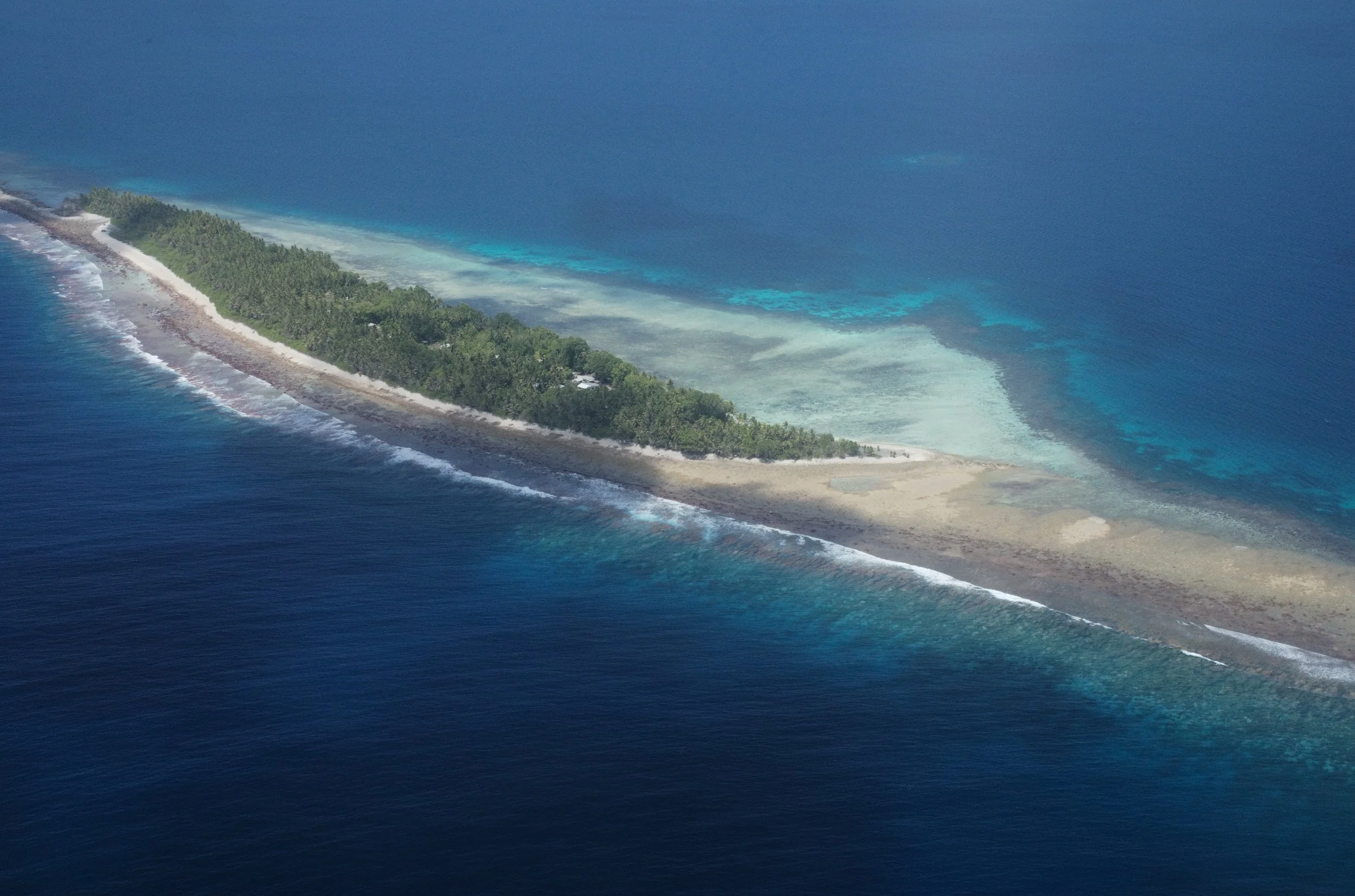


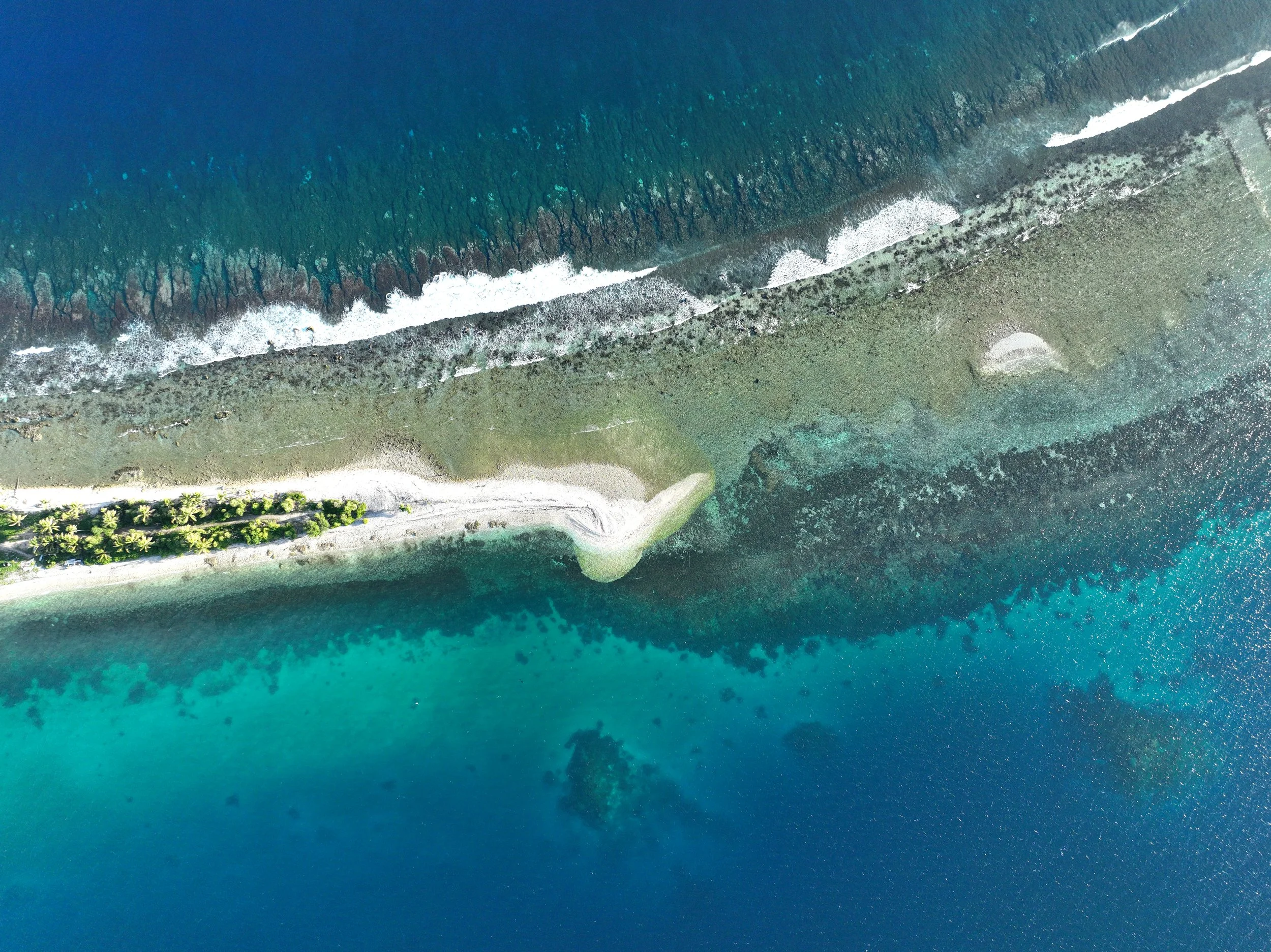
The first thing you notice is how little separates land from water. Not metaphorically, but physically. The ocean is never far, never out of sight, pressing against the edges of the road and the homes beside it. Only after you’ve been there for a while do you begin to understand what that proximity means. In Tuvalu, much of the land sits only a few feet above sea level.
Tuvalu is a Polynesian nation of nine low-lying atolls and reef islands scattered across the Pacific Ocean. Just over 12,000 people call its ten square miles of land home, making it one of the smallest and least-visited countries in the world. After nearly a century under British rule, Tuvalu gained independence in 1978. Today, it is a sovereign nation, a parliamentary democracy, and a member of the Commonwealth.
What those facts cannot convey is how much history, culture, and identity can be held within such a small place. Tuvaluan remains the language of everyday life, carrying stories, songs, and histories from one generation to the next. Here, life unfolds in close relationship with both land and ocean. Fishing, communal gatherings, and traditions passed down through generations continue to shape daily life.
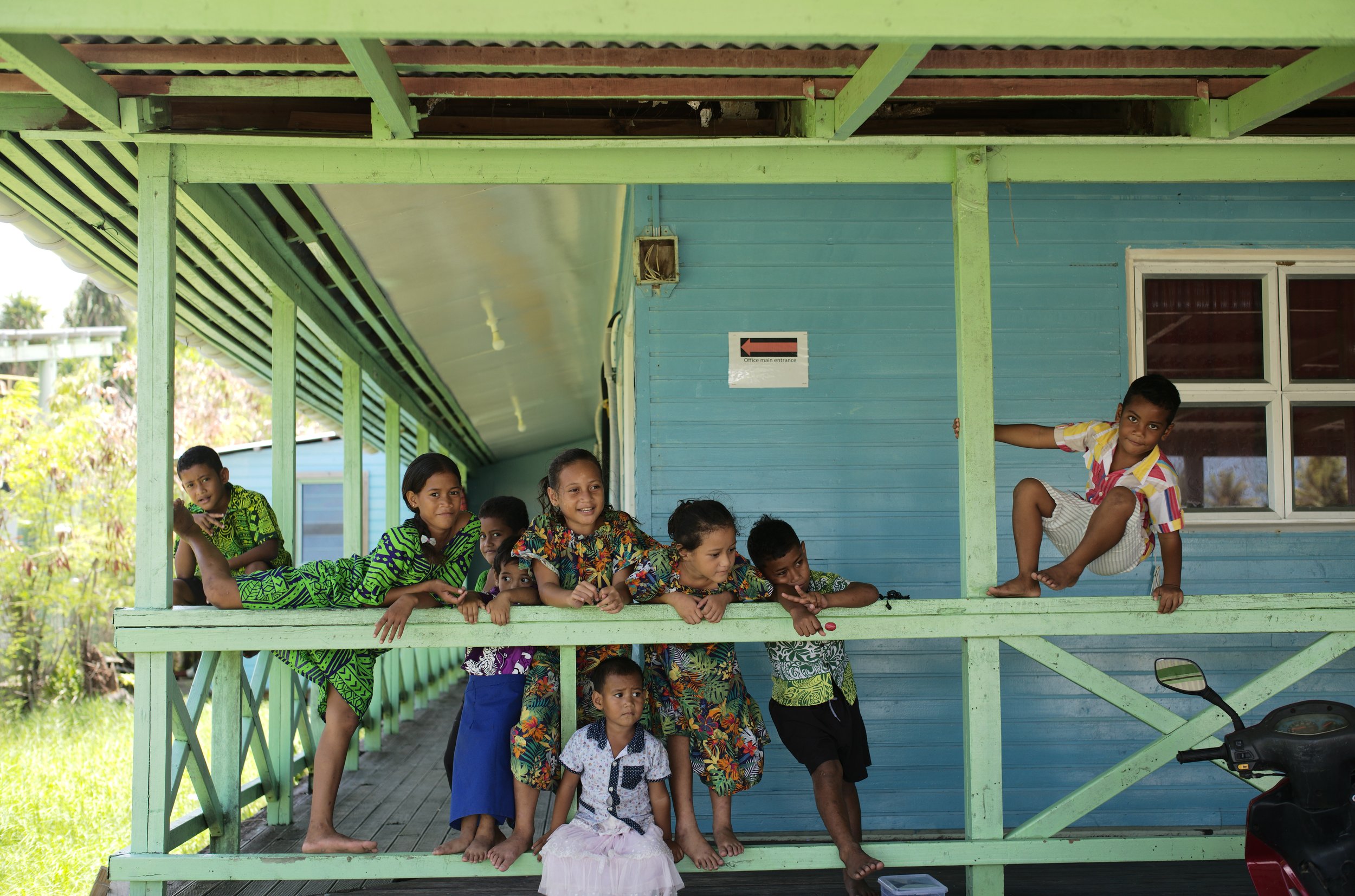
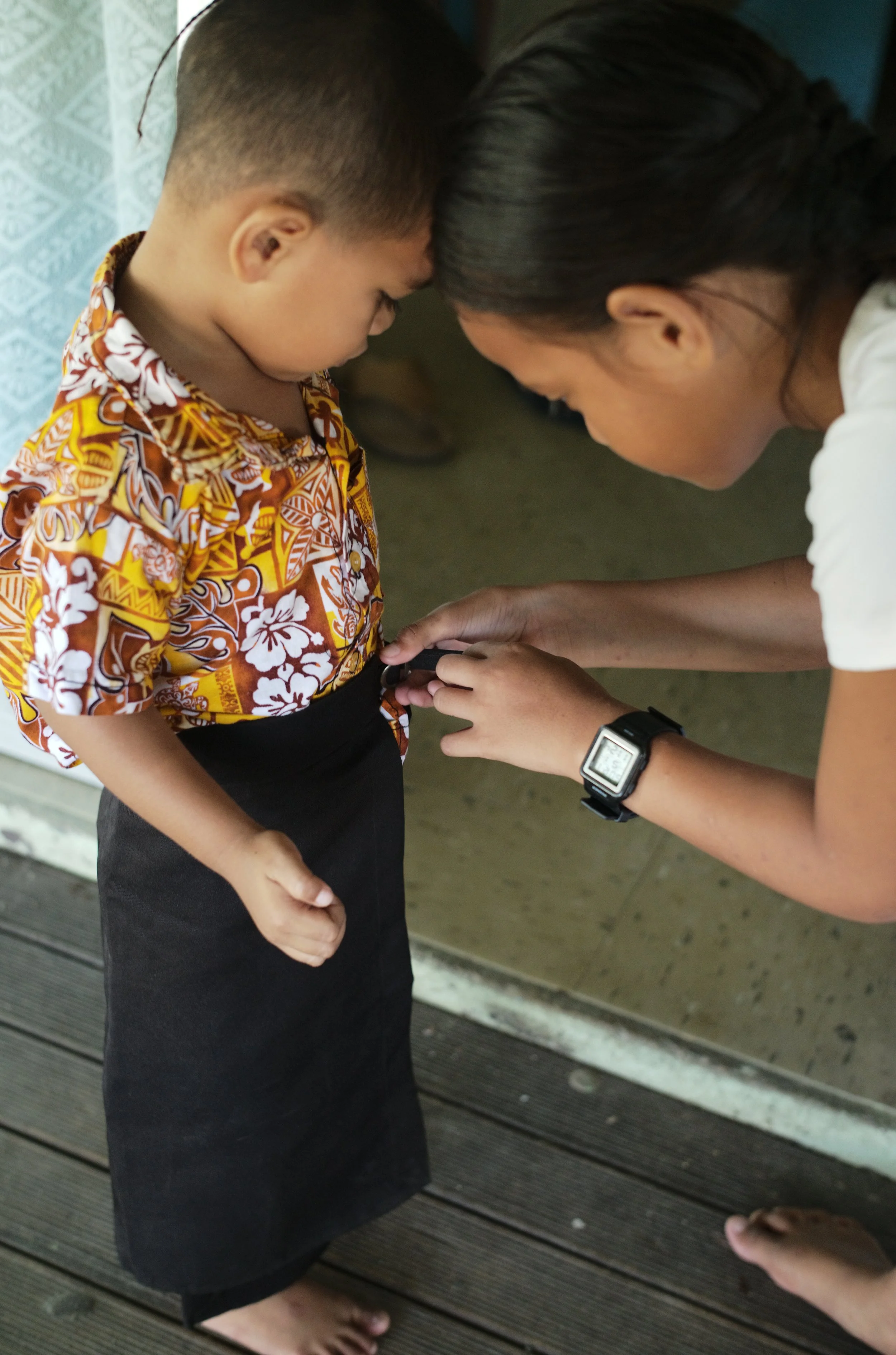

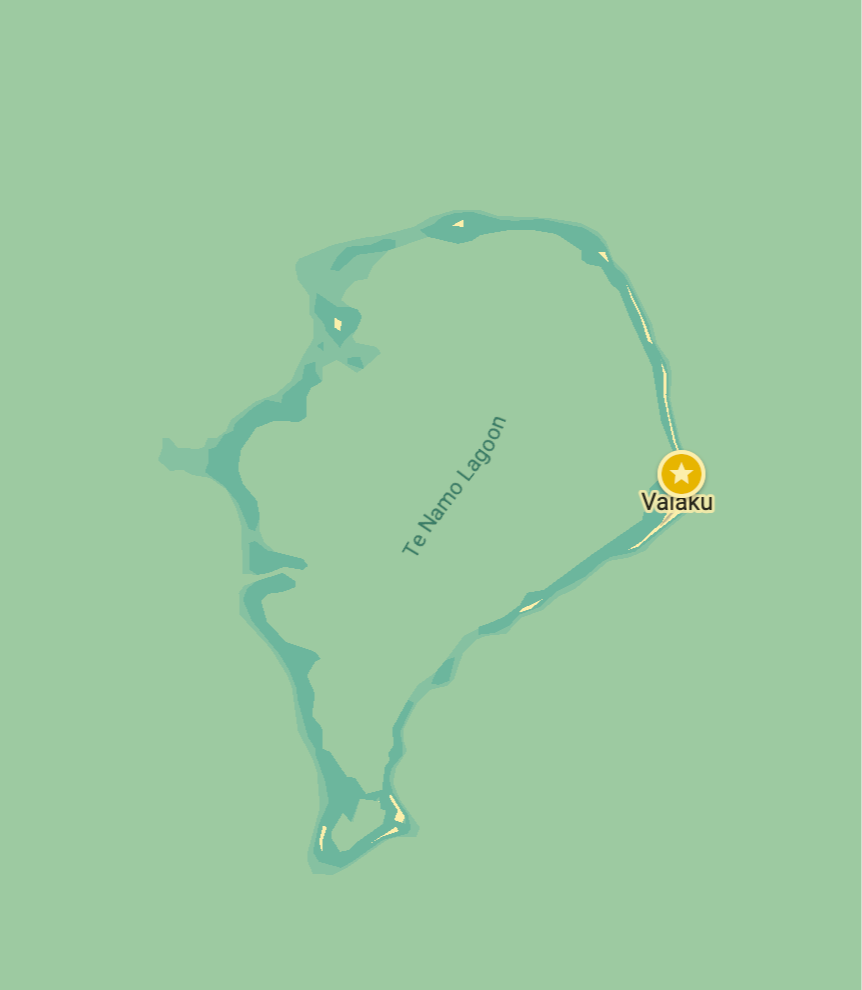
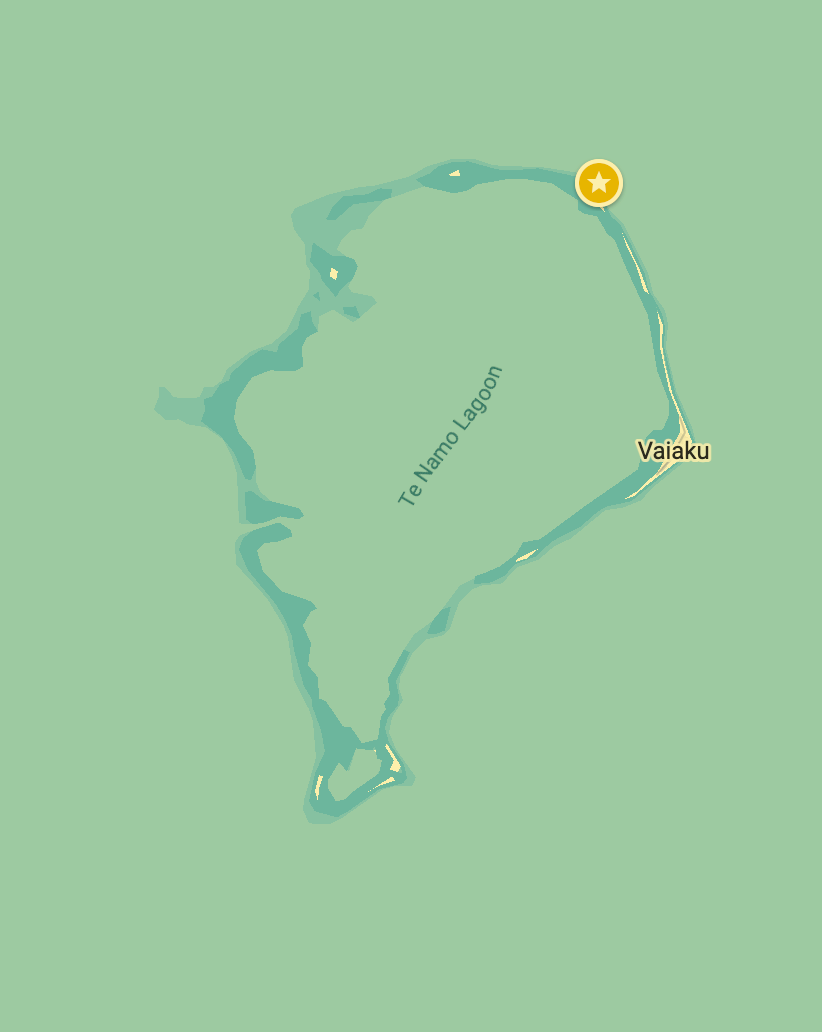
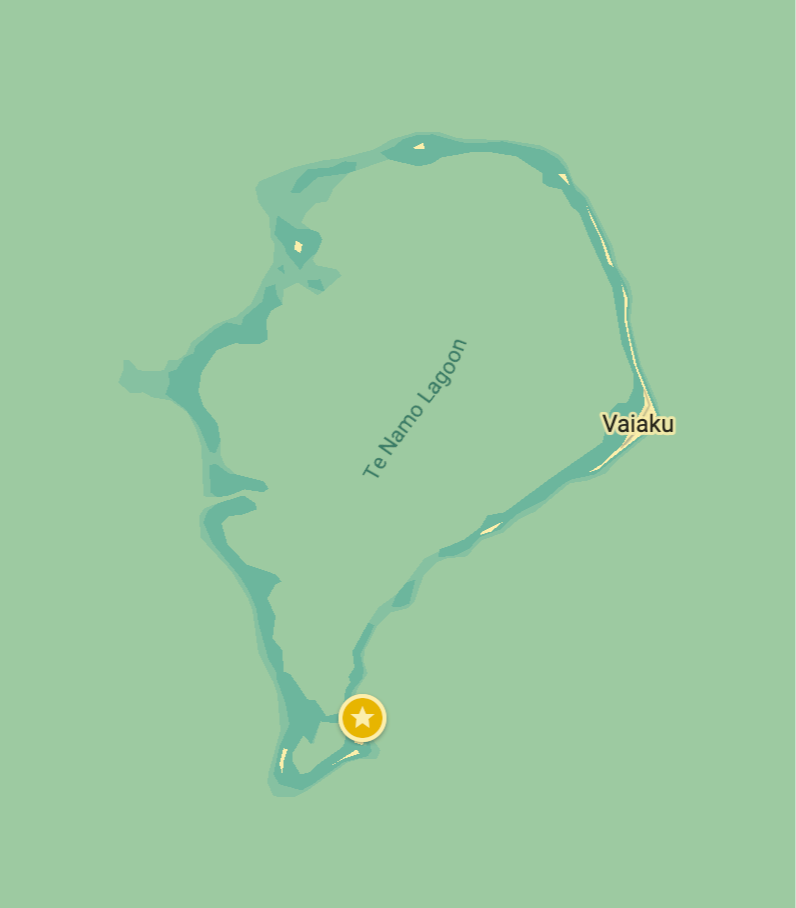
FUNAFUTI ATOLL
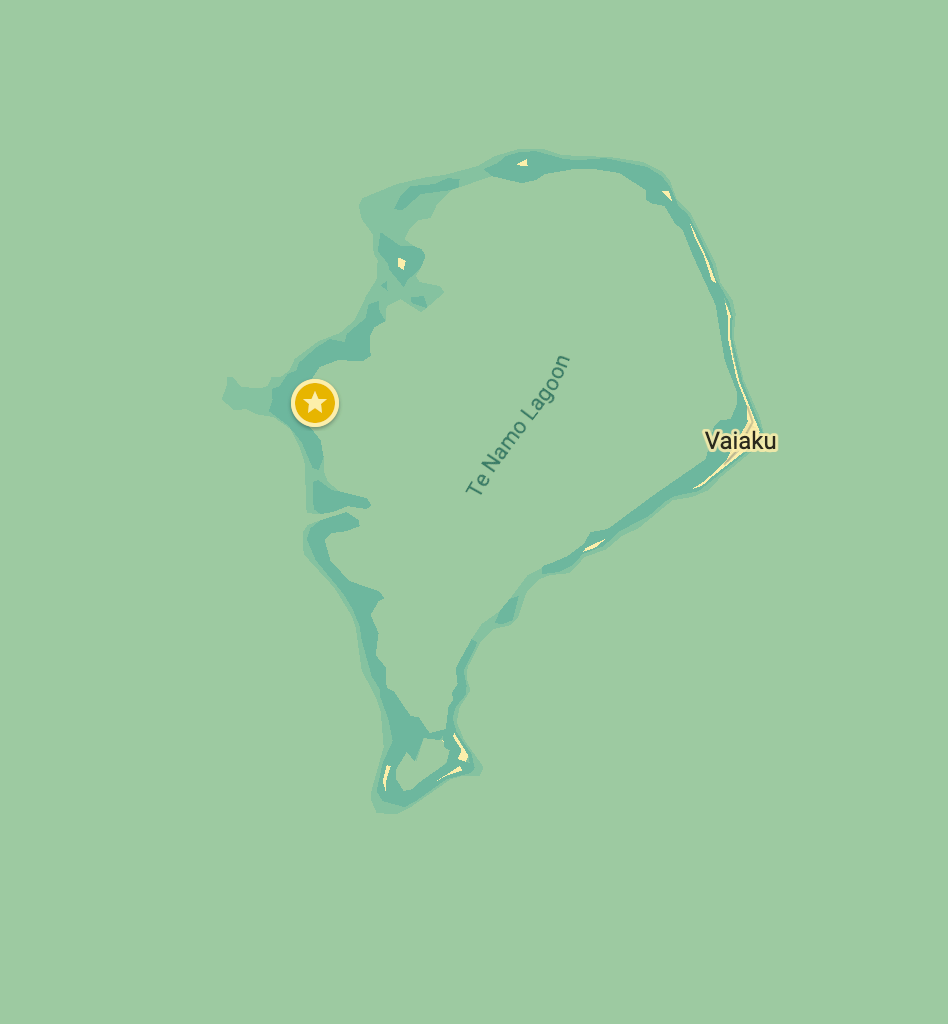
Funafuti is Tuvalu’s capital atoll and one of the country’s nine island groups. Fongafale is the long, narrow islet along the atoll’s eastern edge, and the largest and most populated islet. The star marks Vaiaku, the area of Fongafale where Tuvalu’s Parliament and main government offices are located.
I knew the statistics. I knew the headlines. I knew the warnings. What I didn’t understand was the difference between knowing about a place and standing inside it. Climate change had always existed somewhere beyond my immediate field of vision, inside articles, documentaries, scientific reports, political arguments, and social media debates. Like many people, I understood it intellectually. Sea level rise. Global warming. Climate crisis. Words. Concepts. Soundbites.
I remember mentioning Tuvalu to friends before the trip. Some had never heard of it. Others knew it only as a symbol of climate change. One friend told me he had read that Tuvalu was actually gaining land and wasn’t convinced the threat was as serious as people claimed. I understood why someone might think that. From thousands of miles away, climate change can feel abstract. It can feel political. It can feel like a debate between competing headlines and conflicting interpretations of data. Standing in Tuvalu, those arguments suddenly felt very far away. Because the story isn’t the ocean or the statistics. The story is the people.
That is what brought me to Tuvalu.
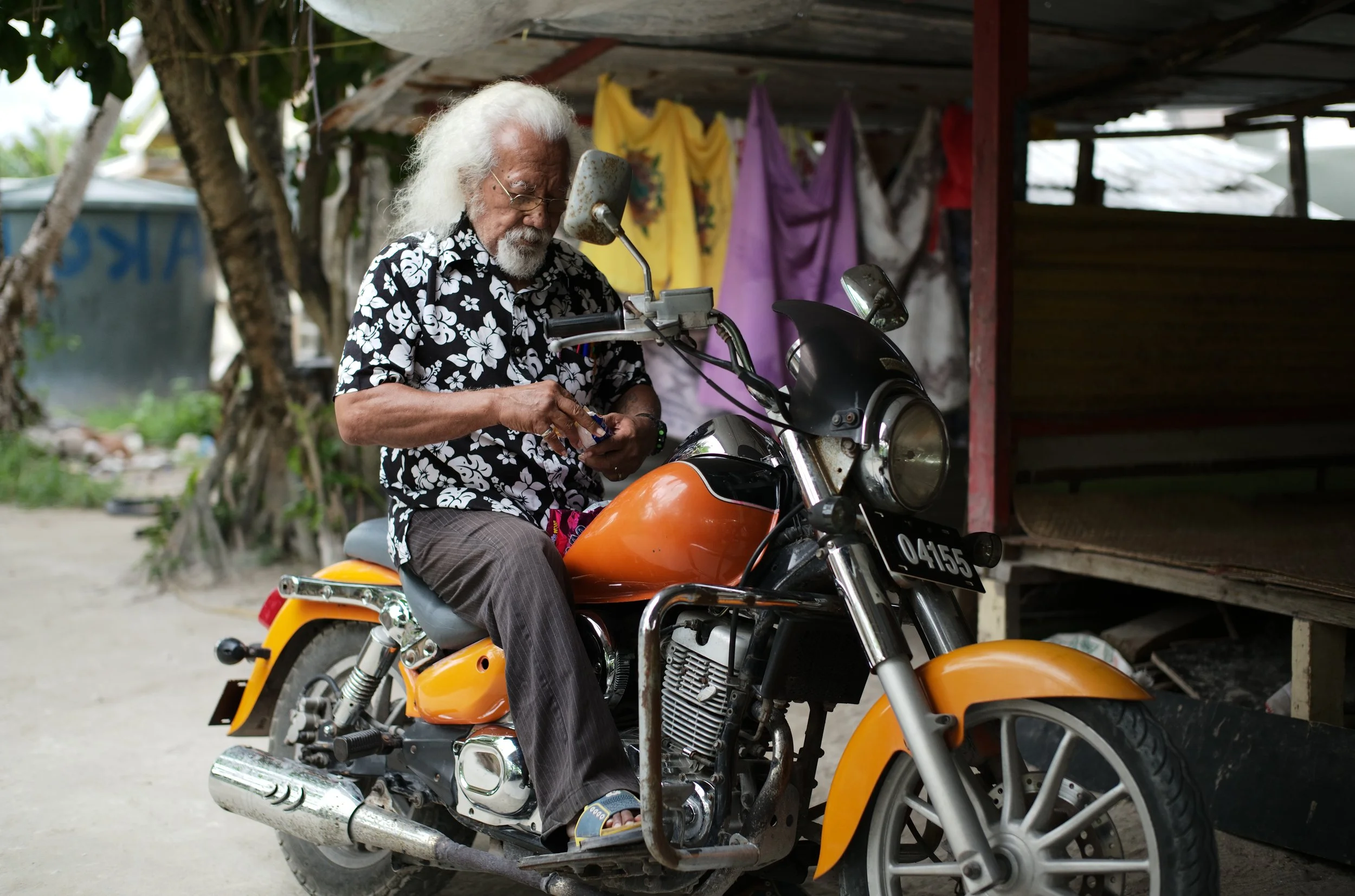
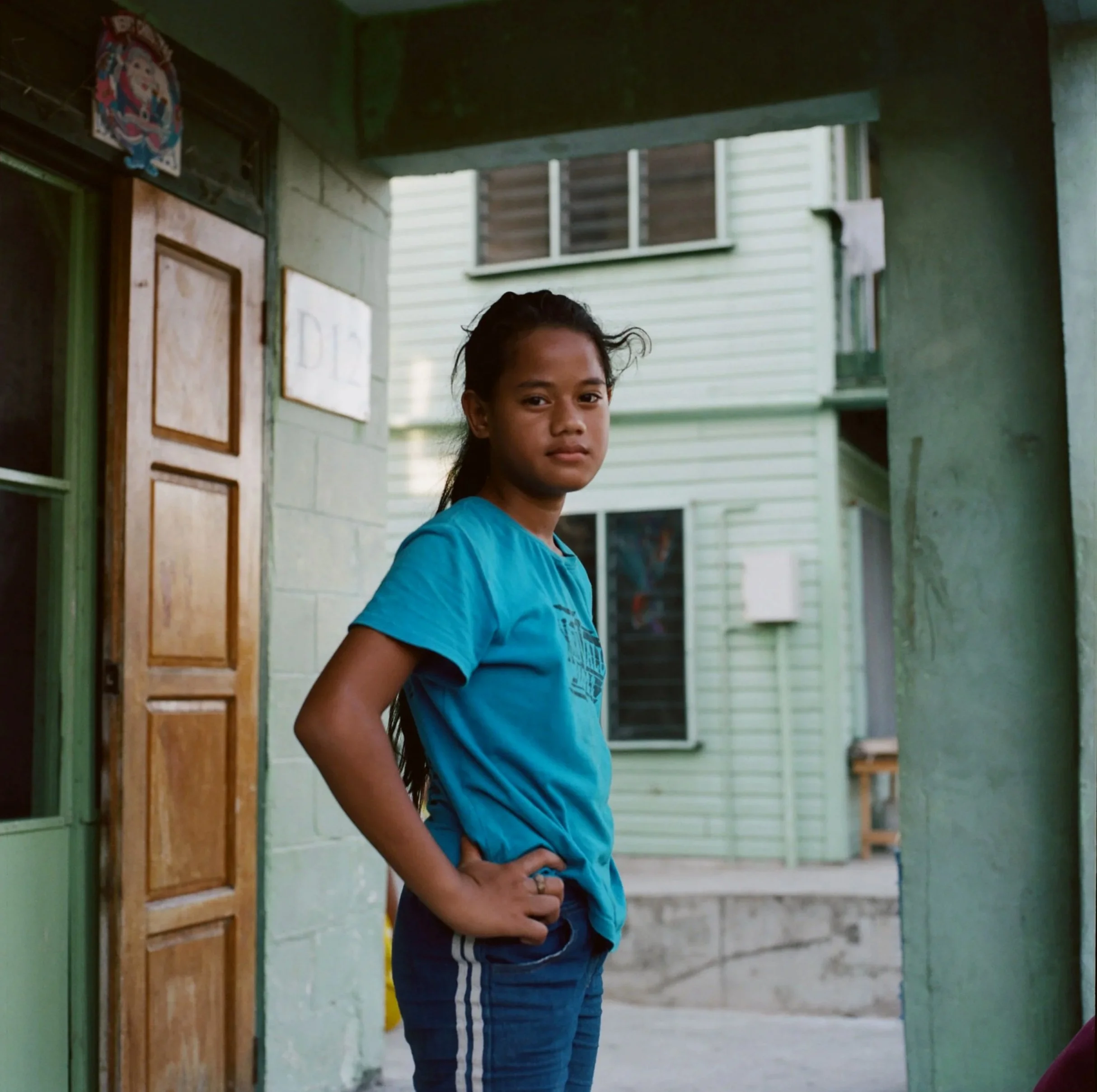
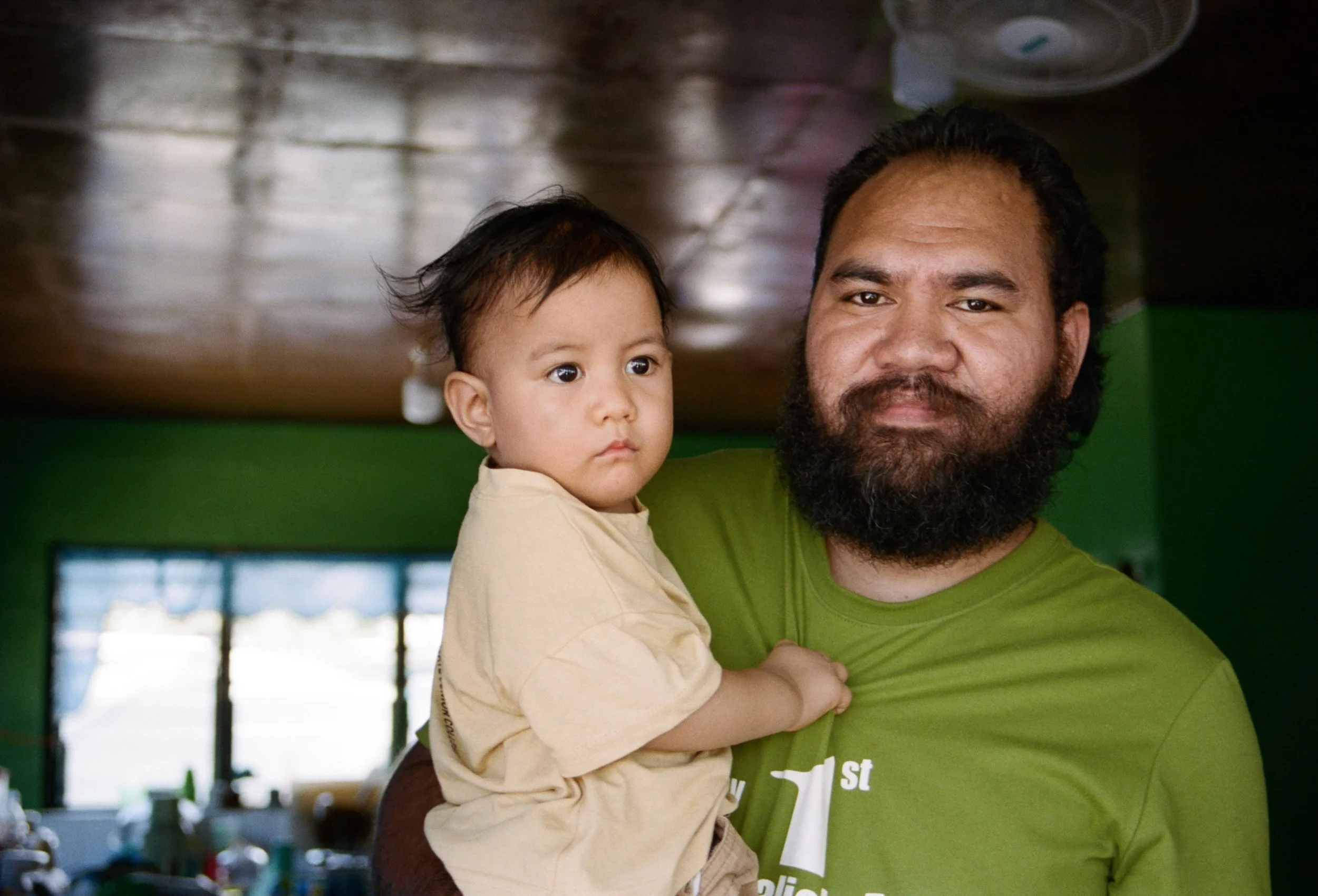
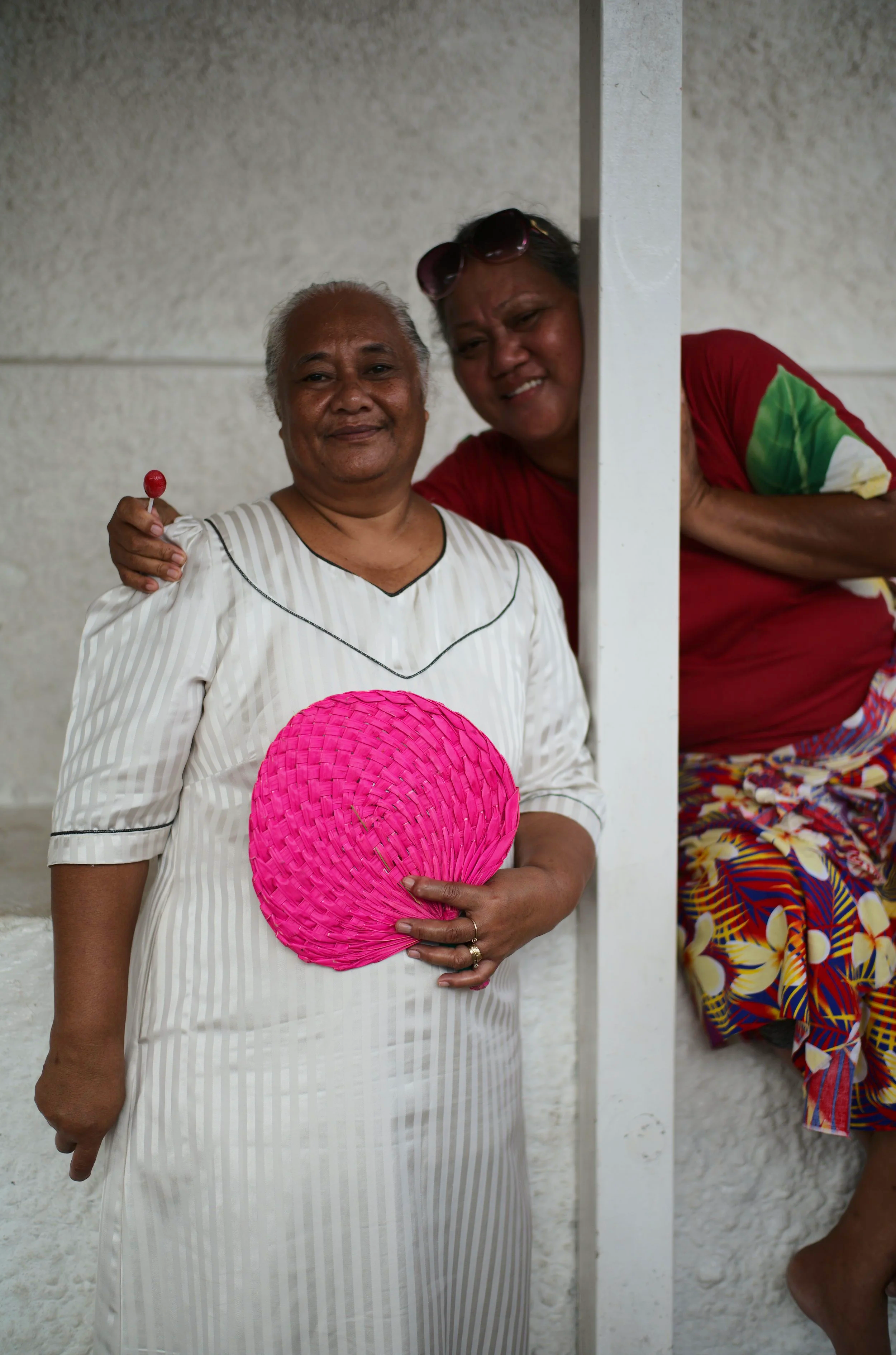
In December 2022, I traveled there to spearhead a cultural heritage documentation project. Working closely with the Government of Tuvalu, I led a team of photojournalists and filmmakers in documenting Tuvaluan life, culture, and traditions through photographs, films, and interviews. The project was conceived as a living repository, one that Tuvaluans could continue contributing to and shaping over time, preserving their own stories and cultural memory for future generations. It was also designed as a model that could eventually be adapted by other nations confronting similar existential threats from climate change and rising seas.
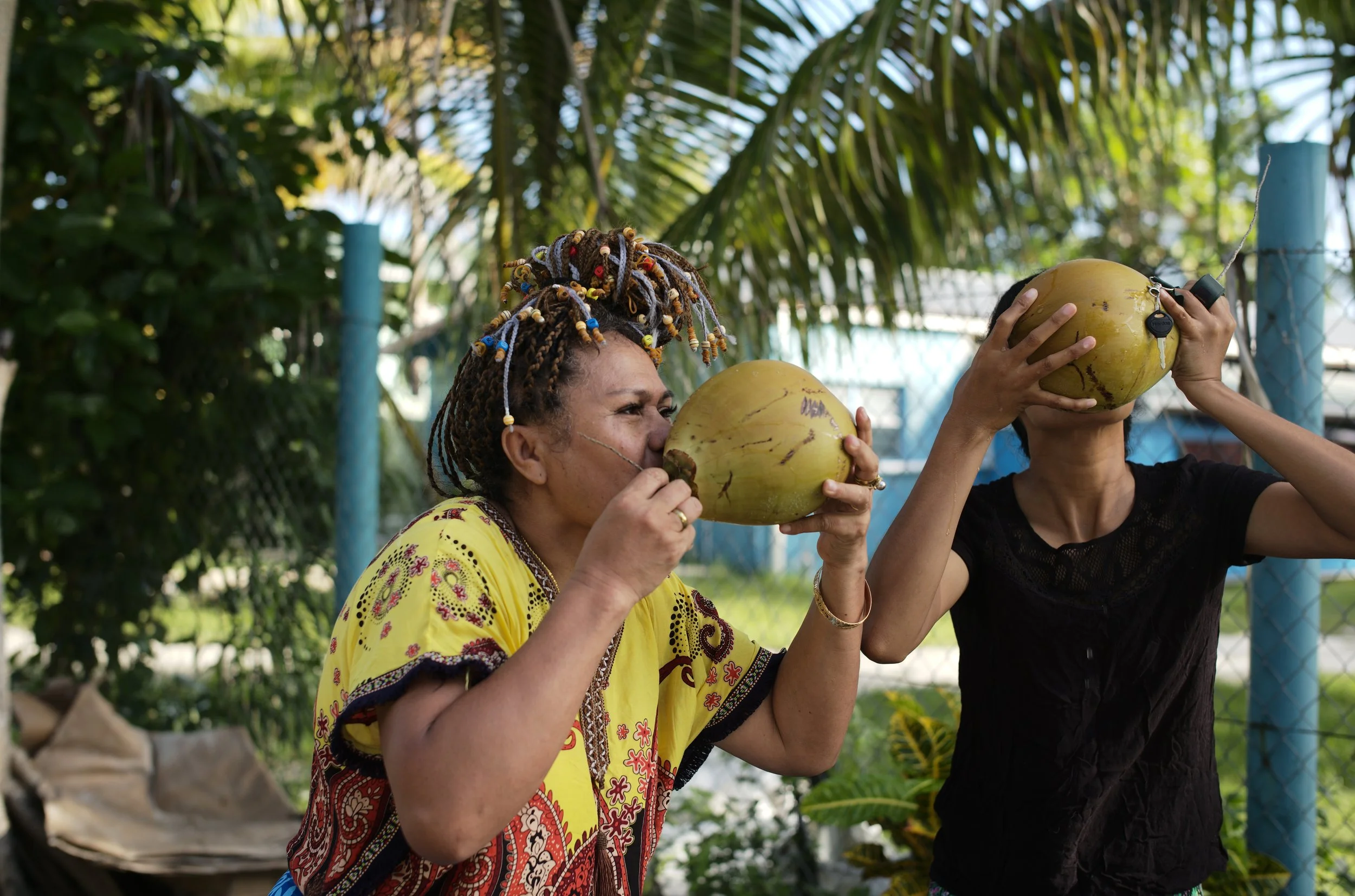
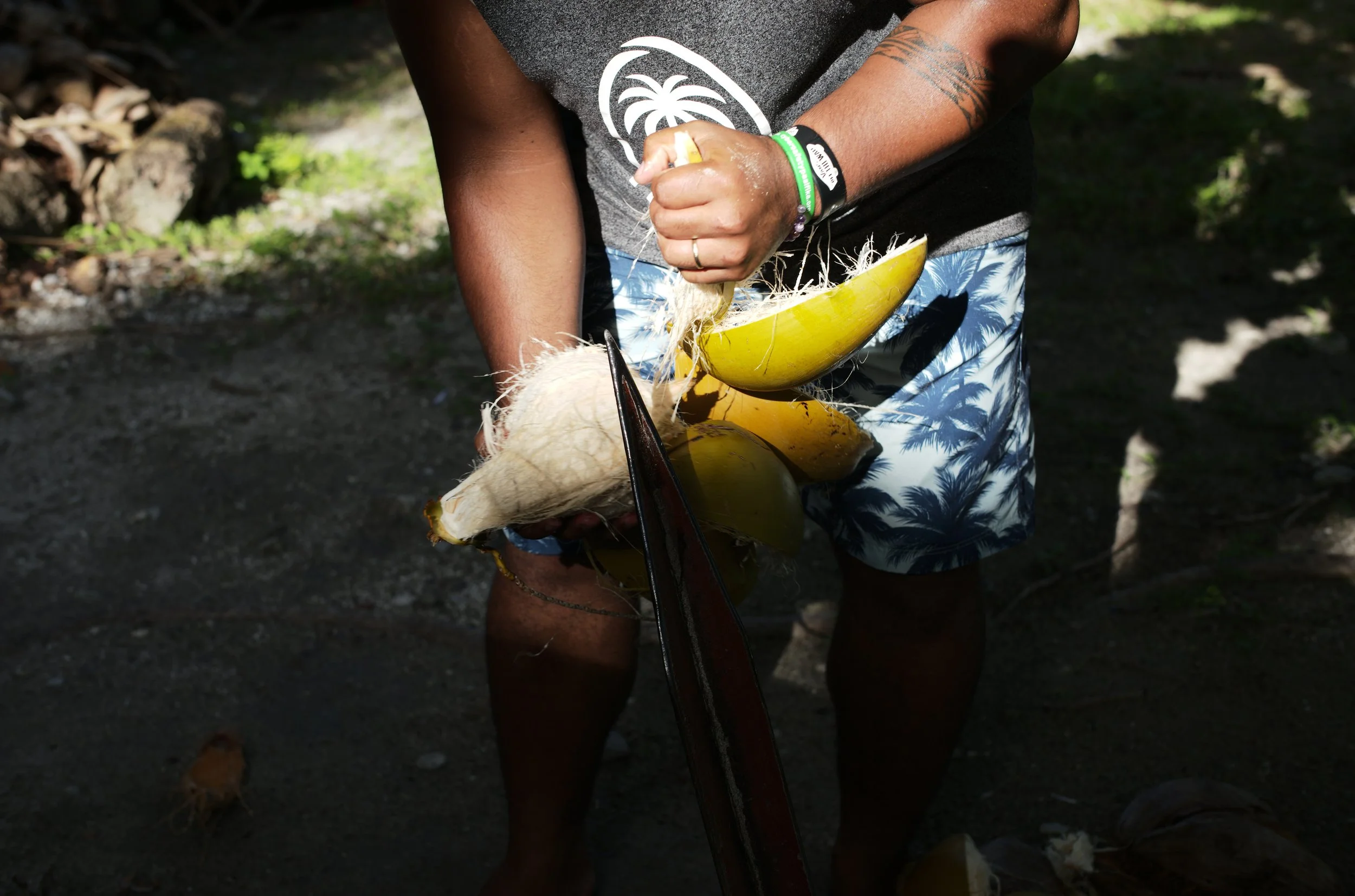
Tuvalu exists right now, full of people whose lives deserve to be seen for who they are, not only for what they may lose. Yet the facts and projections are not what I remember most. I think about the taste of fresh coconut water handed to me moments after it was cut from the tree. I think about the freshly caught tuna dangling behind a scooter on the way home. I think about the heat, an enveloping heat so intense that by midday it felt as though the sun was pressing down from every direction, baking the coral islands beneath it. I think about meals shared with people who welcomed us into their homes and communities.
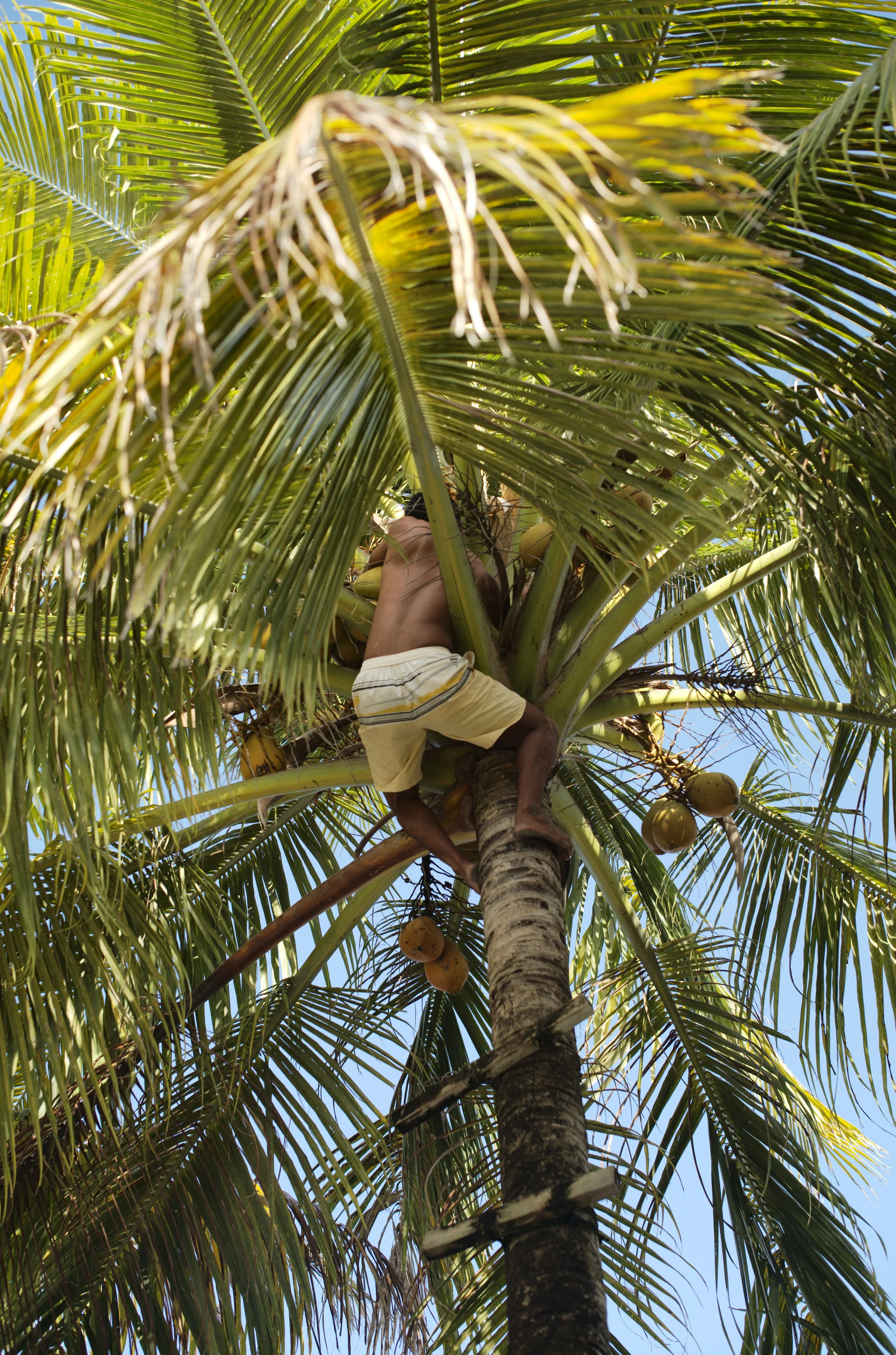
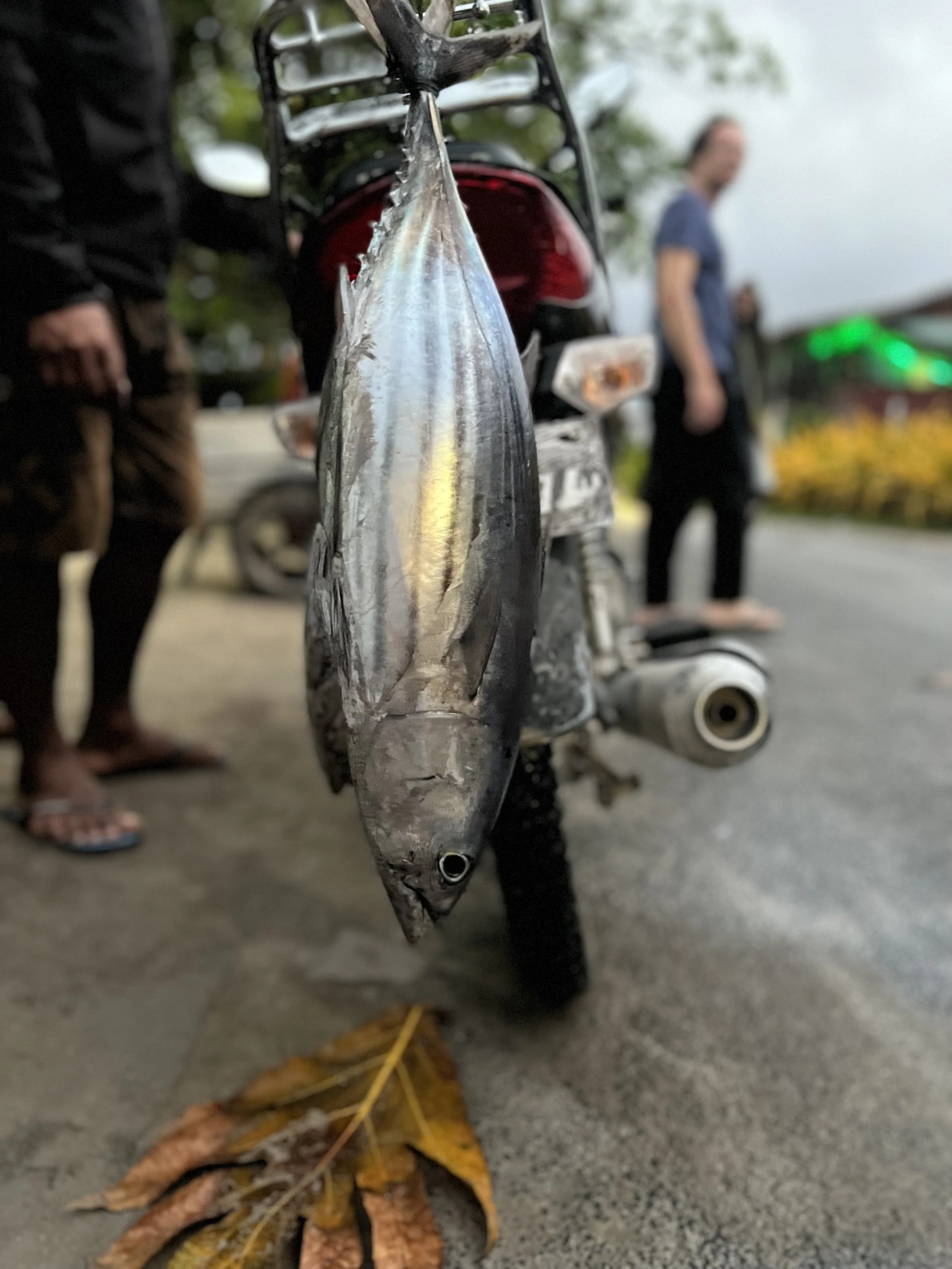
Freshly caught skipjack tuna sold by a local fisherman, hanging from a customer’s scooter.
So why should you care about Tuvalu, an island nation in the middle of the Pacific that most people could not find on a map? Because our humanity doesn’t end where our geography does. Every one of us comes from somewhere. Every one of us knows what home feels like. And if we can understand what home means to ourselves, we can begin to understand what it means to lose one. What happens in Tuvalu is not separate from the rest of the world. We are connected by the same atmosphere and a shared future. The same ocean that surrounds Tuvalu reaches every shore.
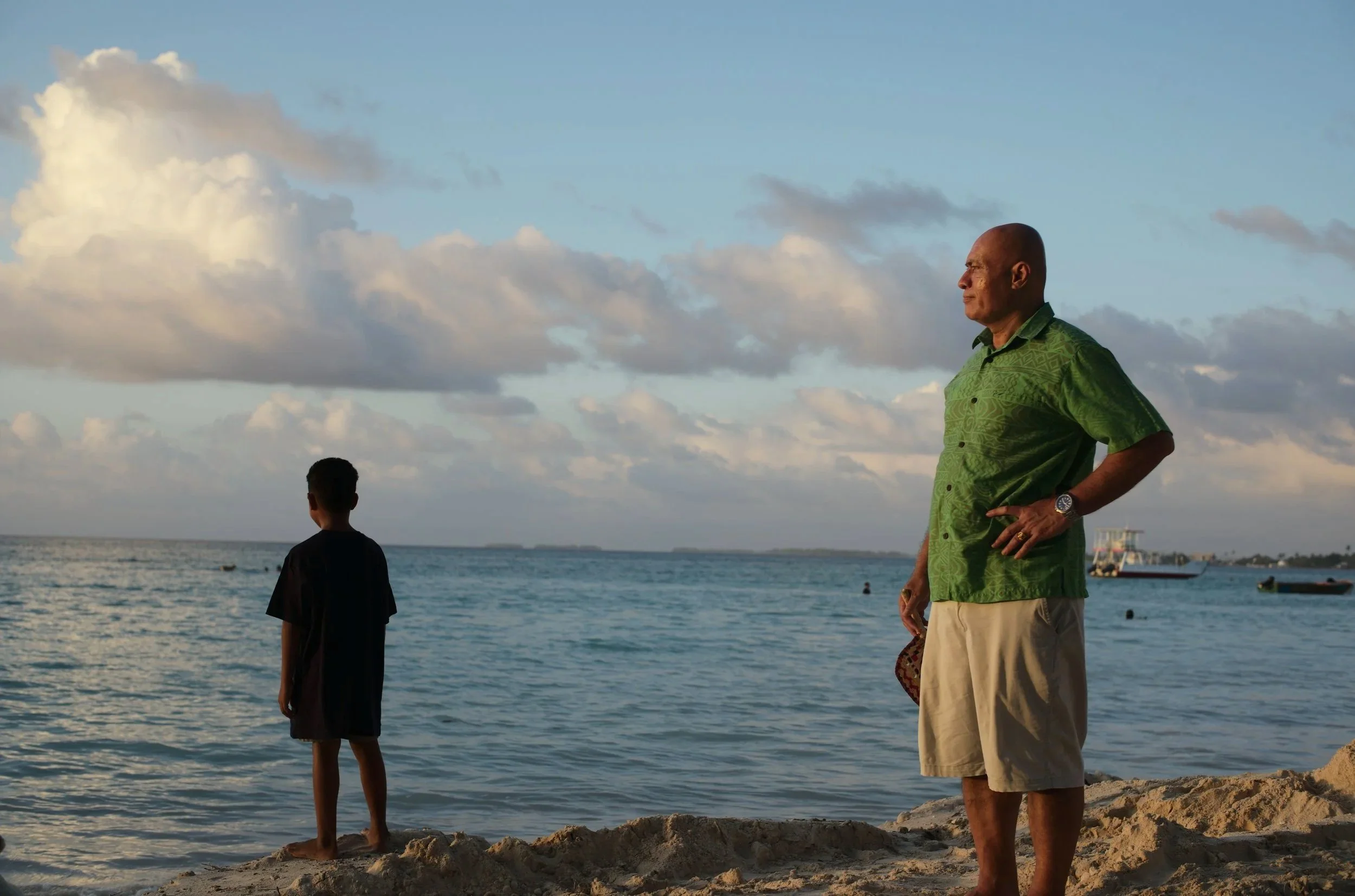
Seve Paeniu, Tuvalu’s former Minister of Finance, and his grandson on the shore of Funafuti Lagoon at sunset.
An excavator works in the shallow waters off Fongafale as part of a land reclamation project. Sand dredged from the lagoon is used to raise and extend the shoreline, creating land intended to better withstand flooding and rising seas.
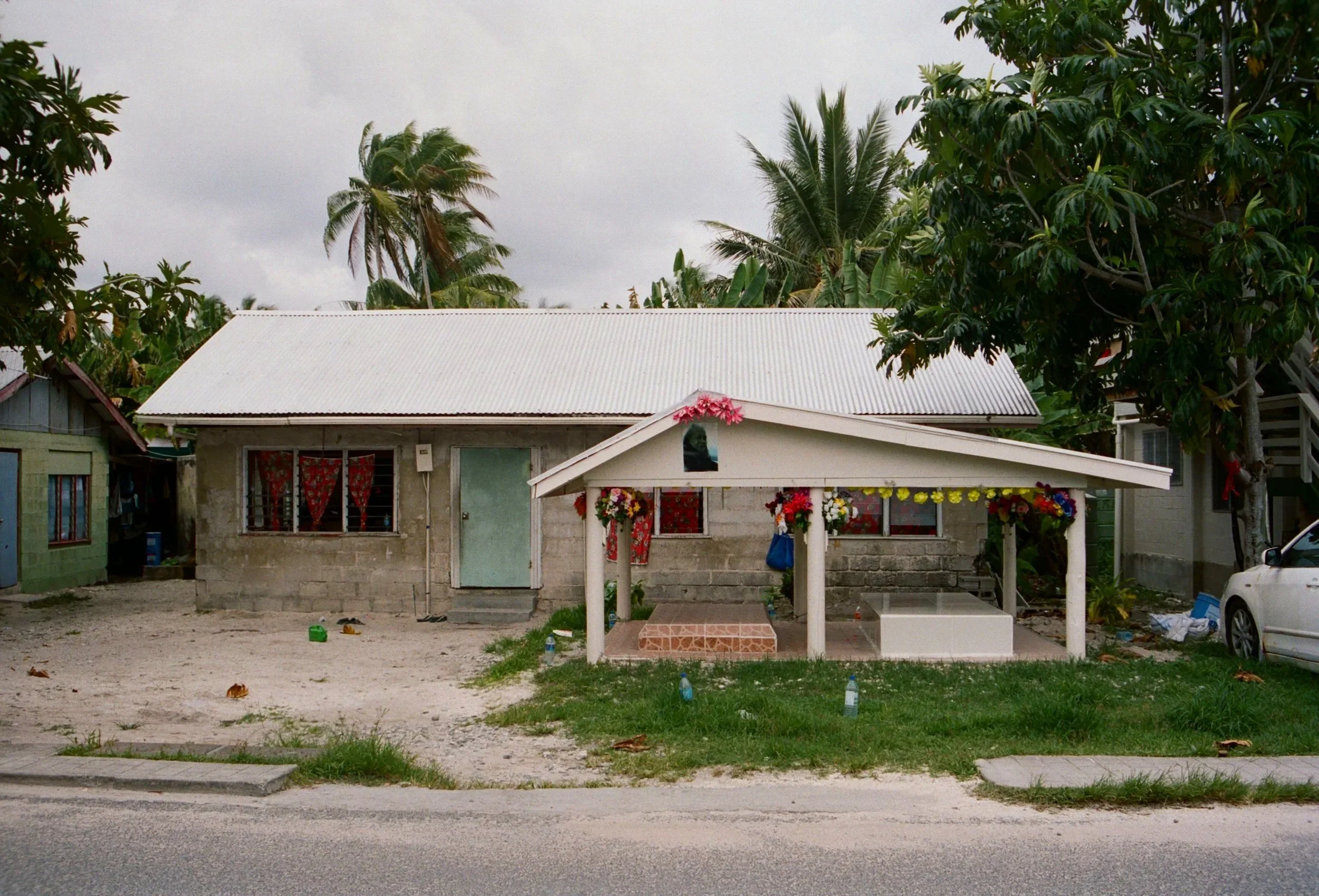
A typical home in Funafuti, with ancestral graves in the front yard—a reflection of the enduring connection between family, land, and home in Tuvalu.
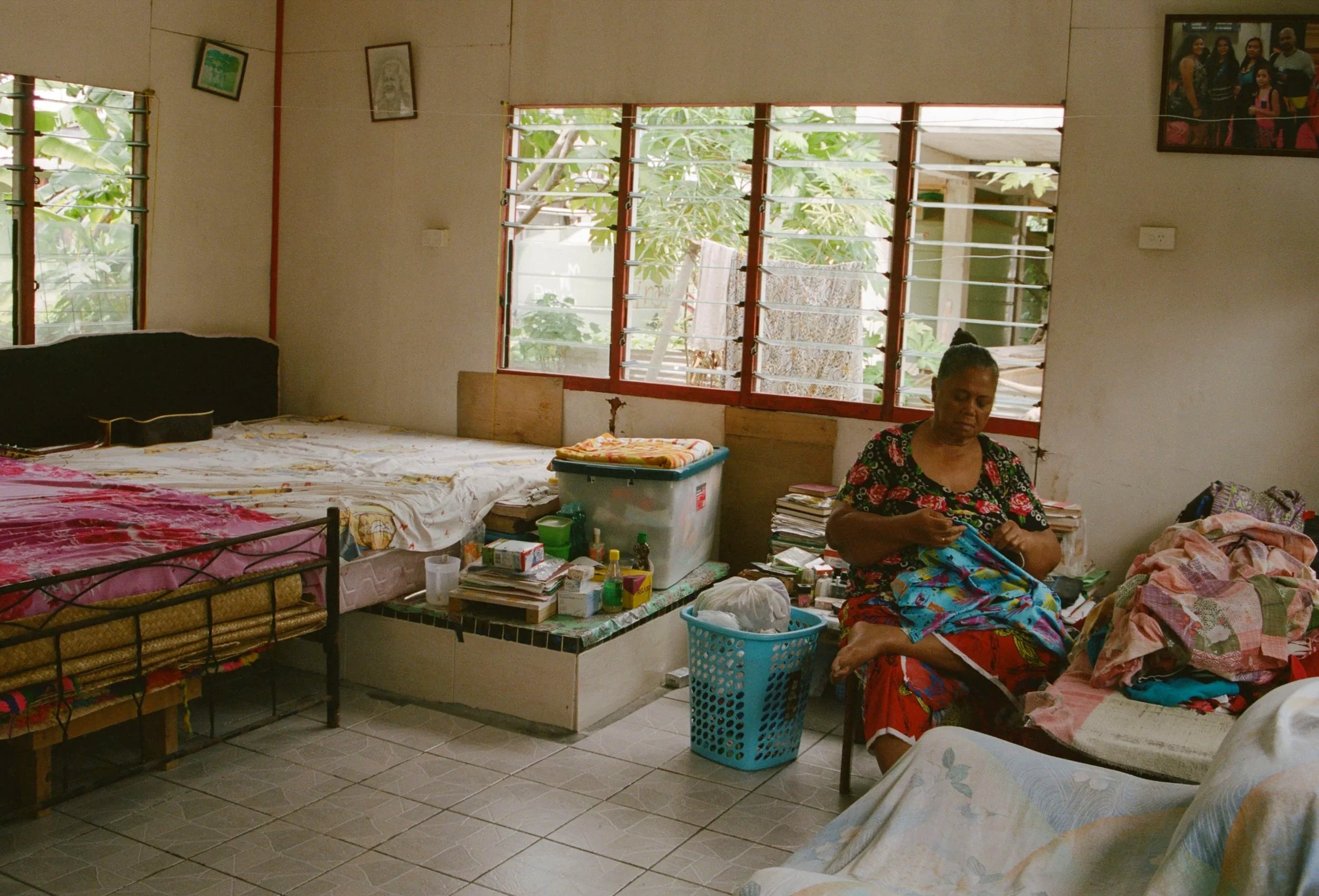
Bottom: A woman sews beside a grave that extends partially beneath a bed inside a home in Funafuti.
In Tuvalu, home is more than the place where a person lives. It is where a family’s past, present, and future are rooted in the same land. Homes are often passed down through generations rather than bought and sold, remaining within families as living extensions of lineage and identity. The connection to land is not merely financial or practical. It is ancestral. I learned that when a child is born, the umbilical cord is often buried on family land. When a loved one dies, they may be buried there too. The boundaries between life, death, memory, and place feel remarkably thin.
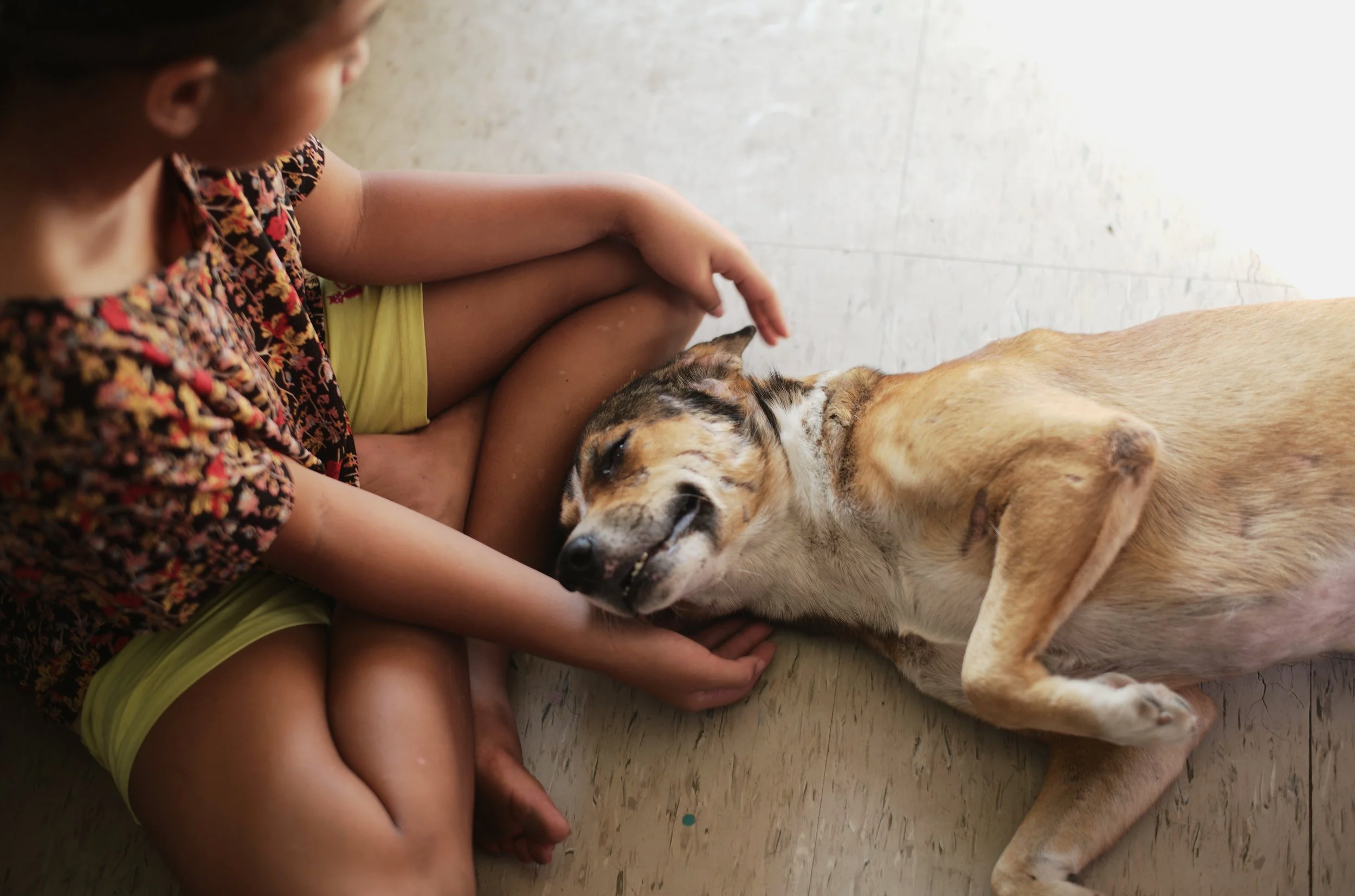
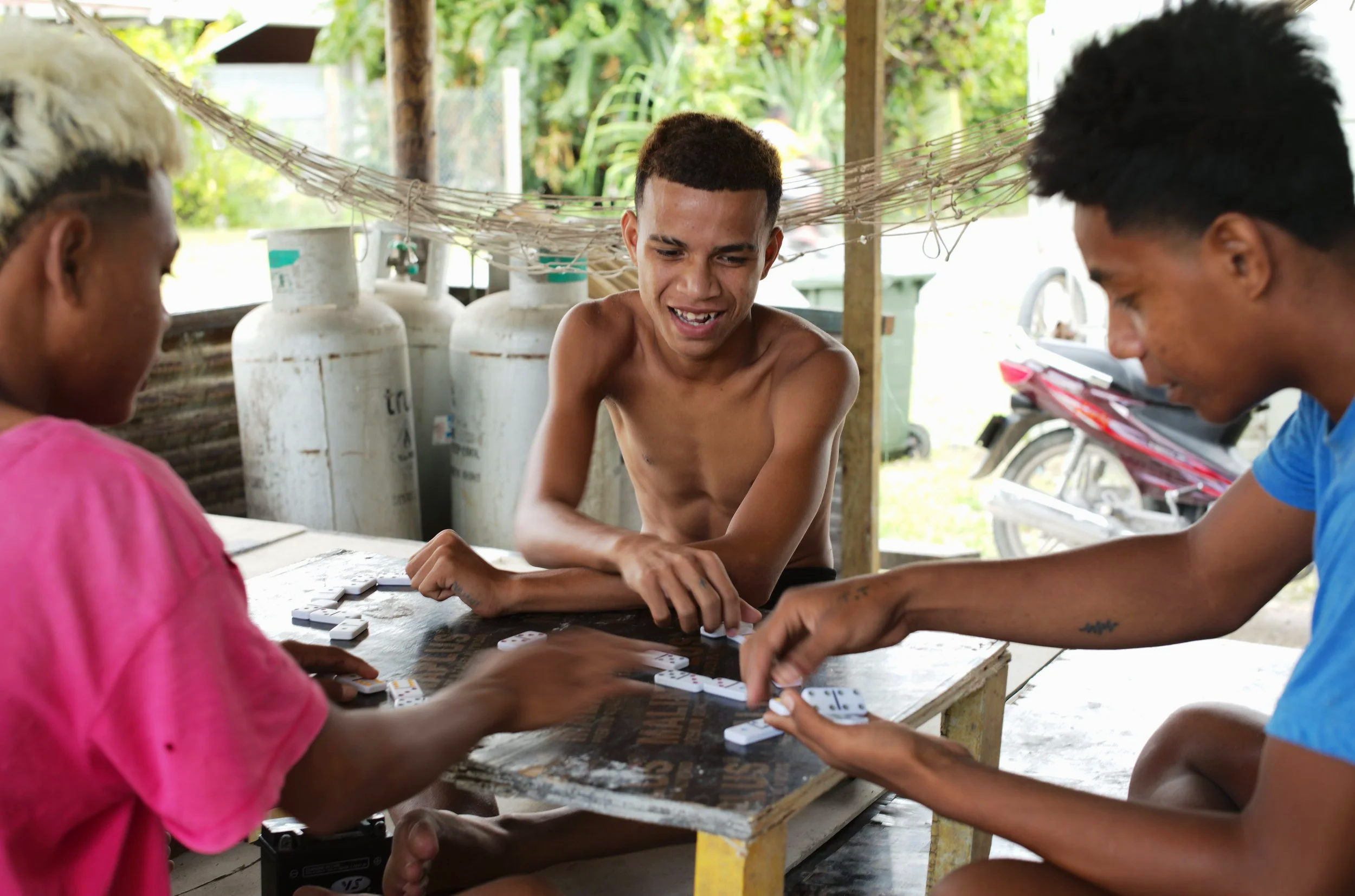
Some families have loved ones buried inside or beneath part of their home, their graves marked by stone platforms. Daily life continues around them. Family members gather nearby. Children play on them. People take naps on them. Nothing about this is treated as unusual. It is simply part of home.
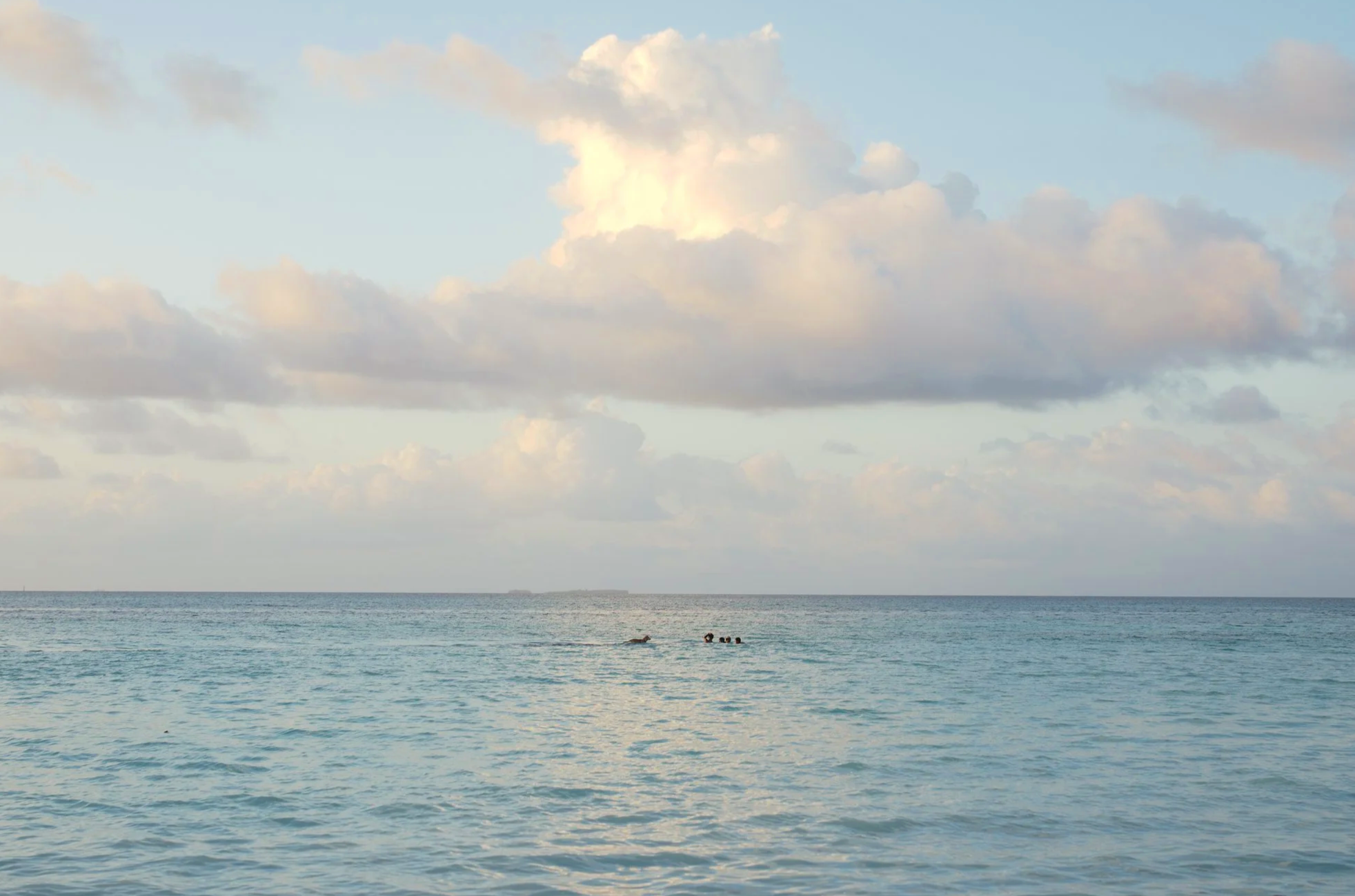
Far from shore, a group of swimmers and their dog play along a shallow ridge in the Funafuti lagoon at sunset.
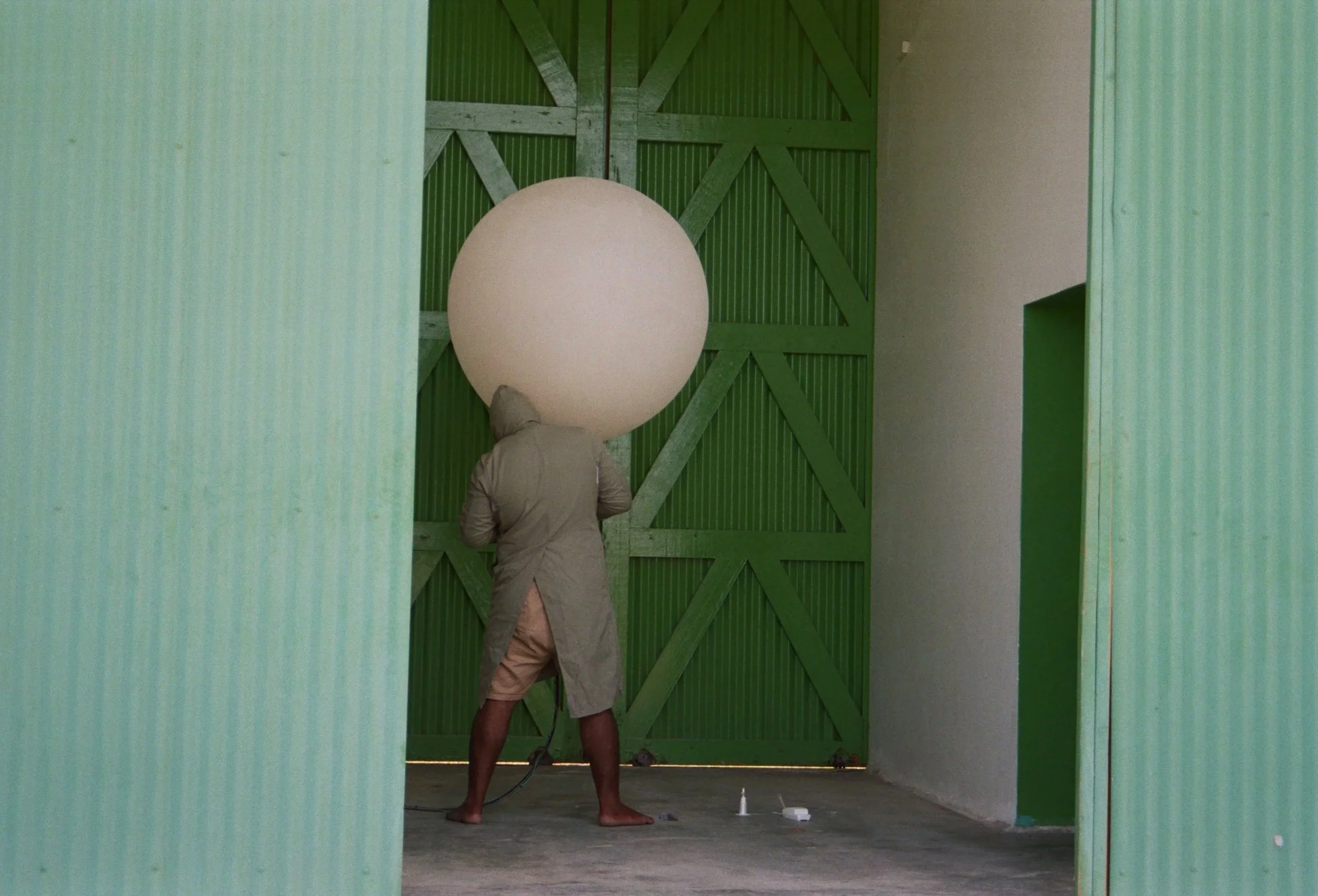
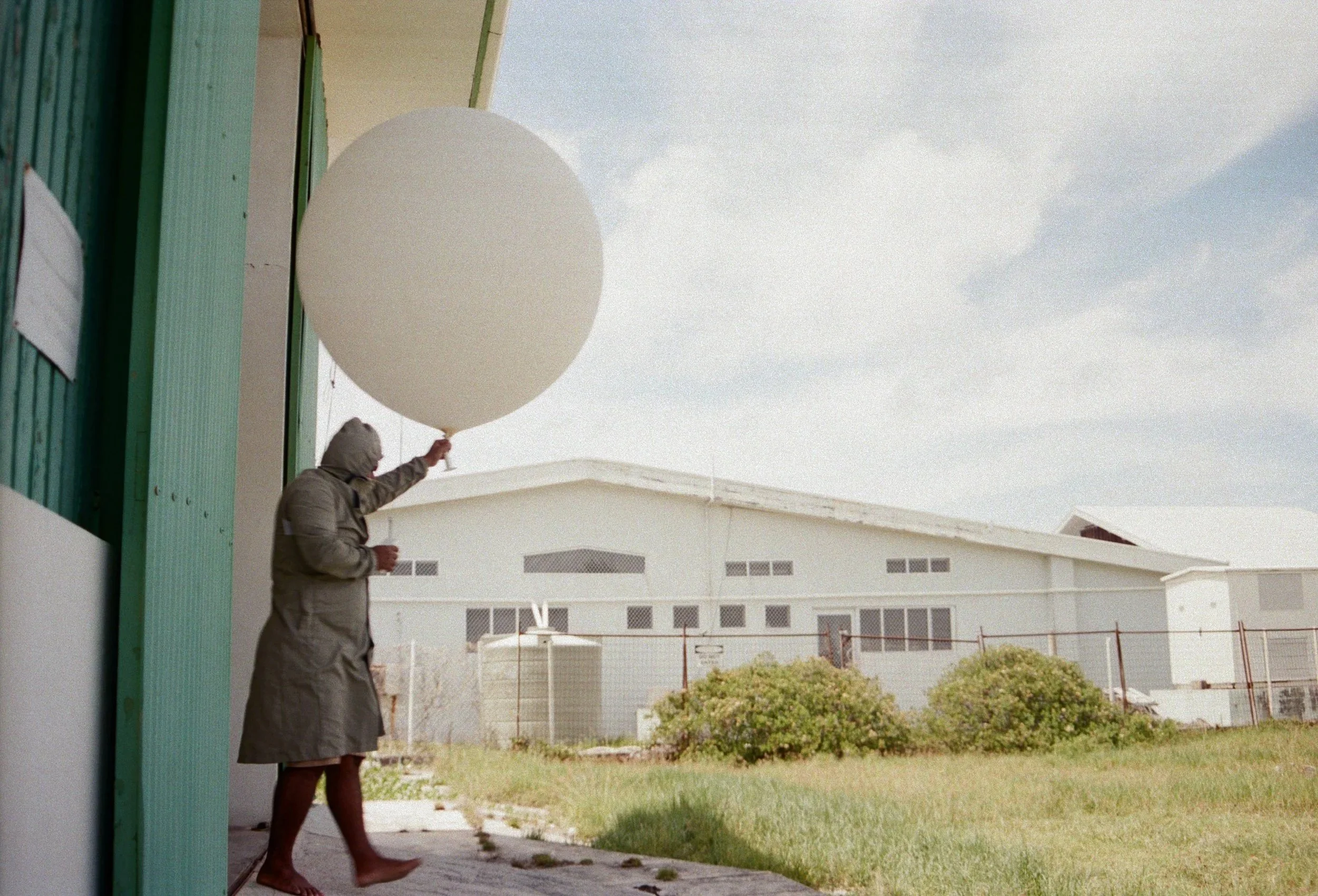
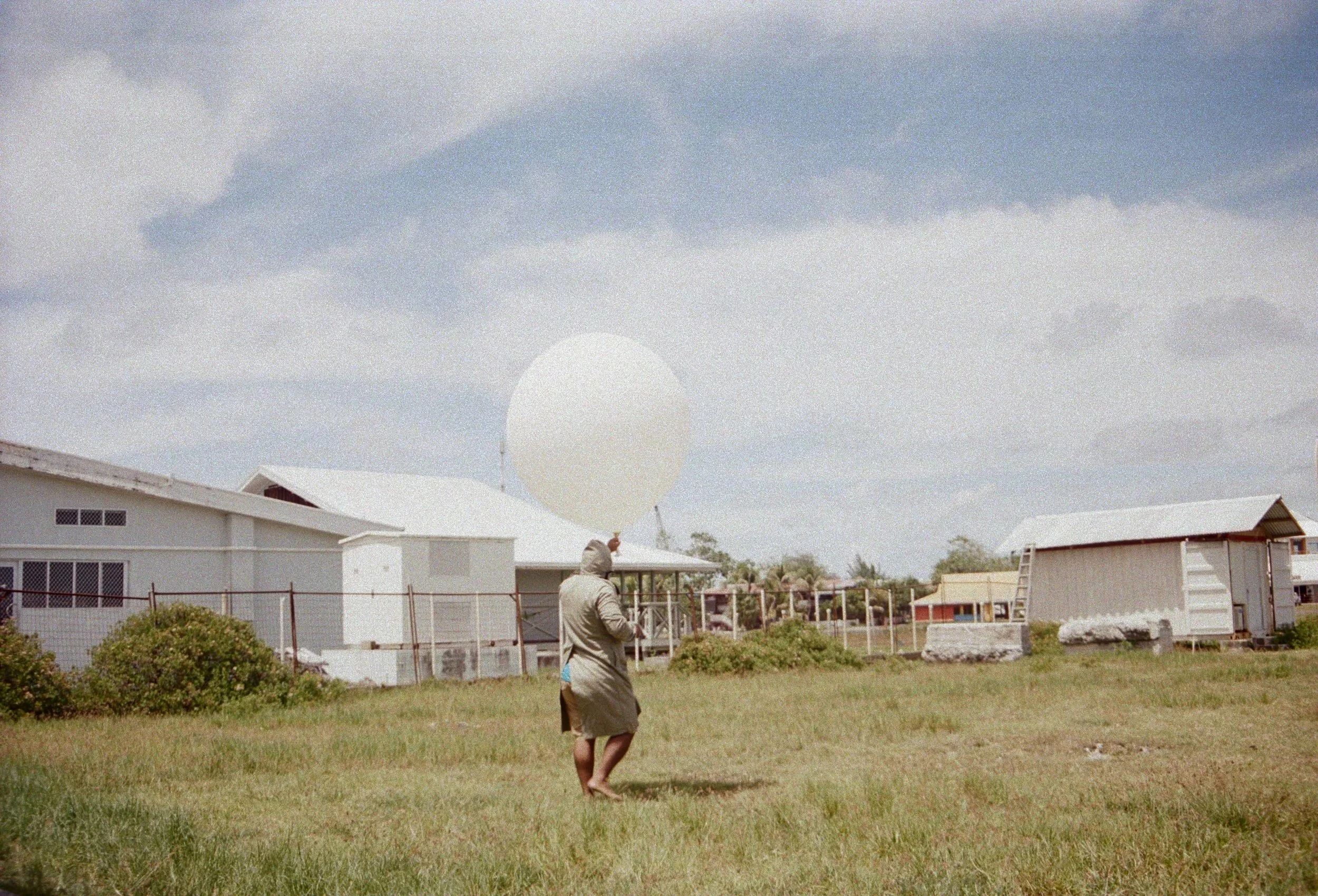
At Funafuti’s meteorological station, a weather balloon is prepared for its daily flight. As it climbs, a small instrument sends back readings of temperature, humidity, air pressure, and wind. Those measurements help forecasters track changing conditions across Tuvalu and the wider Pacific.
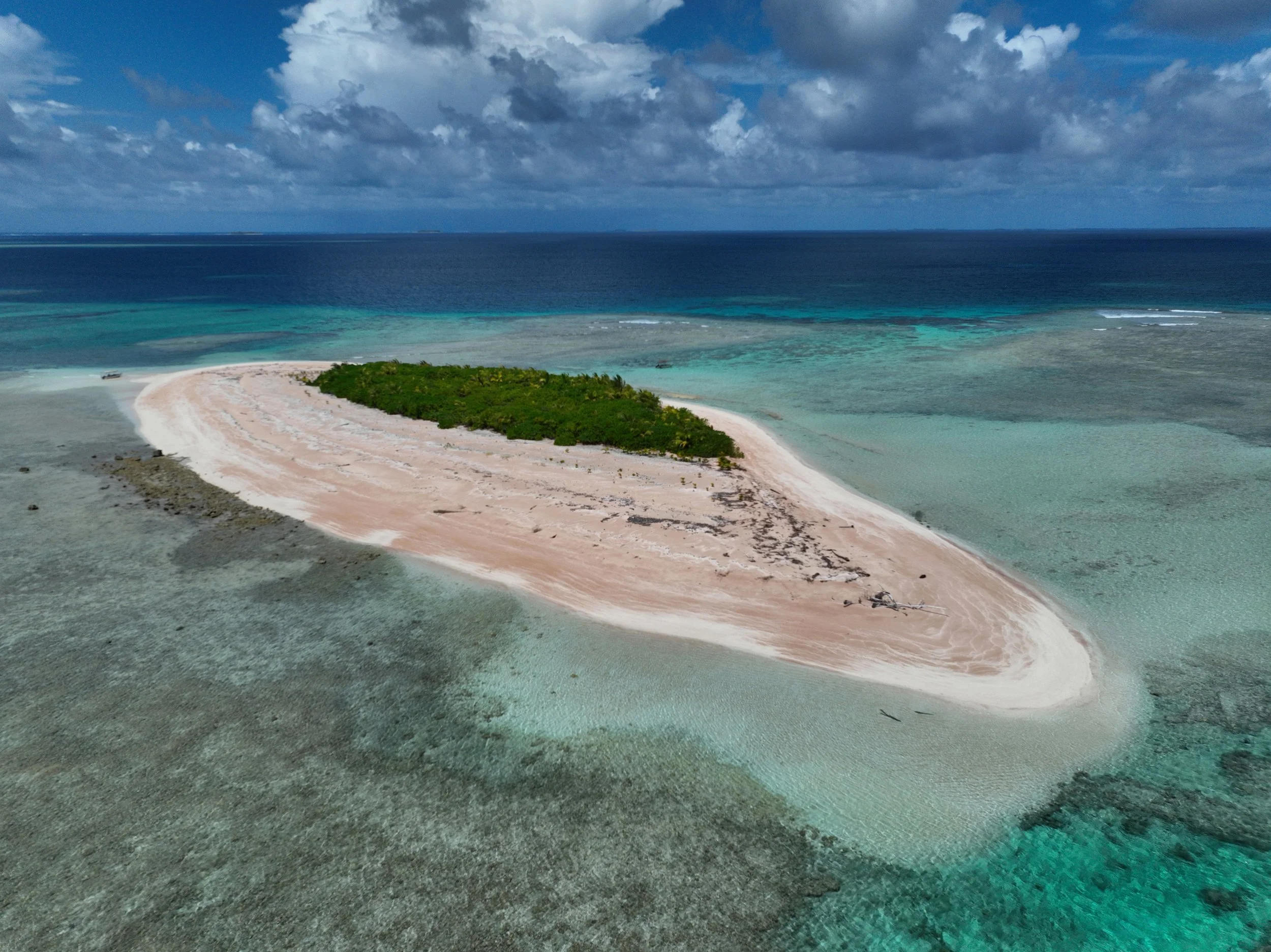
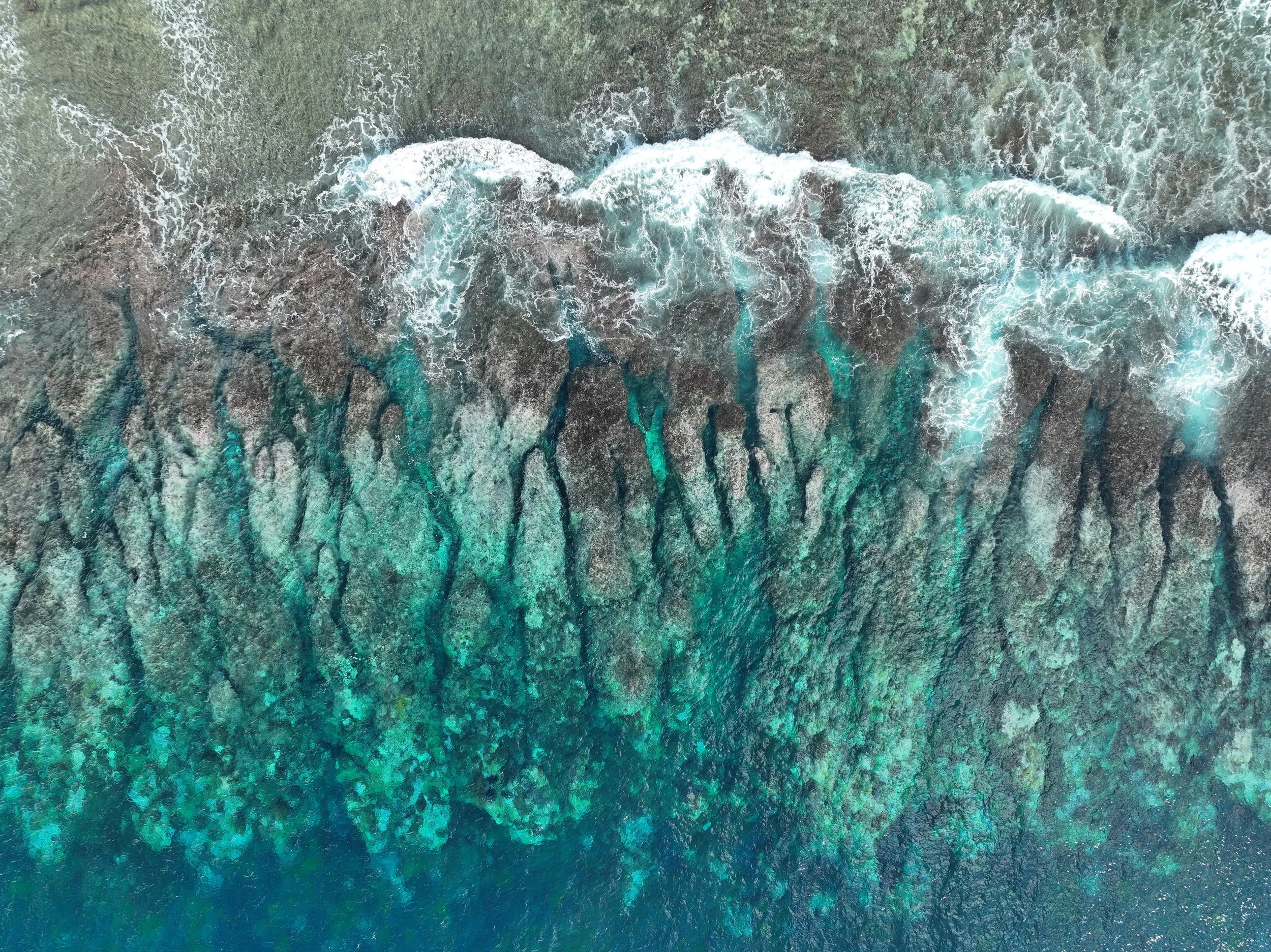
The Funafuti Conservation Area protects 33 square kilometers of reef, lagoon, ocean, and six uninhabited motu along the western edge of the atoll. Established in 1996, it provides a vital refuge for coral, fish, seabirds, and nesting green sea turtles, while helping preserve the marine ecosystems on which life in Tuvalu depends.

talk about infrastructure, coastlines, property, and economics. We measure loss in acres, dollars, and projections. But how do you measure the value of a place where generations of a family have begun and ended their lives on the same piece of land? How do you relocate ancestral graves? How do you move the ground where a child’s umbilical cord was buried? How do you preserve a relationship to place that has been built over centuries?
The encroachment of the ocean is an ongoing reality here. Saltwater has pushed into the land and soil, damaging crops and making food increasingly difficult to grow. High tides reach farther than they once did, and frequent king tides wash through homes. Scientists continue to refine projections and timelines, but the people of Tuvalu do not have the luxury of experiencing climate change as an abstract future event. They are living alongside it now.
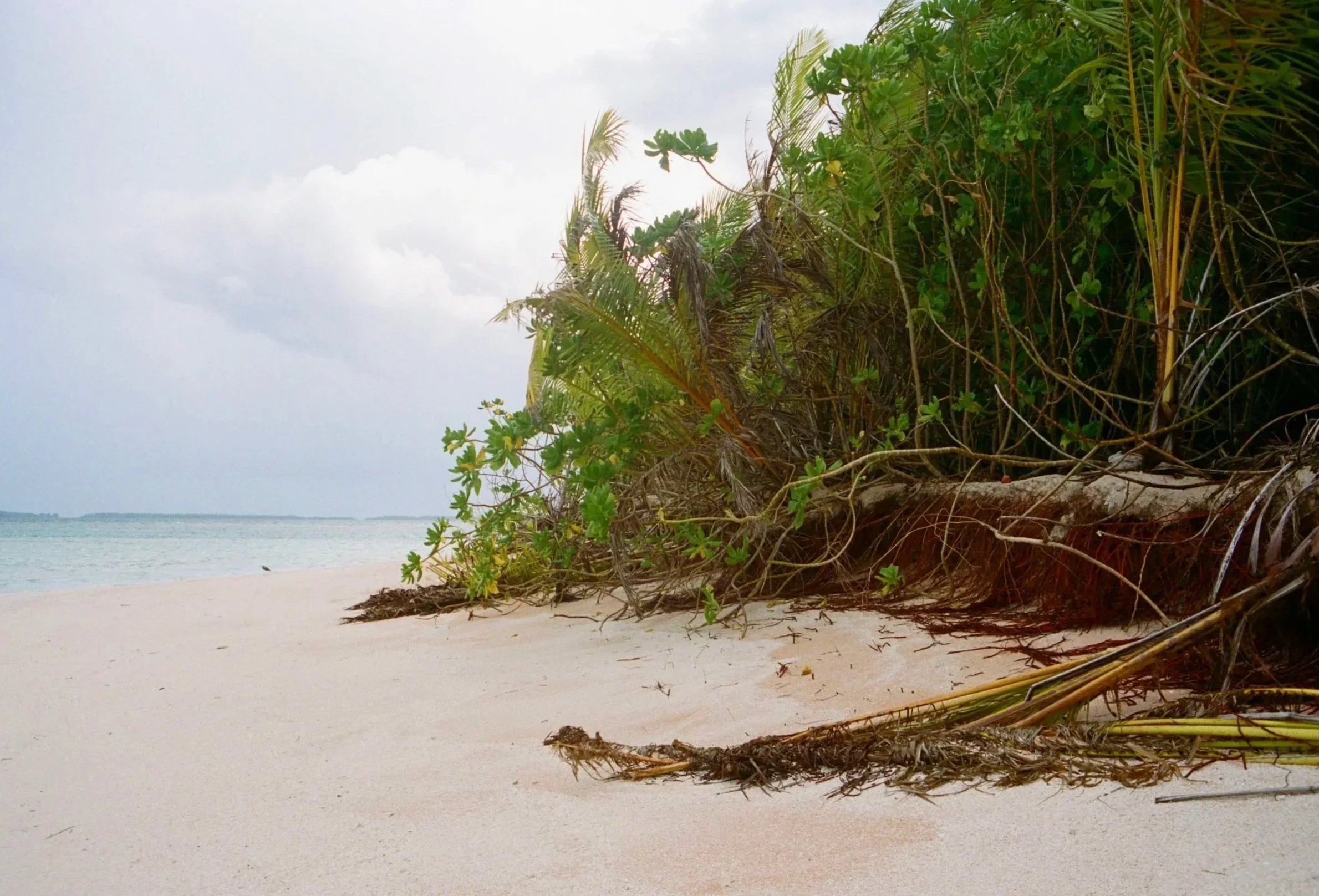
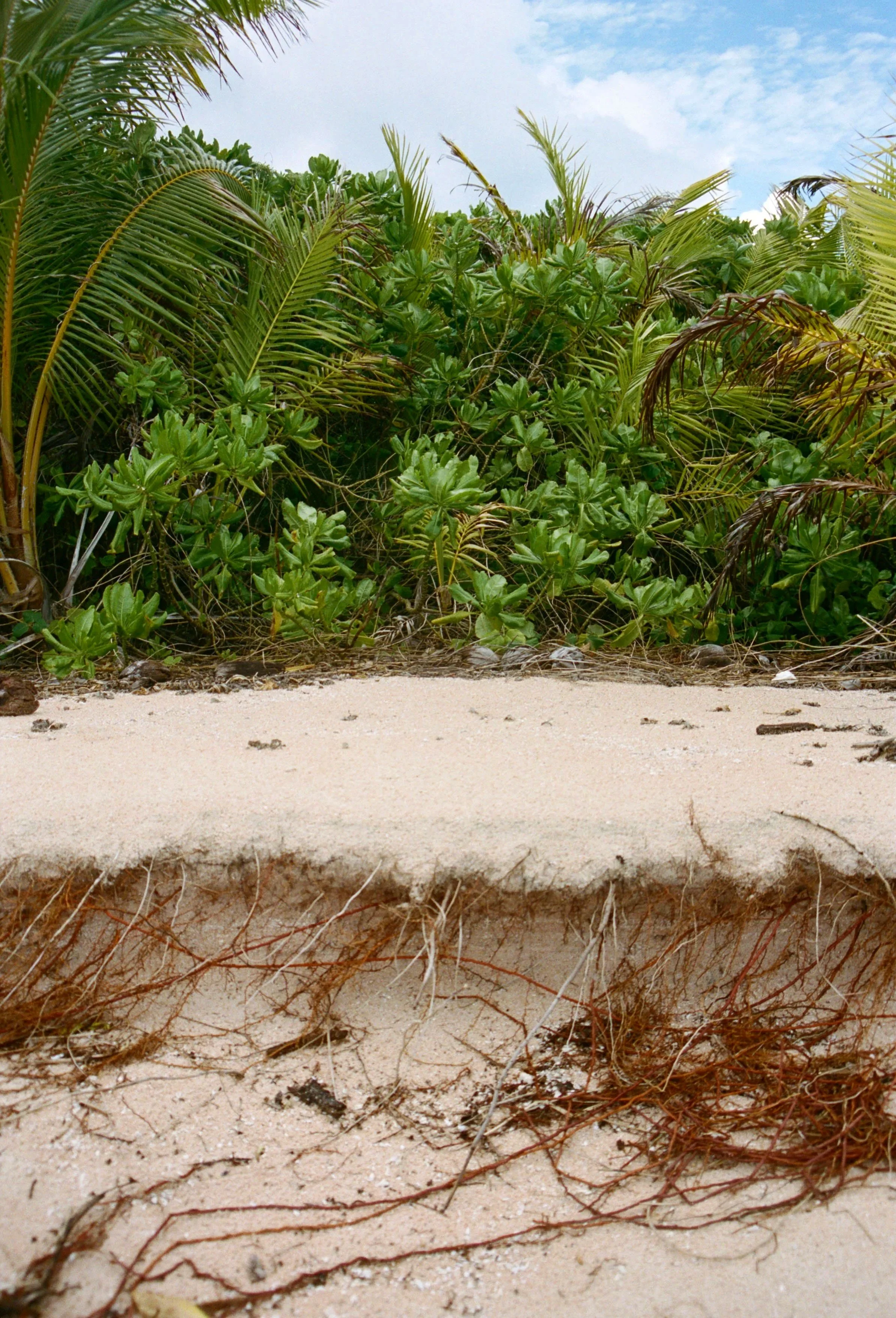
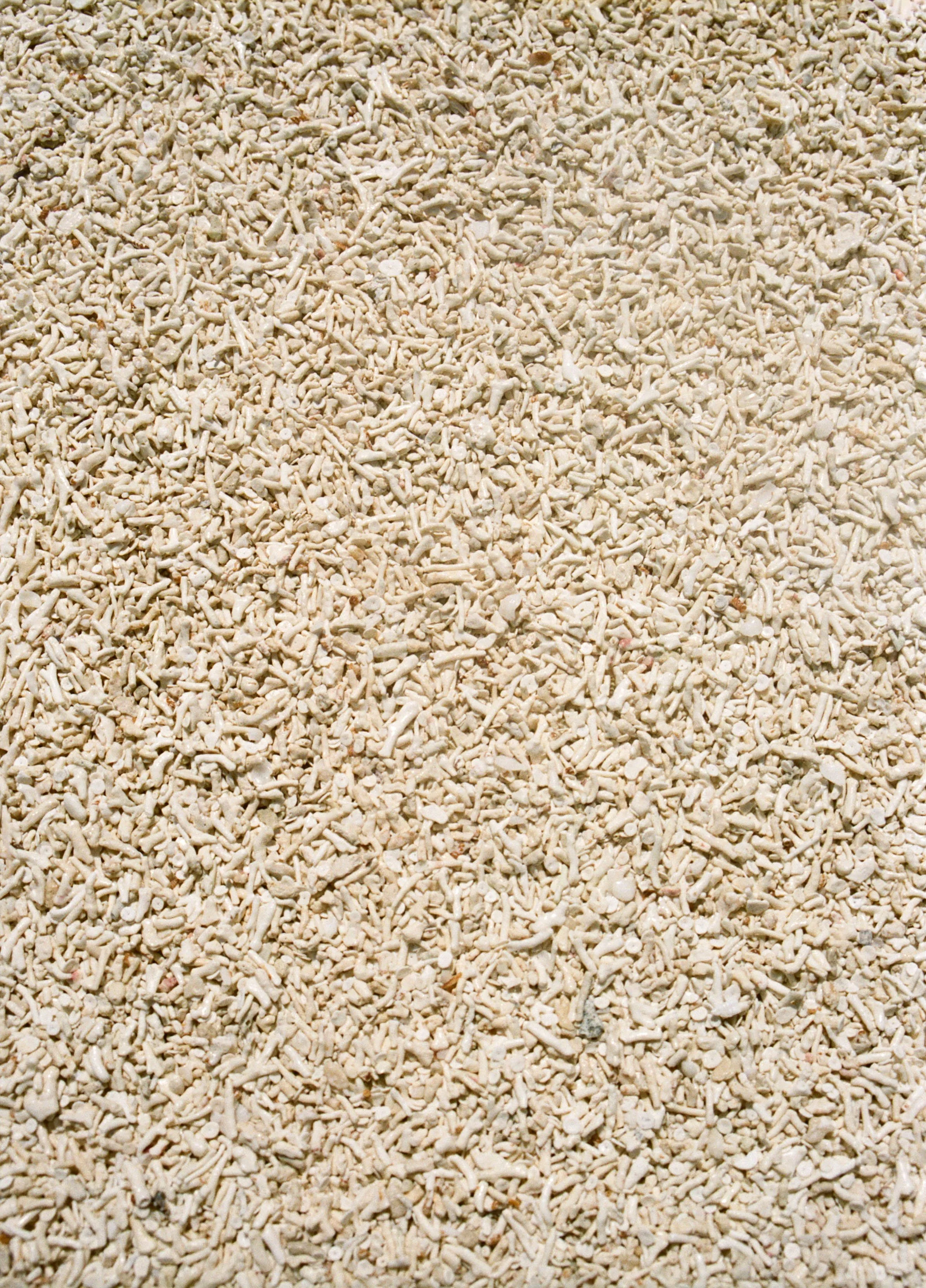
Exposed plant roots in the Funafuti Conservation Area, where receding sand reveals the atoll’s gradual erosion.
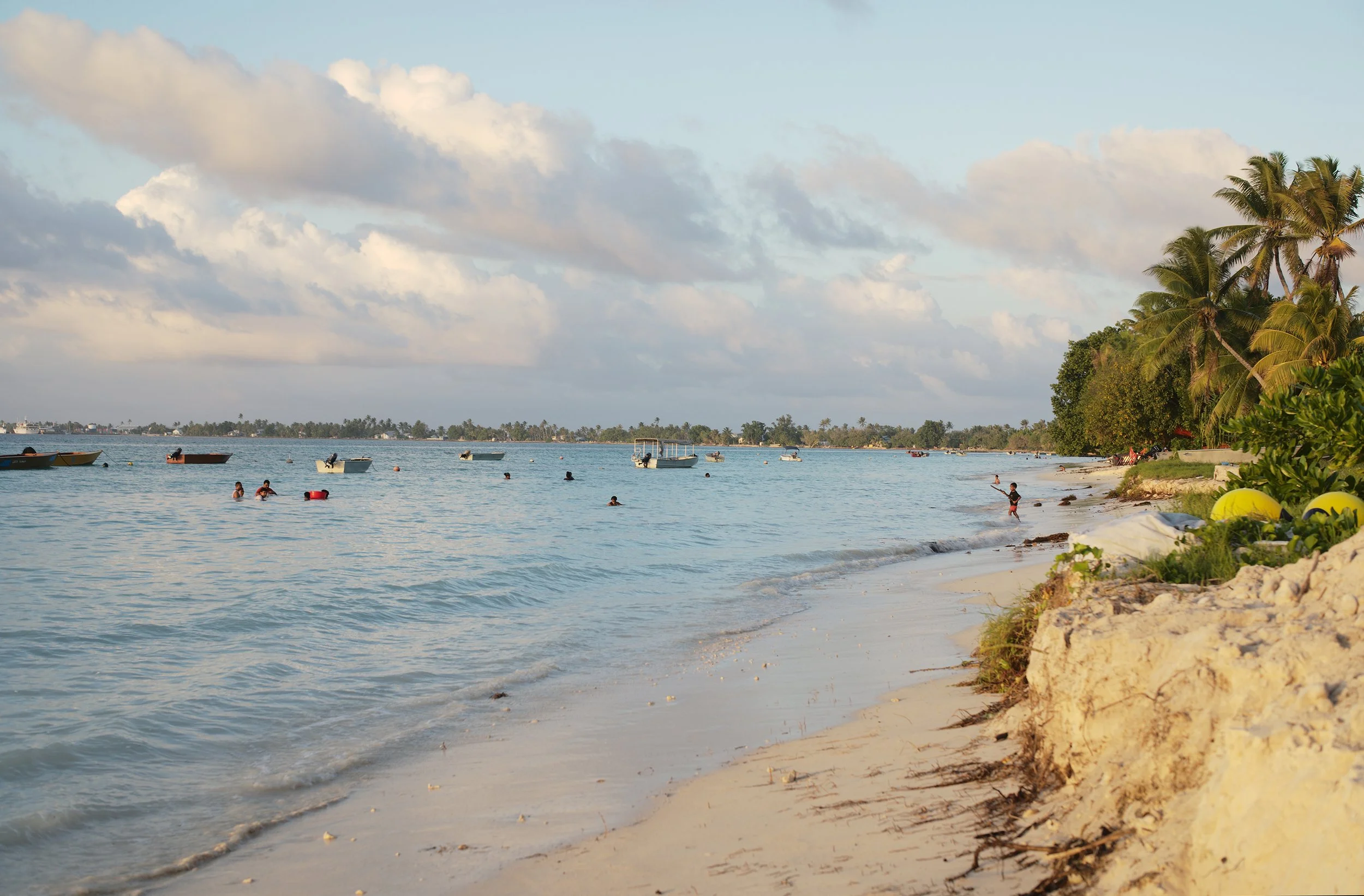
At sunset, residents swim into the Funafuti lagoon to enjoy some fish and coconuts carried in a floating plastic basin, while the undercut shoreline and exposed roots reveal the gradual erosion reshaping Fongafale’s coast.

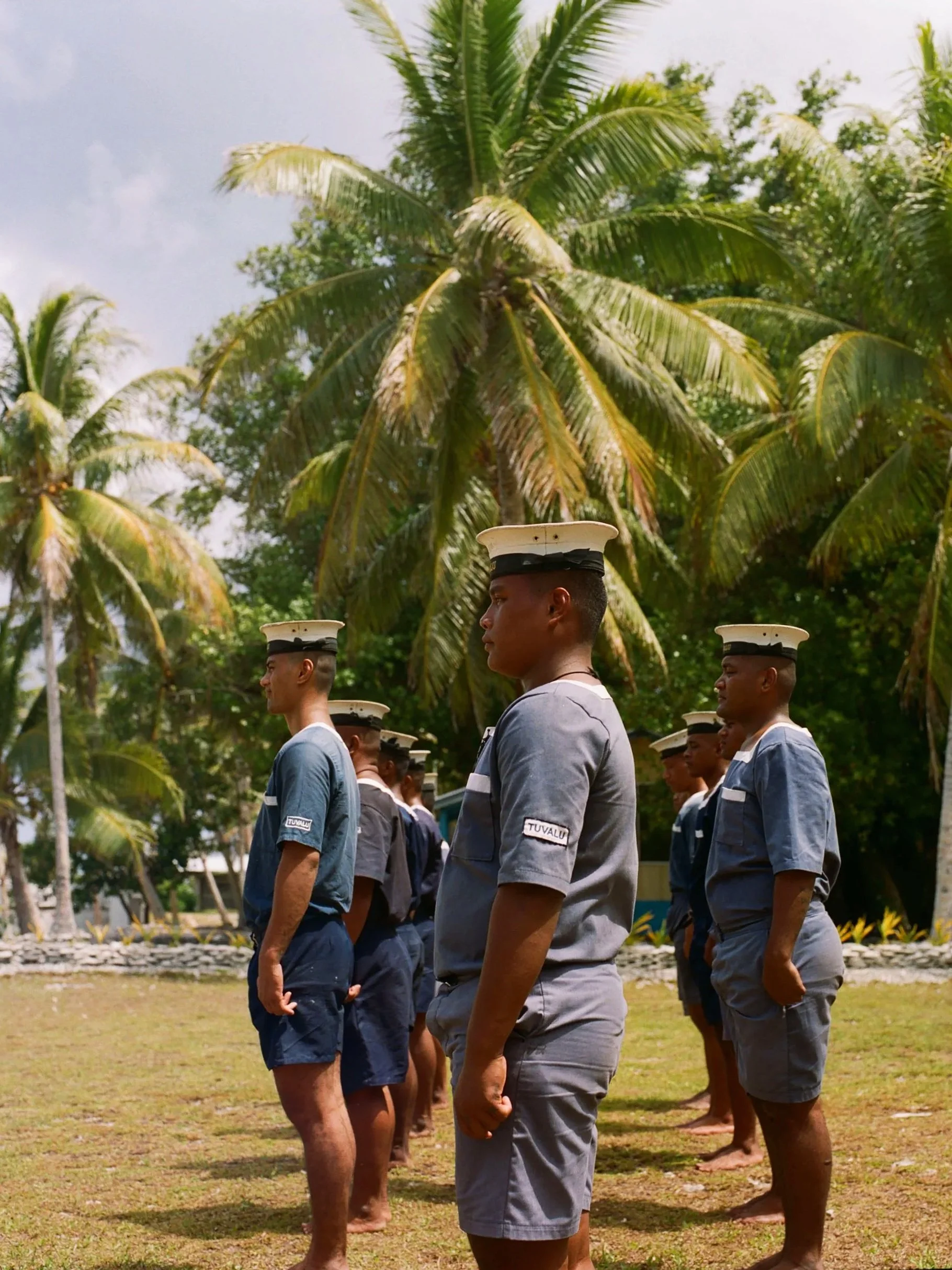
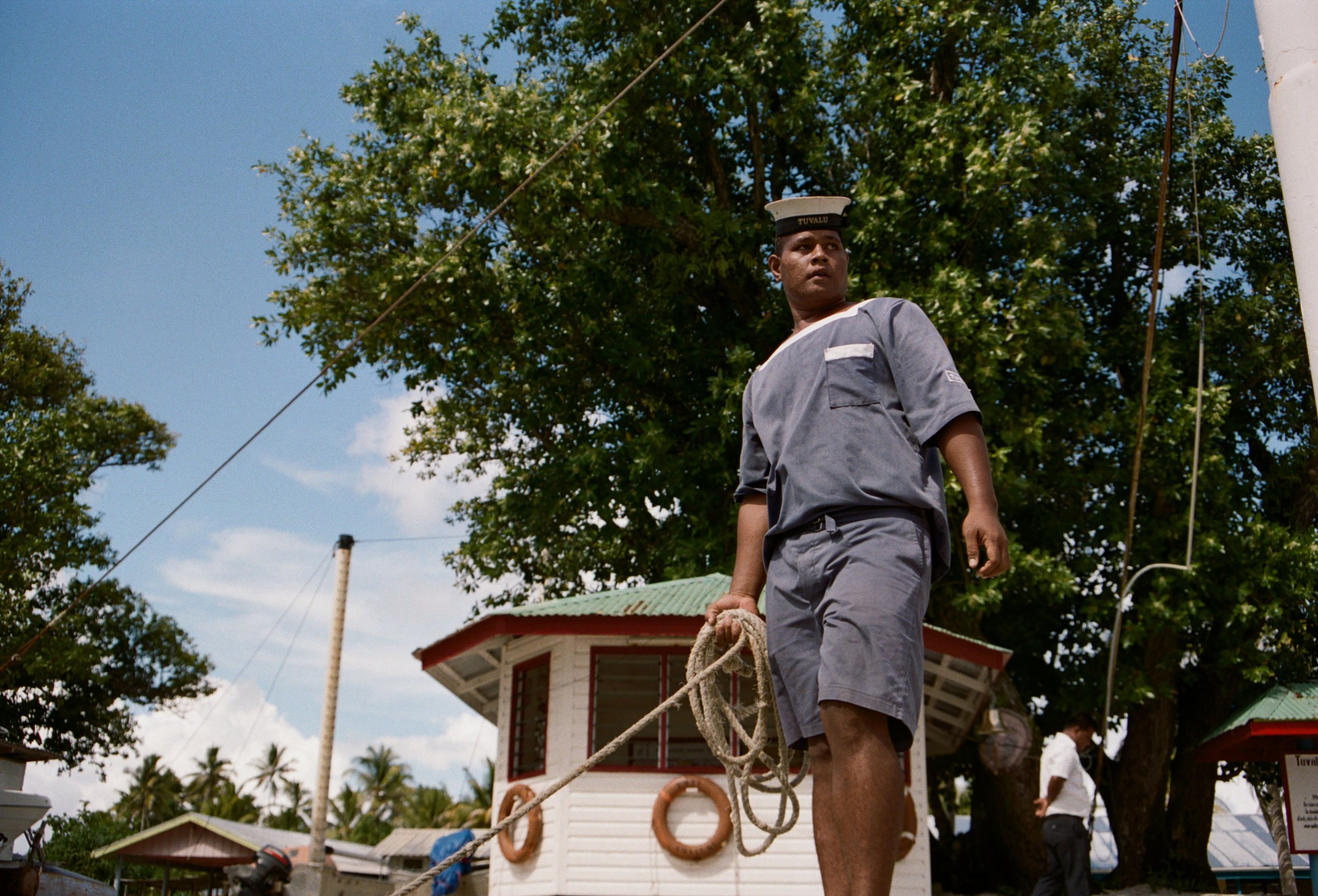
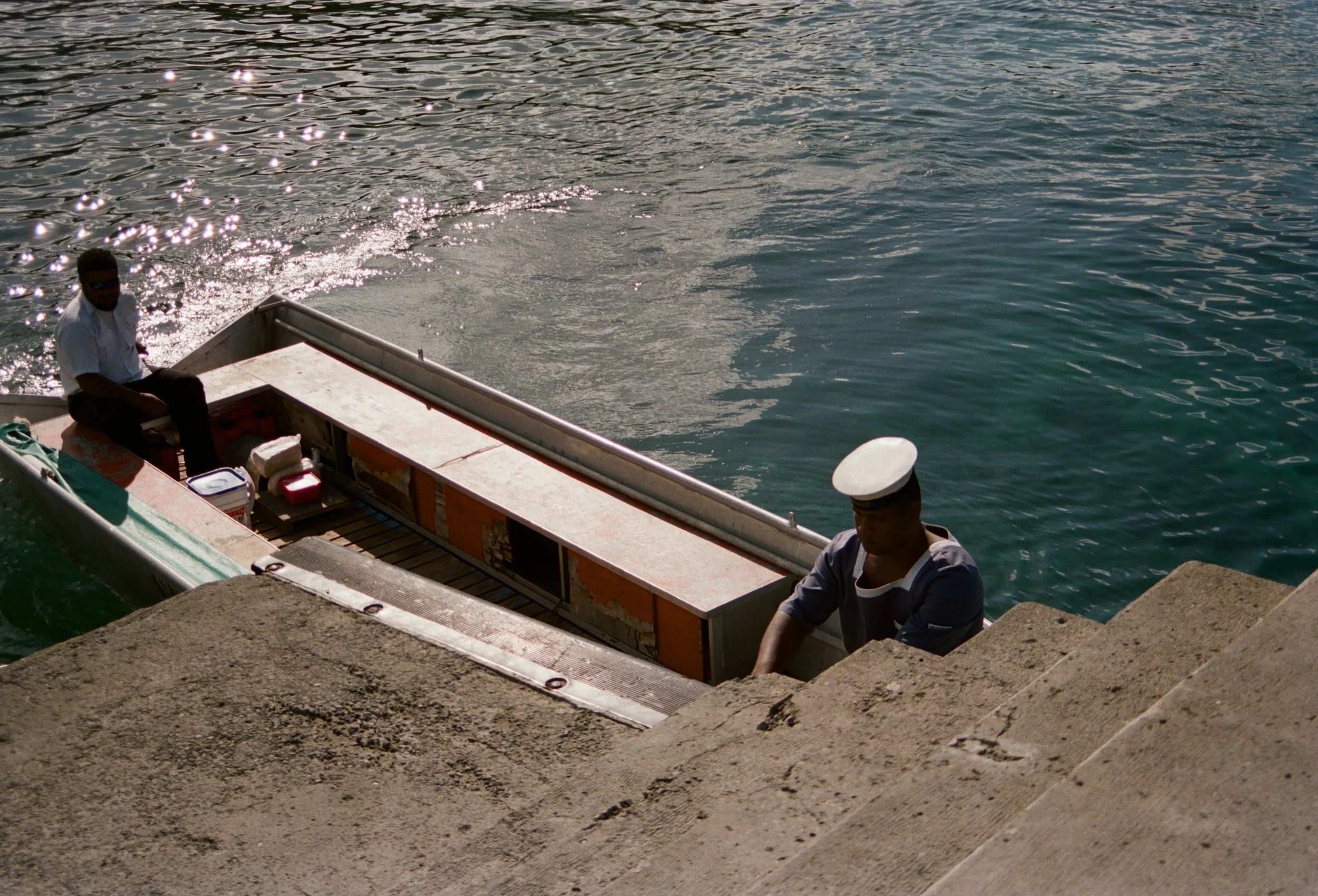
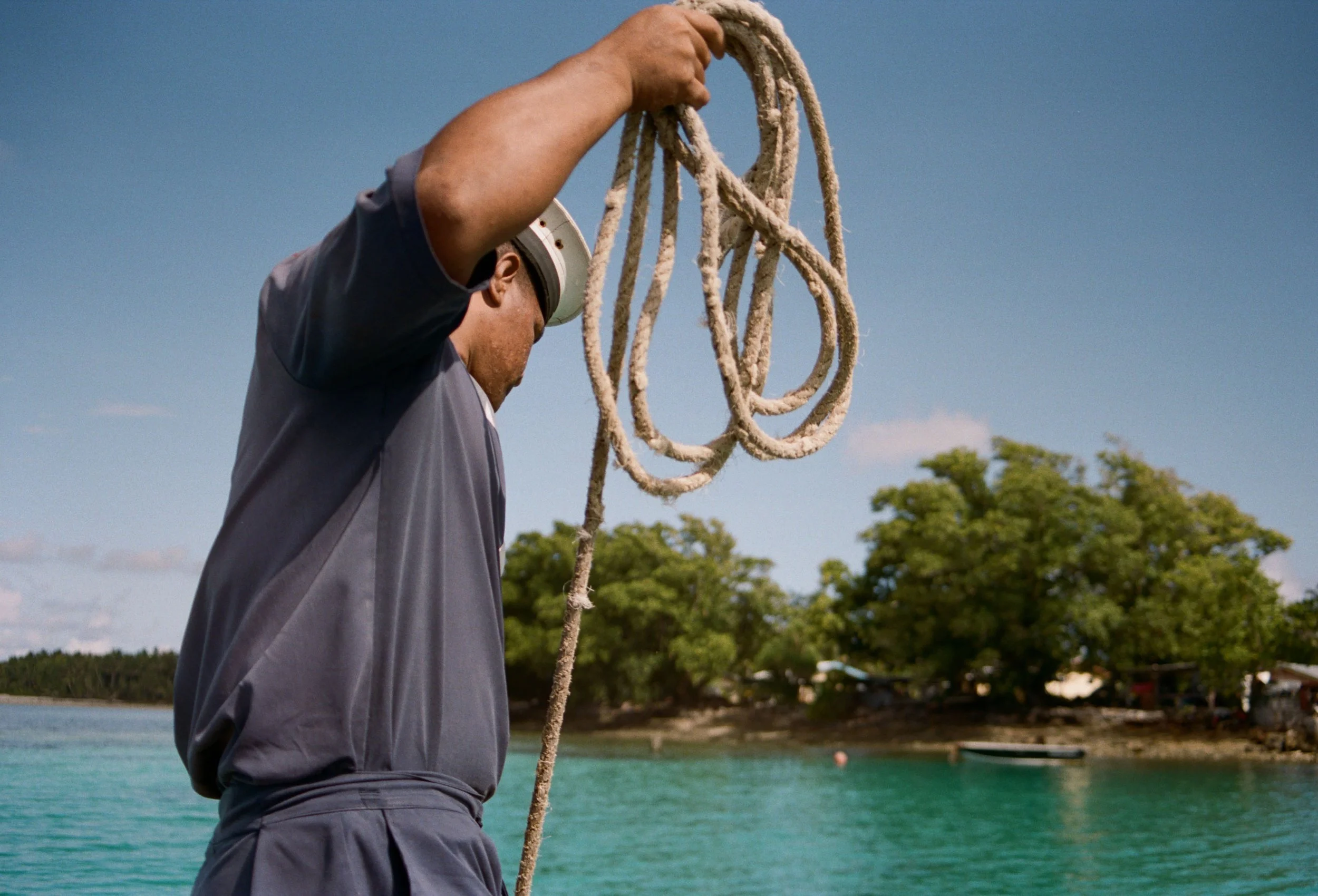
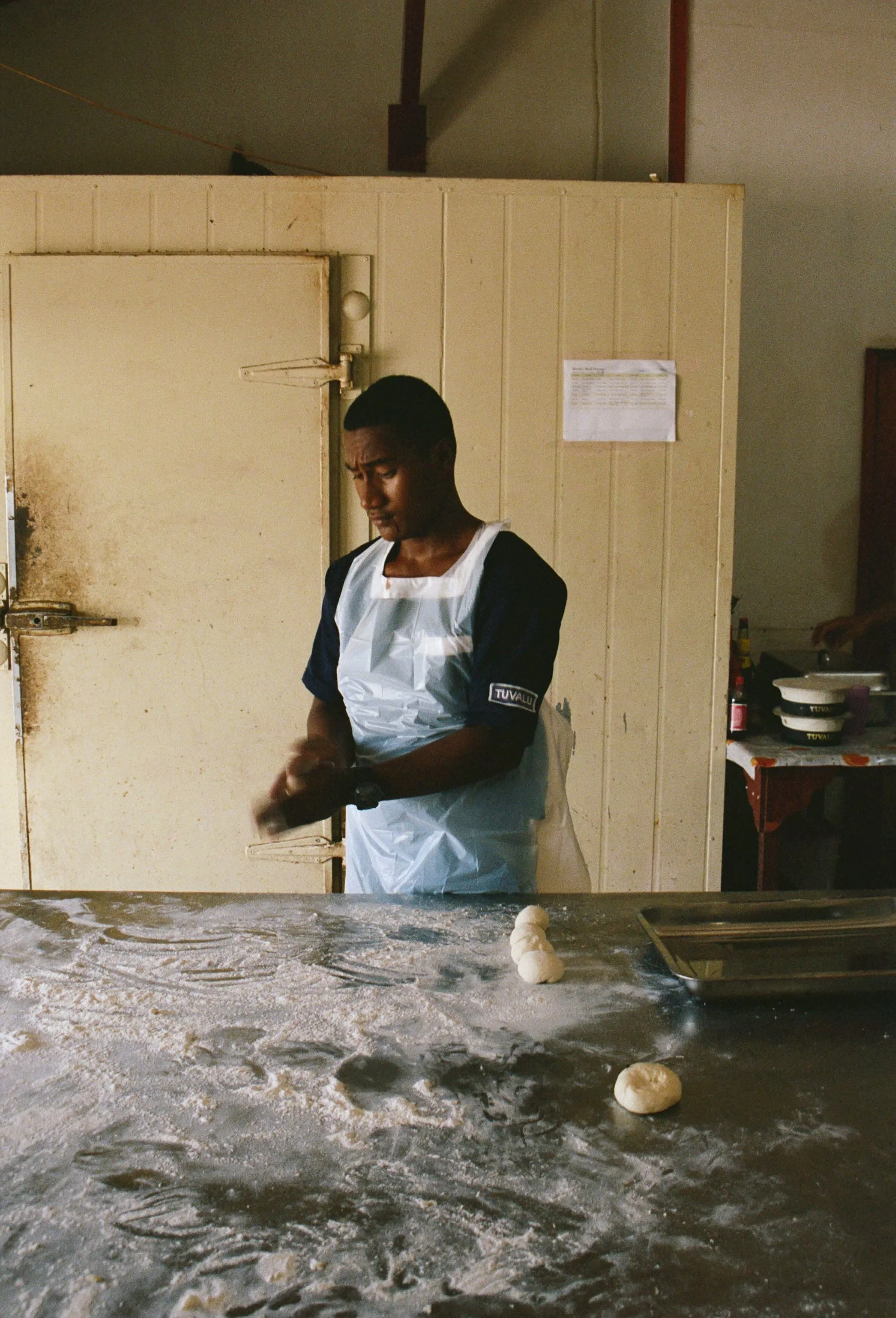
On Amatuku, a small islet within Funafuti Atoll, the Tuvalu Maritime Training Institute (TMTI) prepares cadets for careers aboard international merchant vessels. Established in 1979 as the Tuvalu Maritime School, it has trained generations of seafarers in maritime operations, engineering and safety at sea. Its graduates, and the money they send home while working abroad, have long played an important role in Tuvalu’s economy.
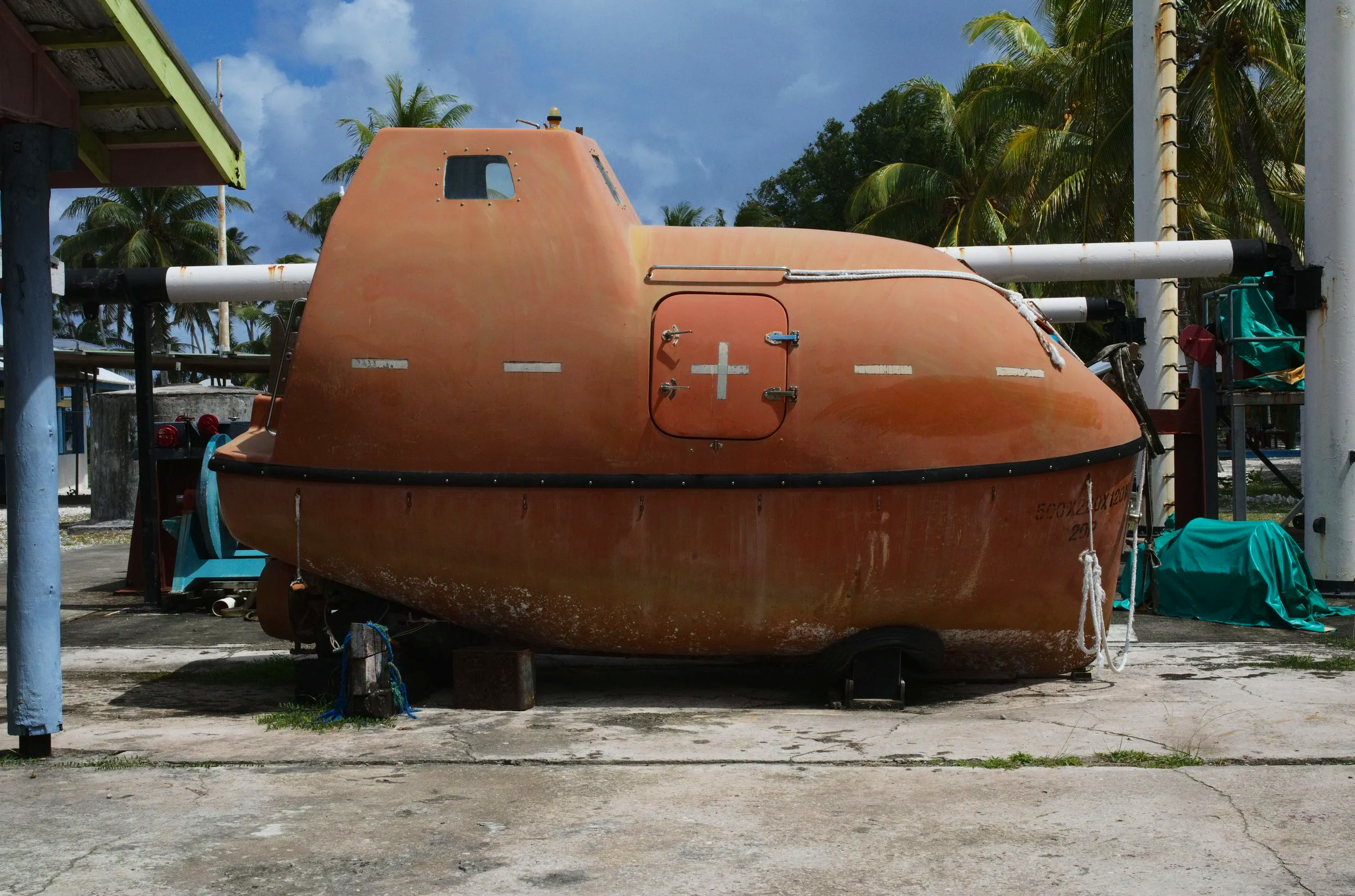
Top: A totally enclosed motor lifeboat. Cadets learn emergency evacuation, launching, survival-craft operation, and rescue procedures at TMTI.
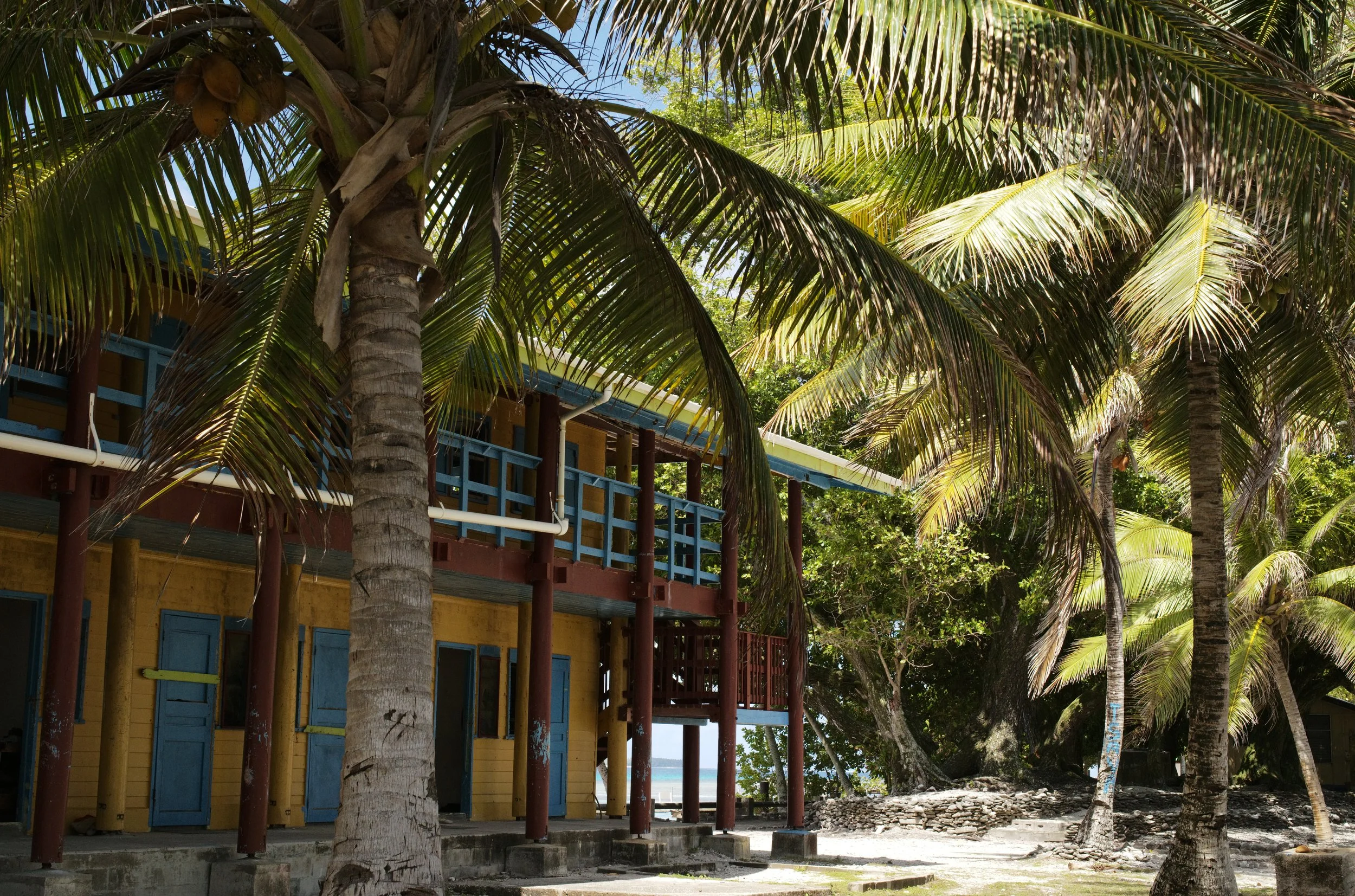
Residential quarters for TMTI’s small cohort of cadets undertaking an eight-month maritime training program.
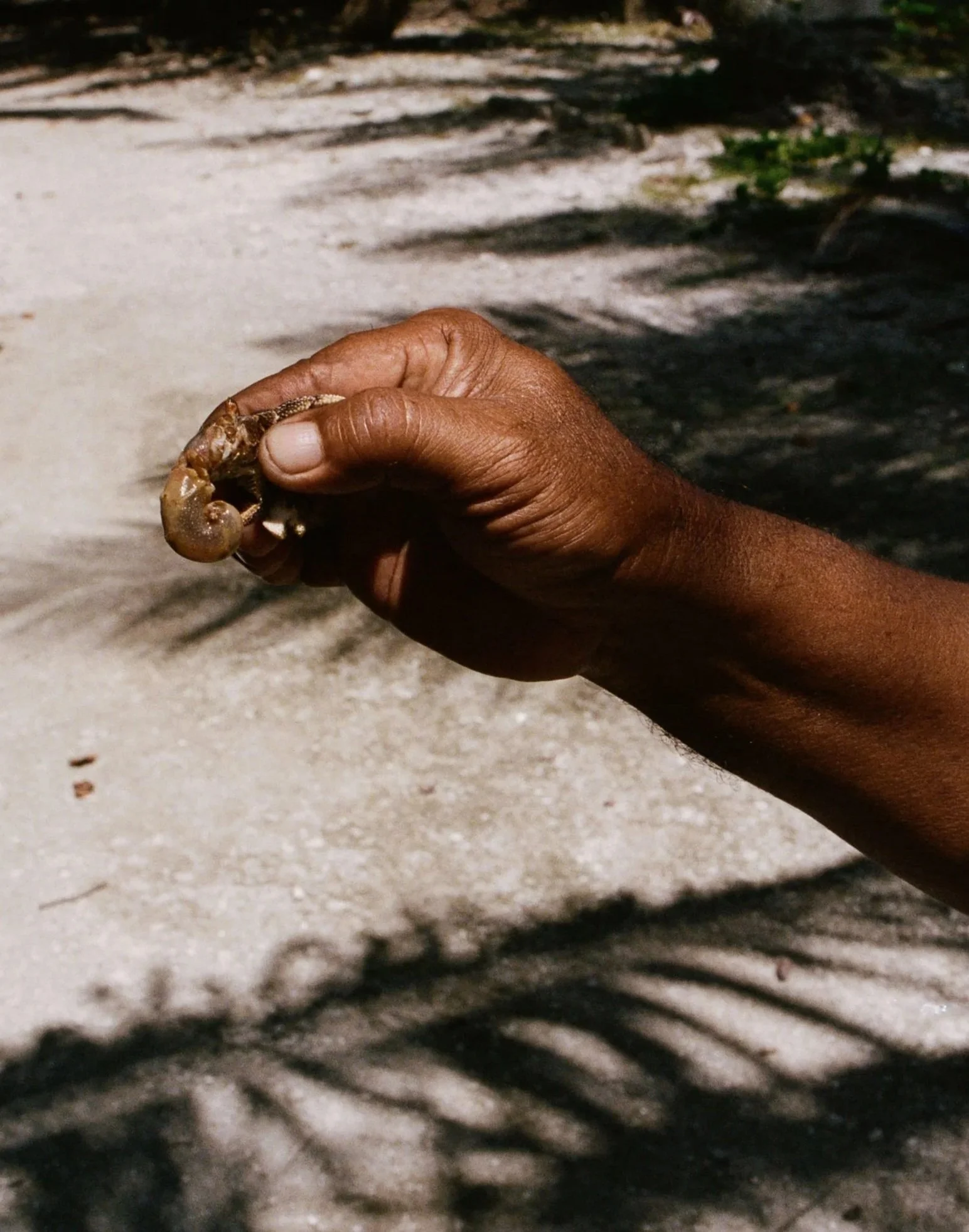
A land hermit crab, known locally as uga, removed from its borrowed shell. According to our guide, it can be eaten raw.

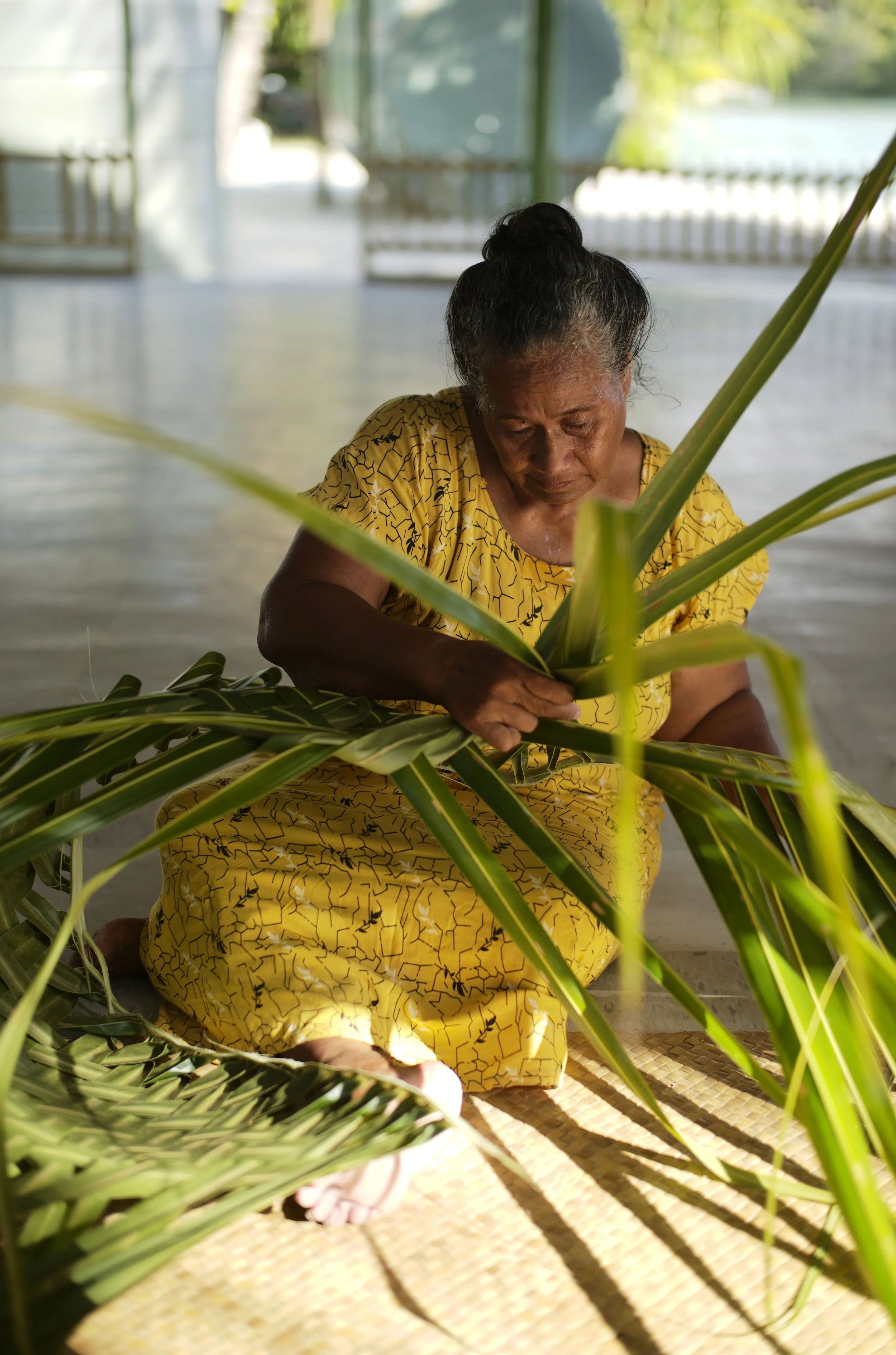
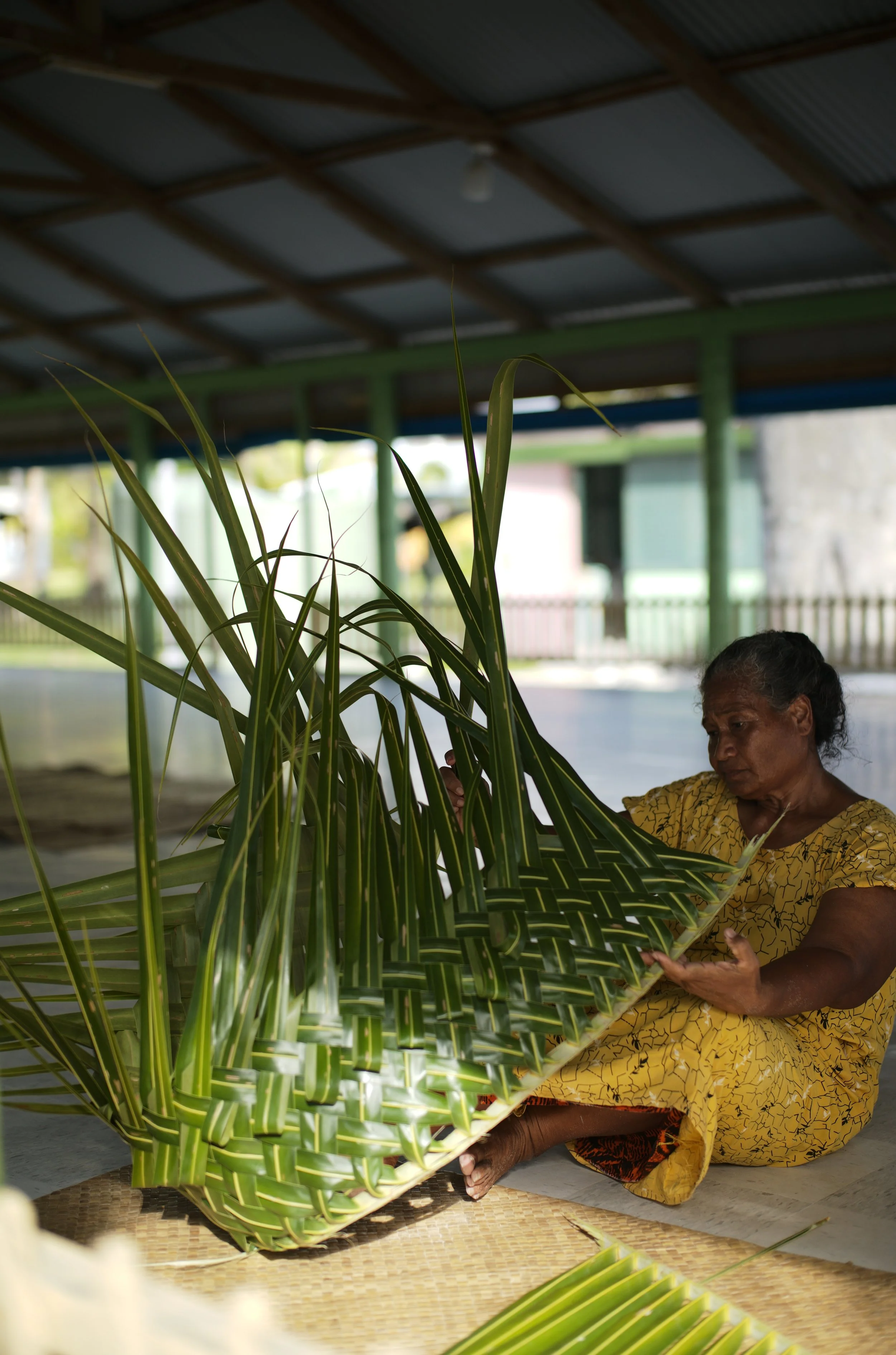
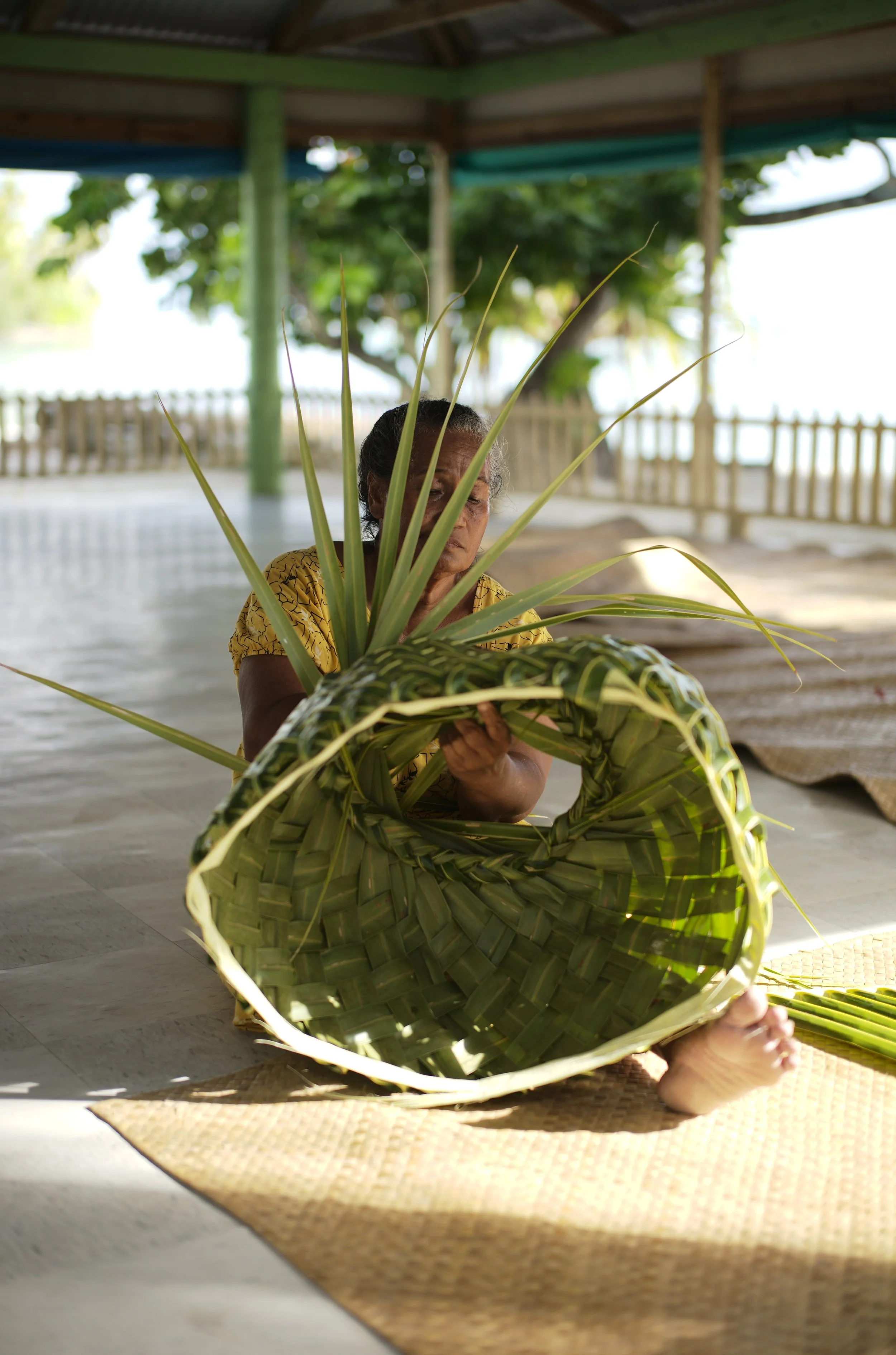
During the COVID-19 pandemic, families moved from densely populated Fongafale to Funafala, a quieter islet within the Funafuti Atoll. Some remained, expanding a small community whose roots predate the pandemic. Below, a local woman weaves a basket out palm tree leaves harvested on the islet.
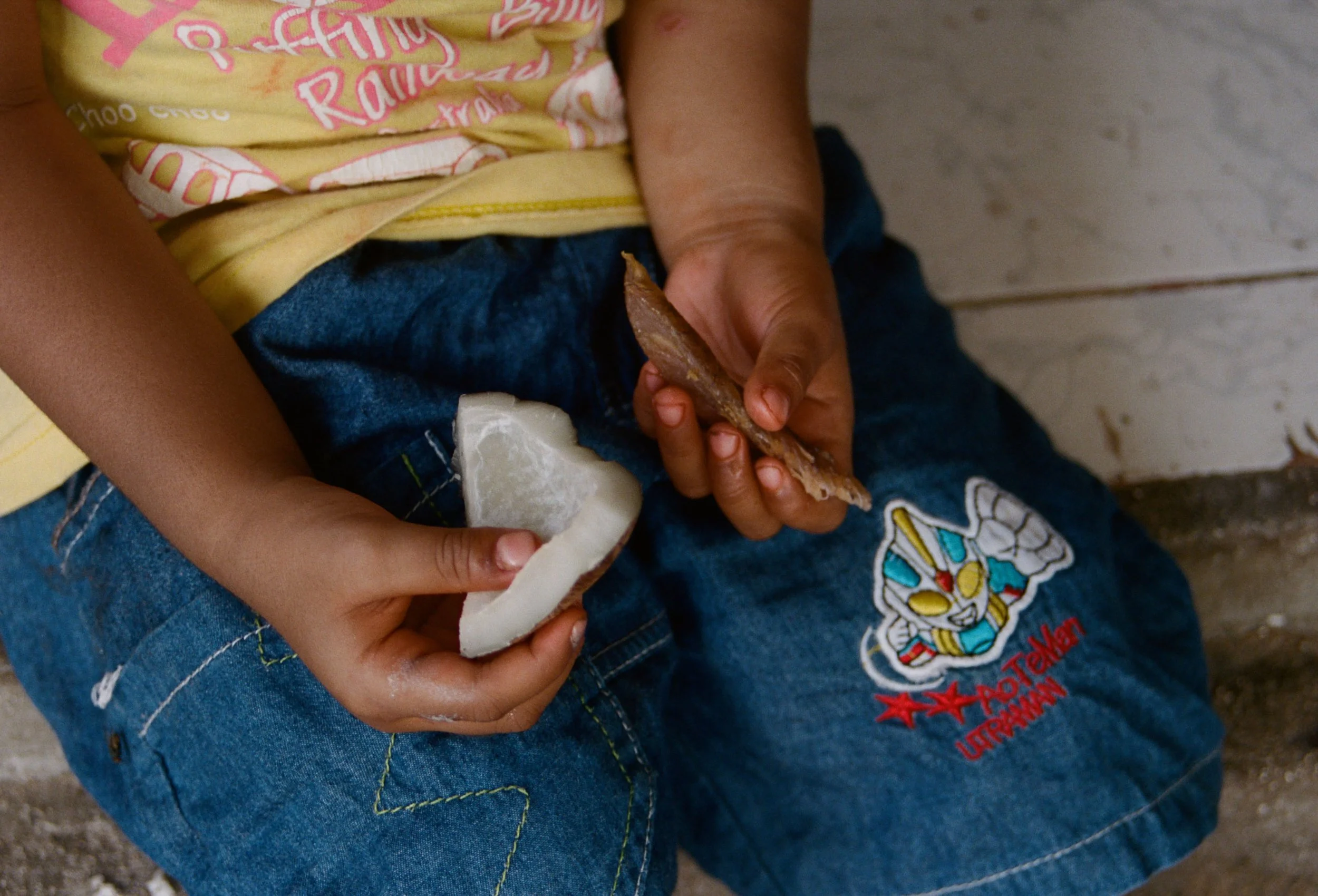
Texture of a coconut apple when pulled apart.
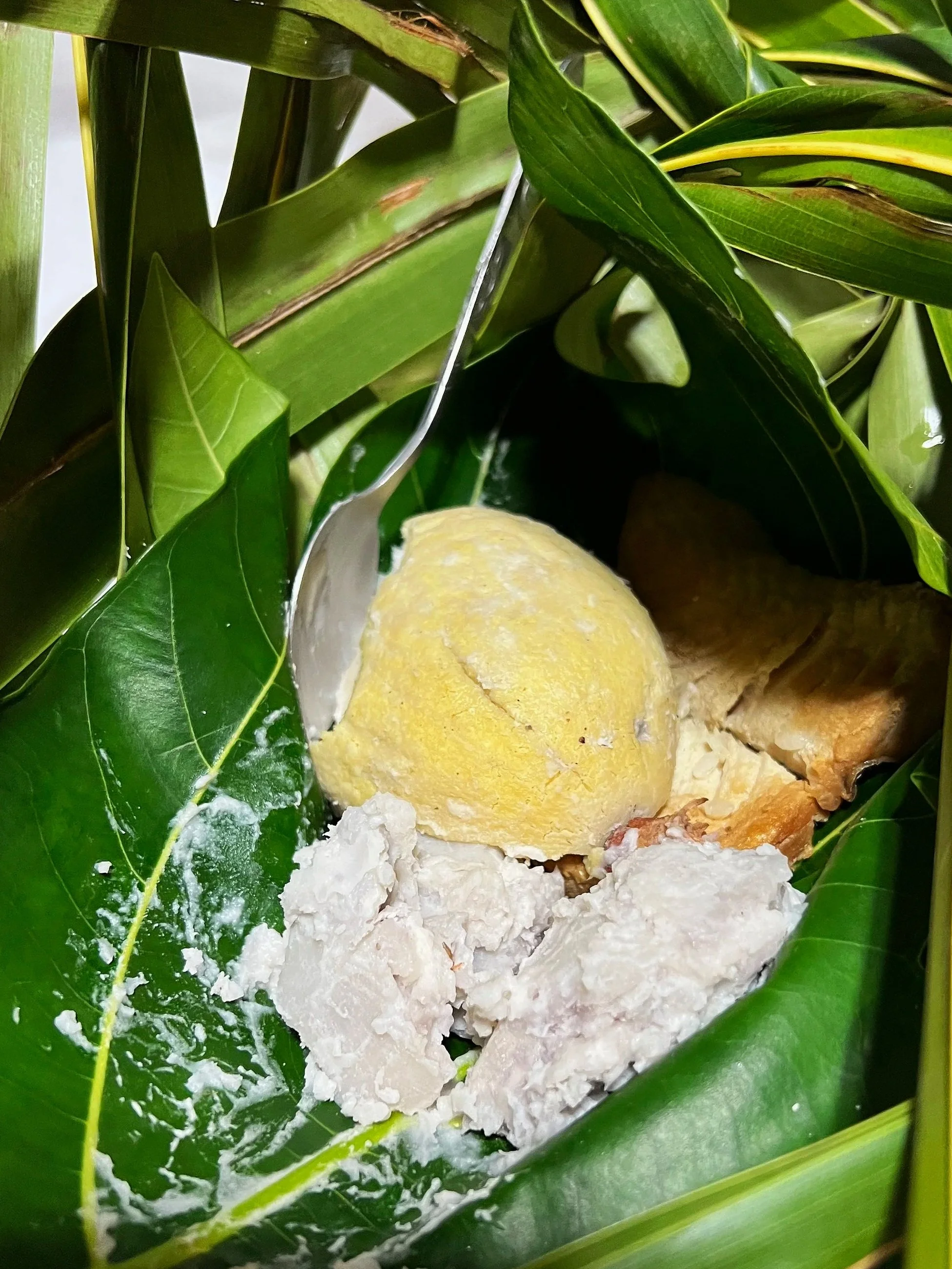
Creamy swamp taro (pulaka), coconut apple, and pan fried fish served on a nonu leaf inside a basket woven from fresh coconut-palm fronds.
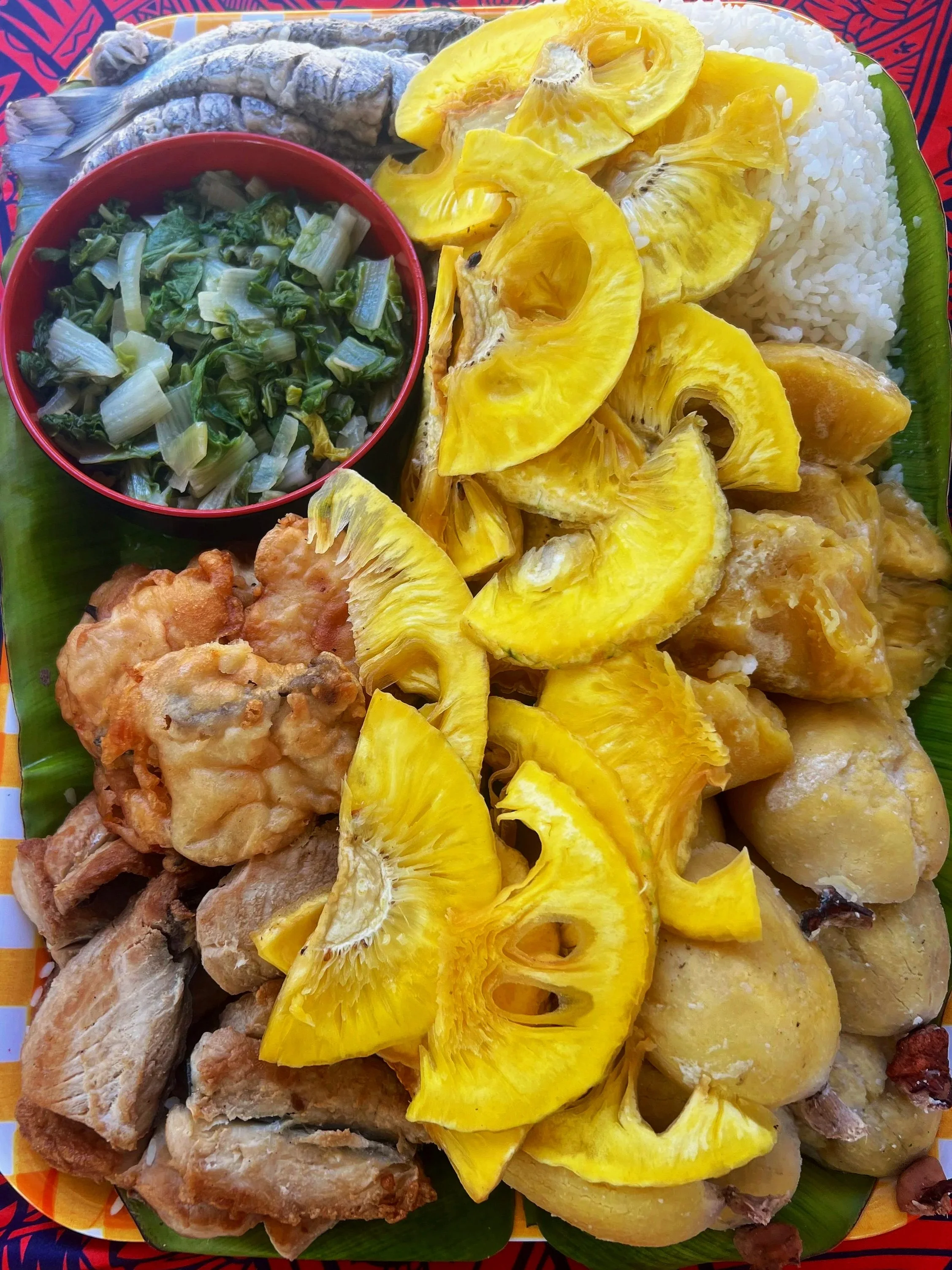
Traditional food prepared by the locals on Funafala, including local fish, greens, rice, coconut apple, and sliced pandanus fruit.
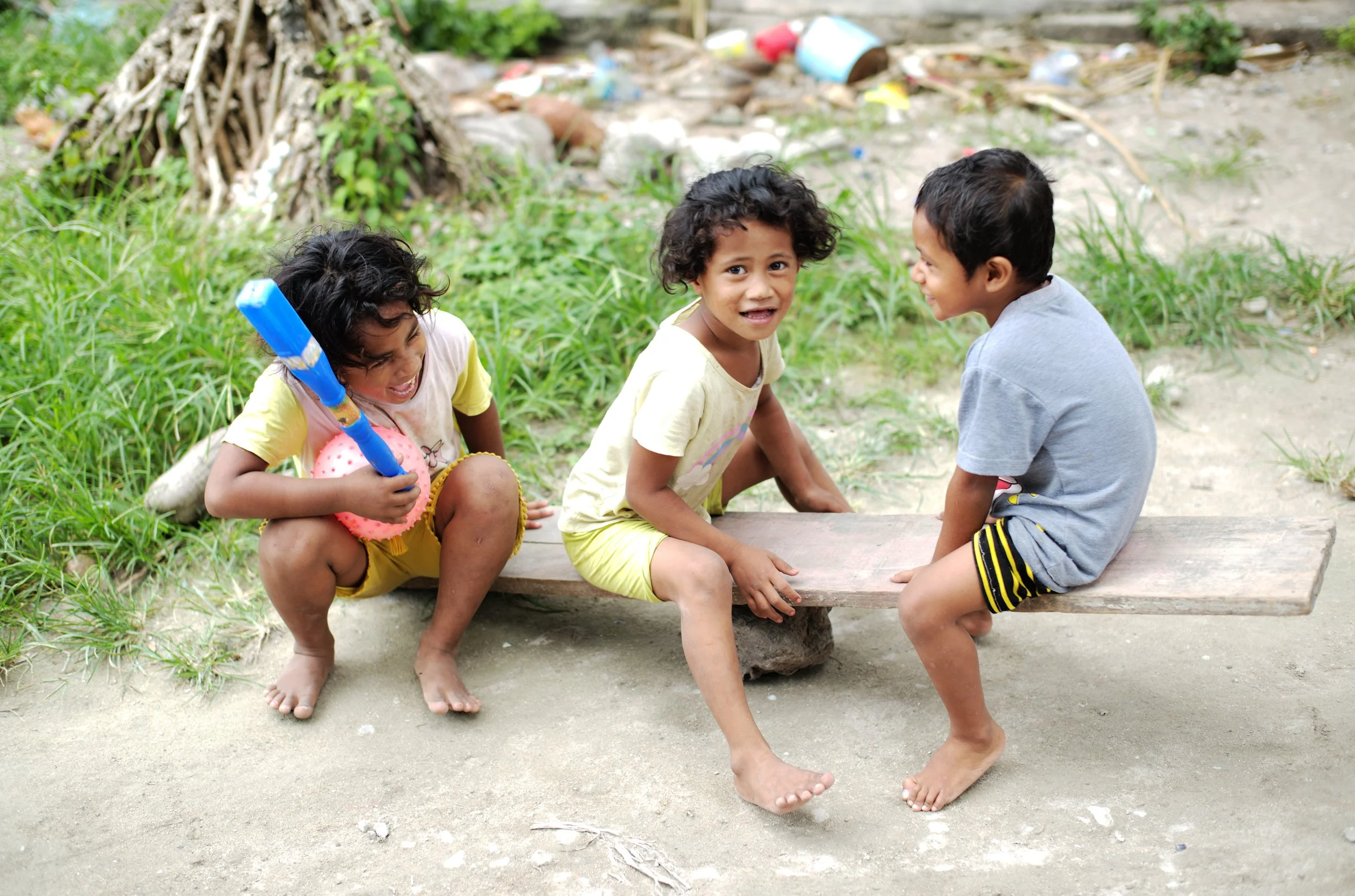
One afternoon, I tried mashed pulaka mixed with fresh coconut cream. It was rich, earthy, sweet, nutty, and unlike anything I had tasted before. Then I tried a coconut apple, the sponge-like heart of a germinating coconut. Light and airy, yet somehow saturated with sweet nectar, it had a texture I had never encountered before and have not experienced since. I wanted to catalogue that sensation forever. I think about the fatele, a Tuvaluan performance of song and dance in which voices, rhythmic clapping, and pounding feet gradually built into something so powerful that, when it ended, I felt almost euphoric, as though I had been carried somewhere outside myself. Then there are the children. Running down roads with their friends. Playing soccer on the airfield. Laughter echoing from the shore. There was an overwhelming feeling of safety in a tightly knit community where everyone seemed to know and care for one another. In the evenings, church songs drifted through the humid air. Everywhere we went, we were met with extraordinary kindness and warmth. These are not the details that appear in climate reports, but they are the details that make a place worth loving.
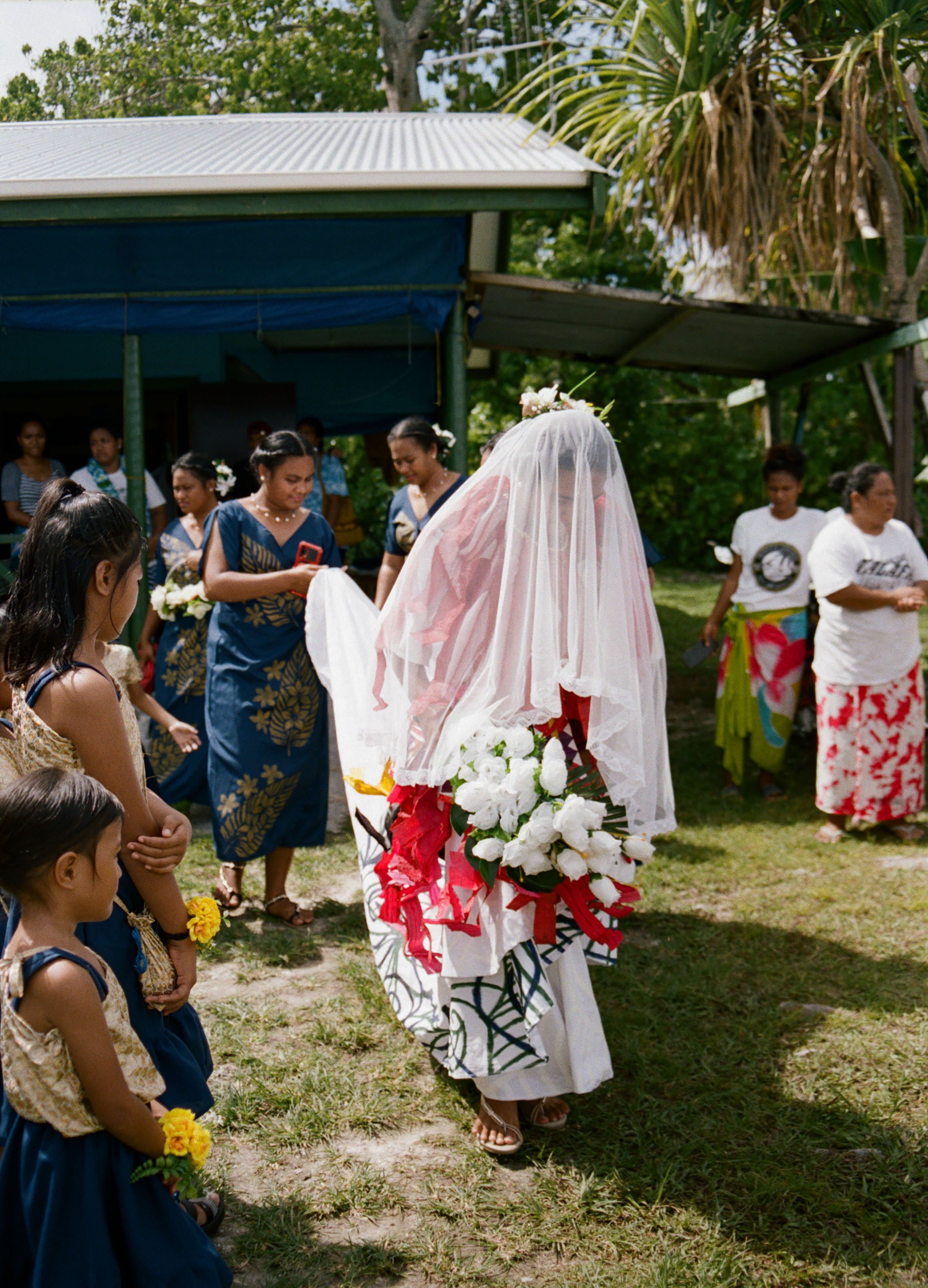
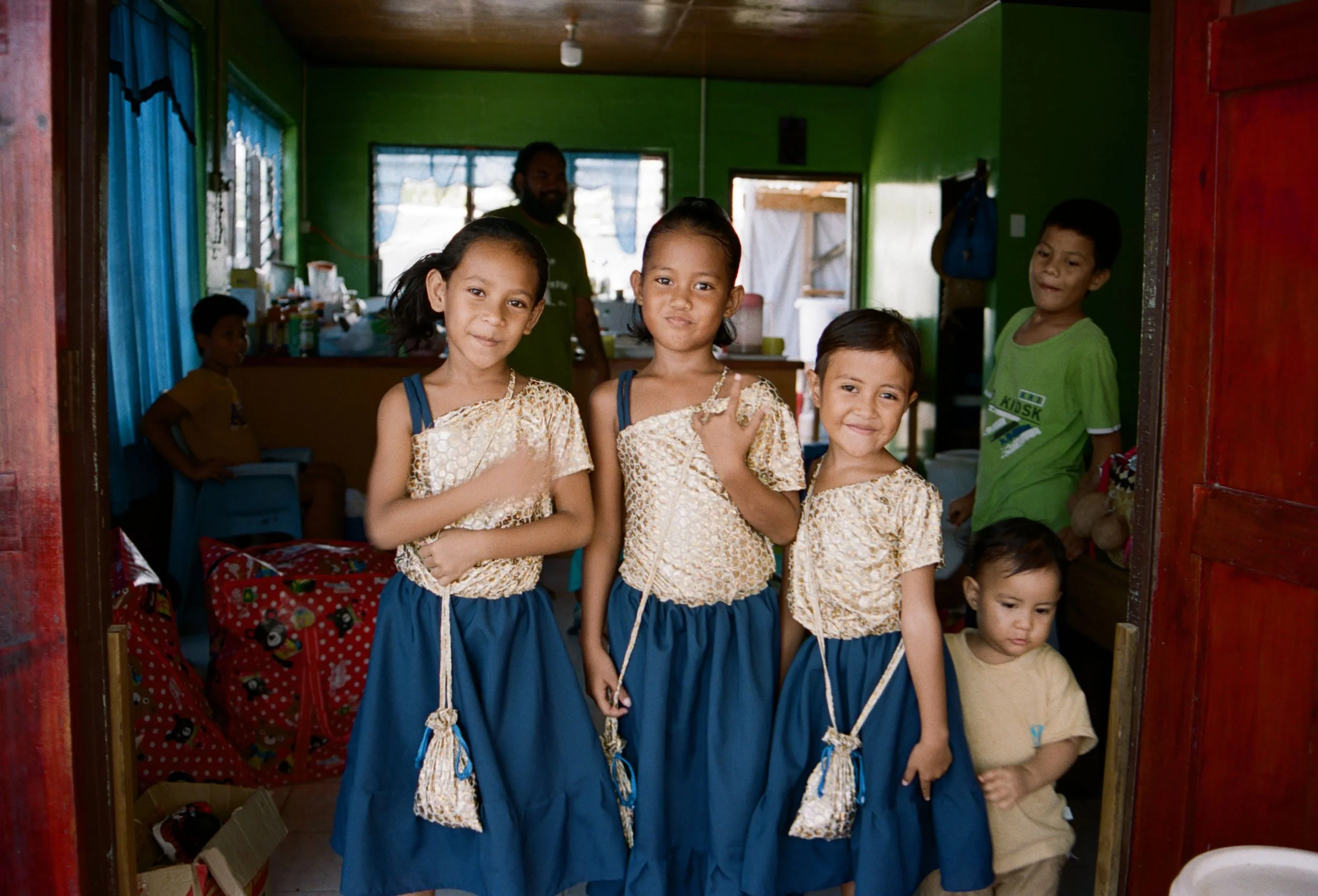
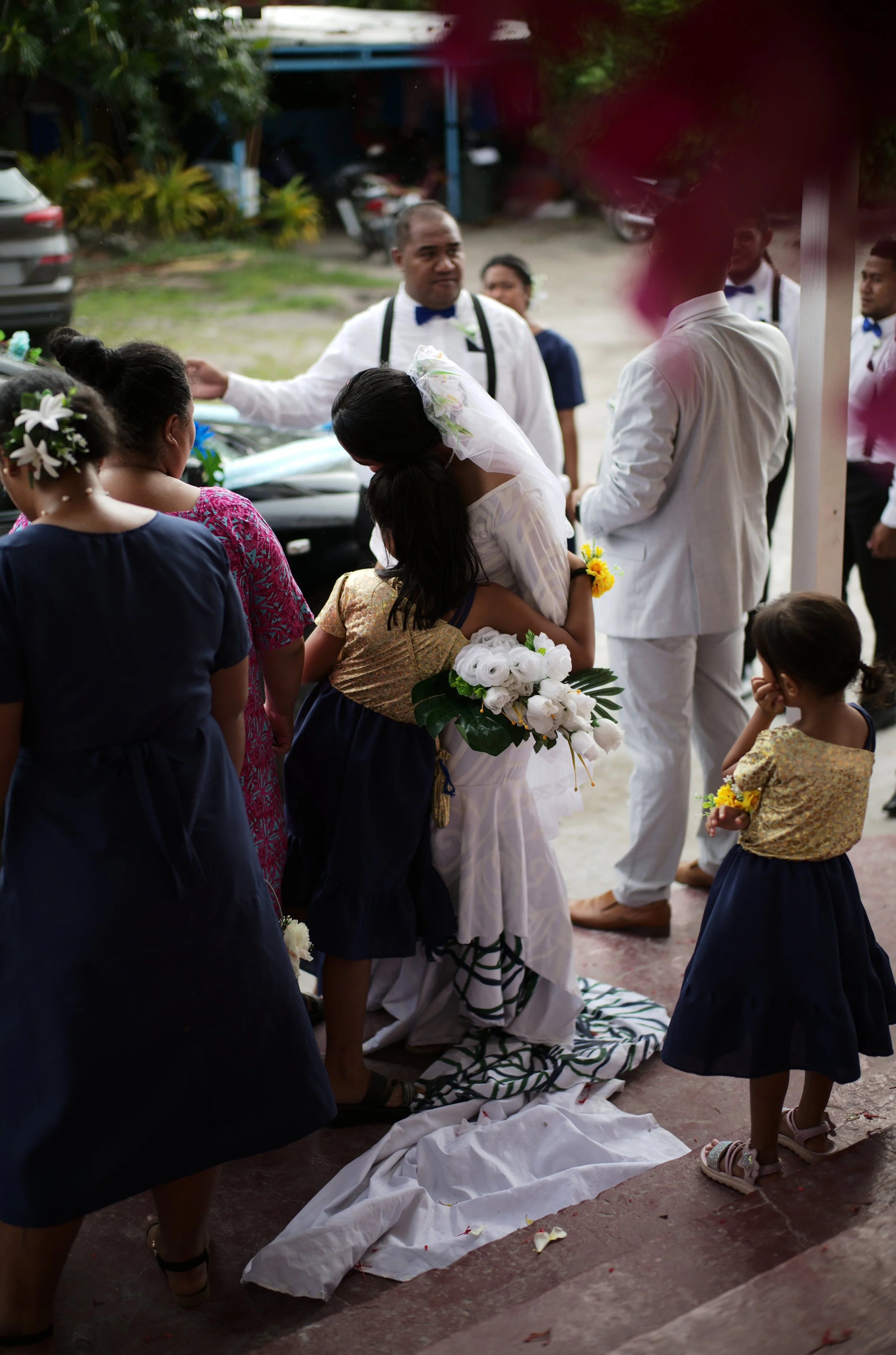
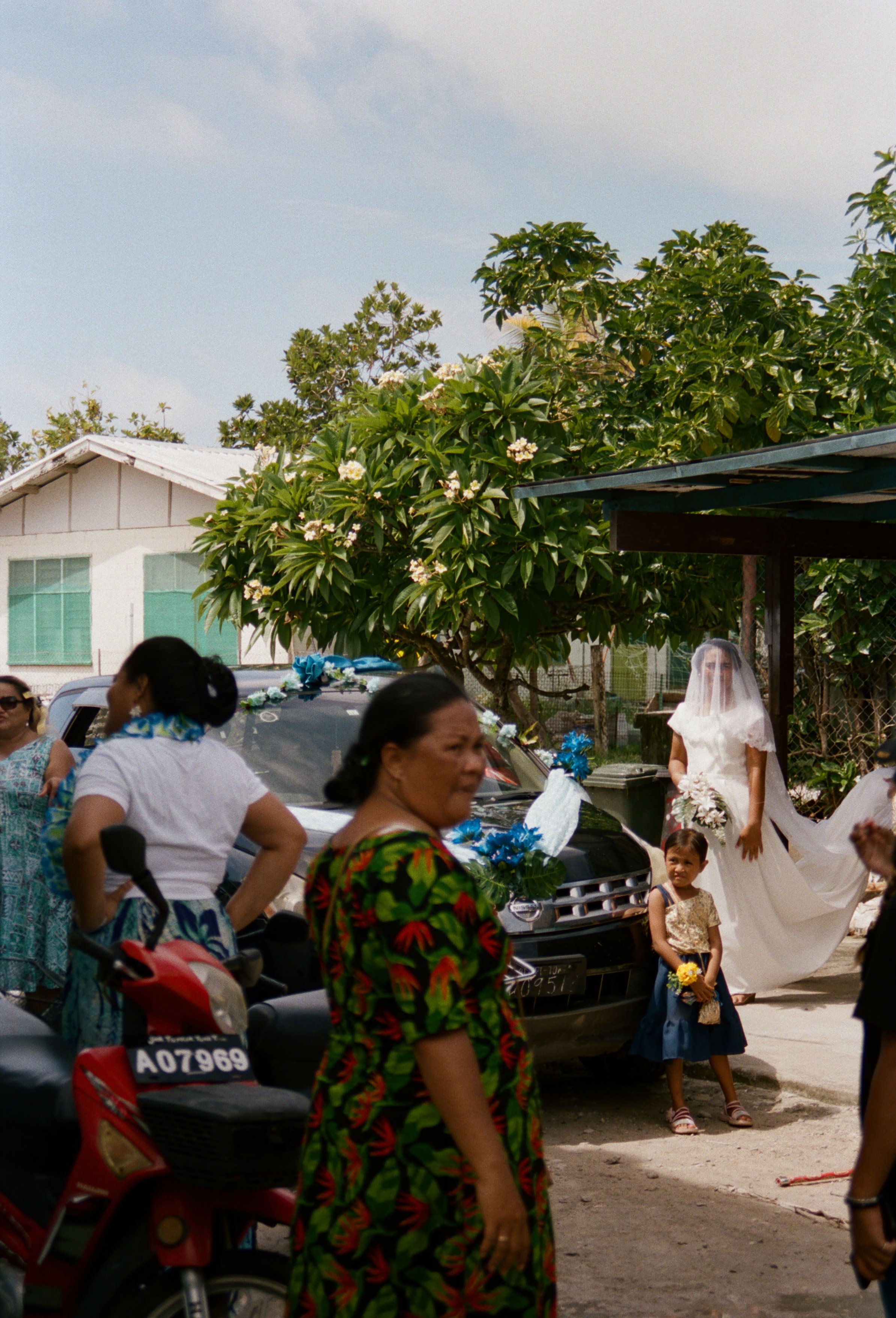
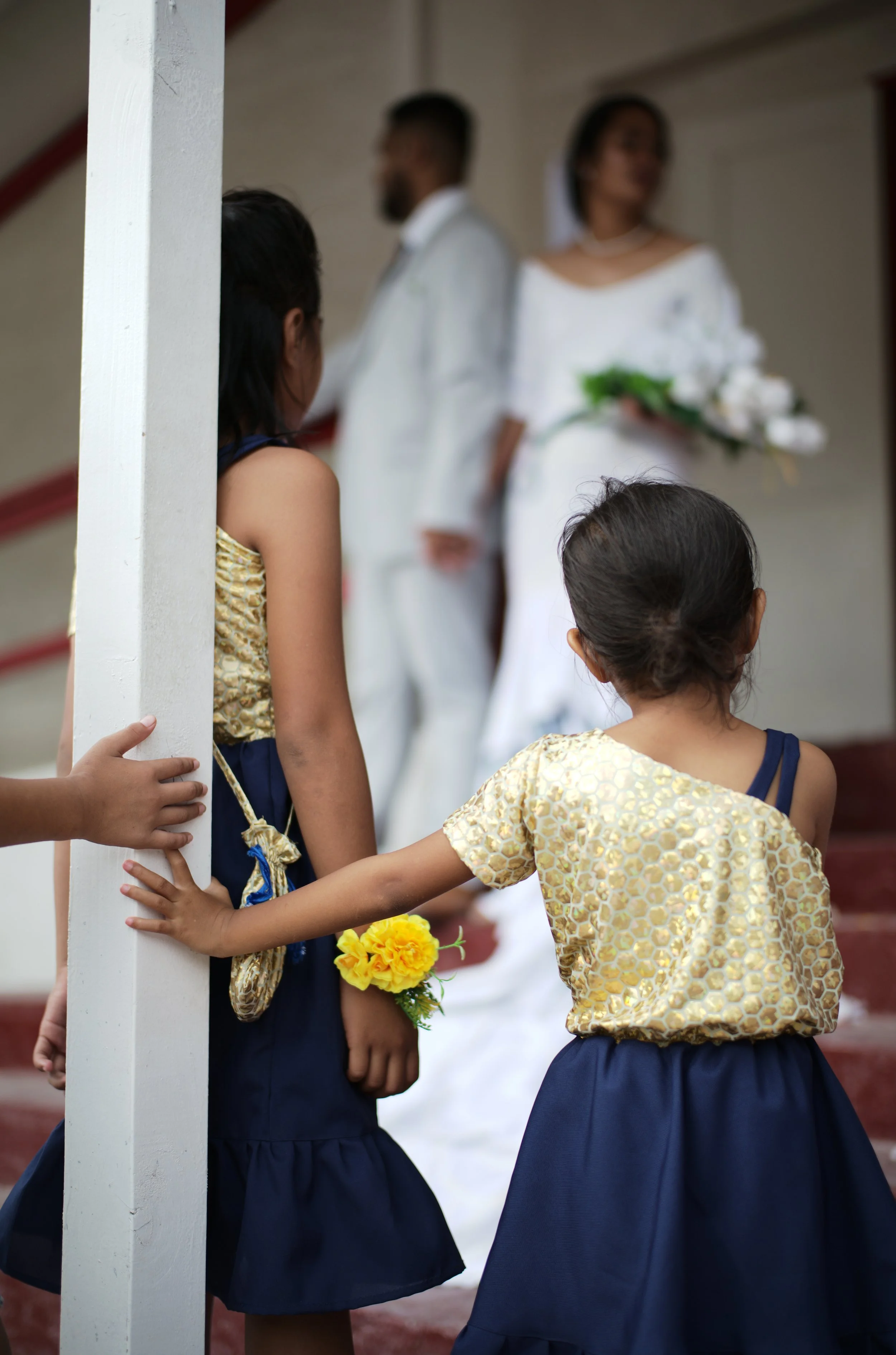
A WEDDING IN FONGAFALE
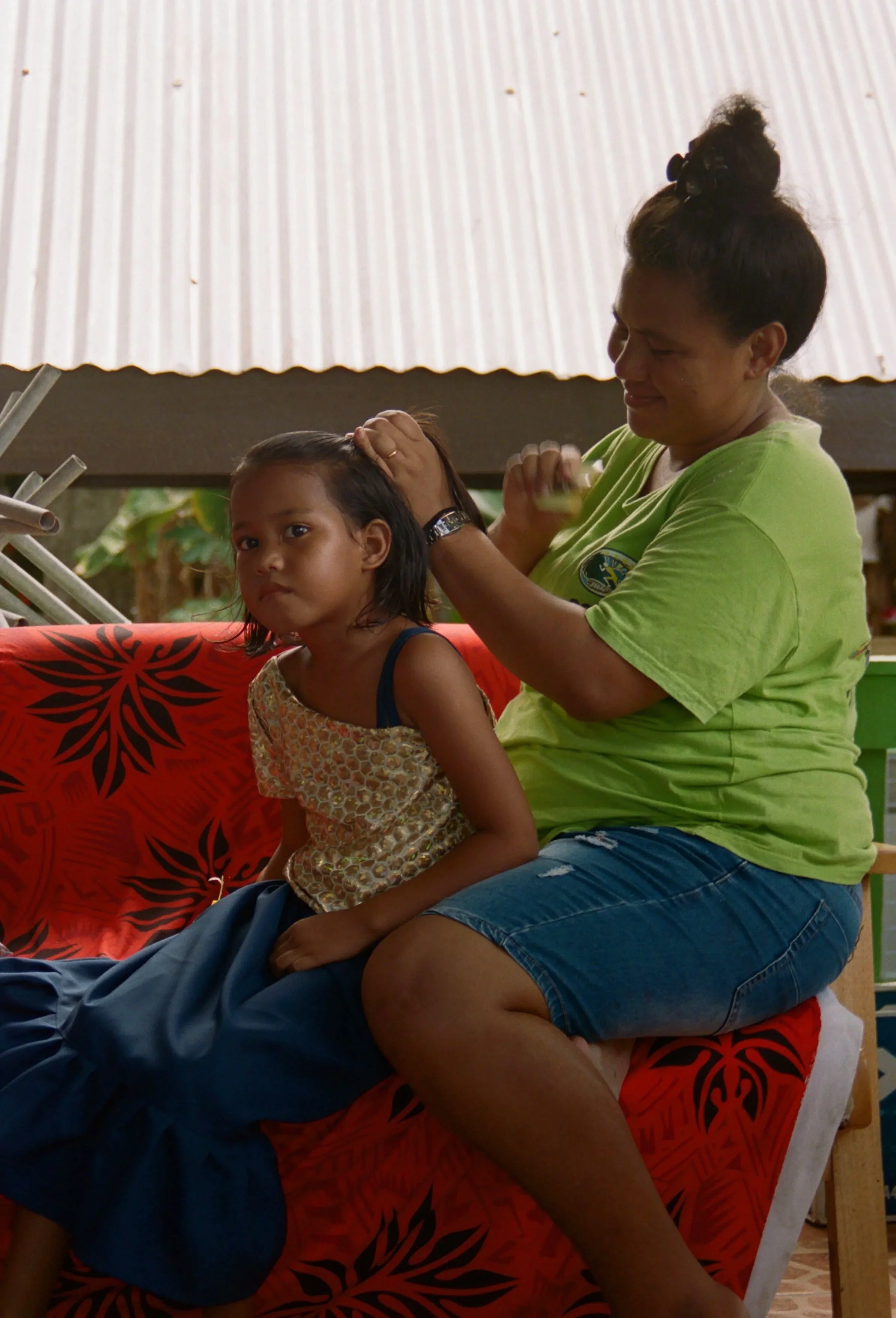
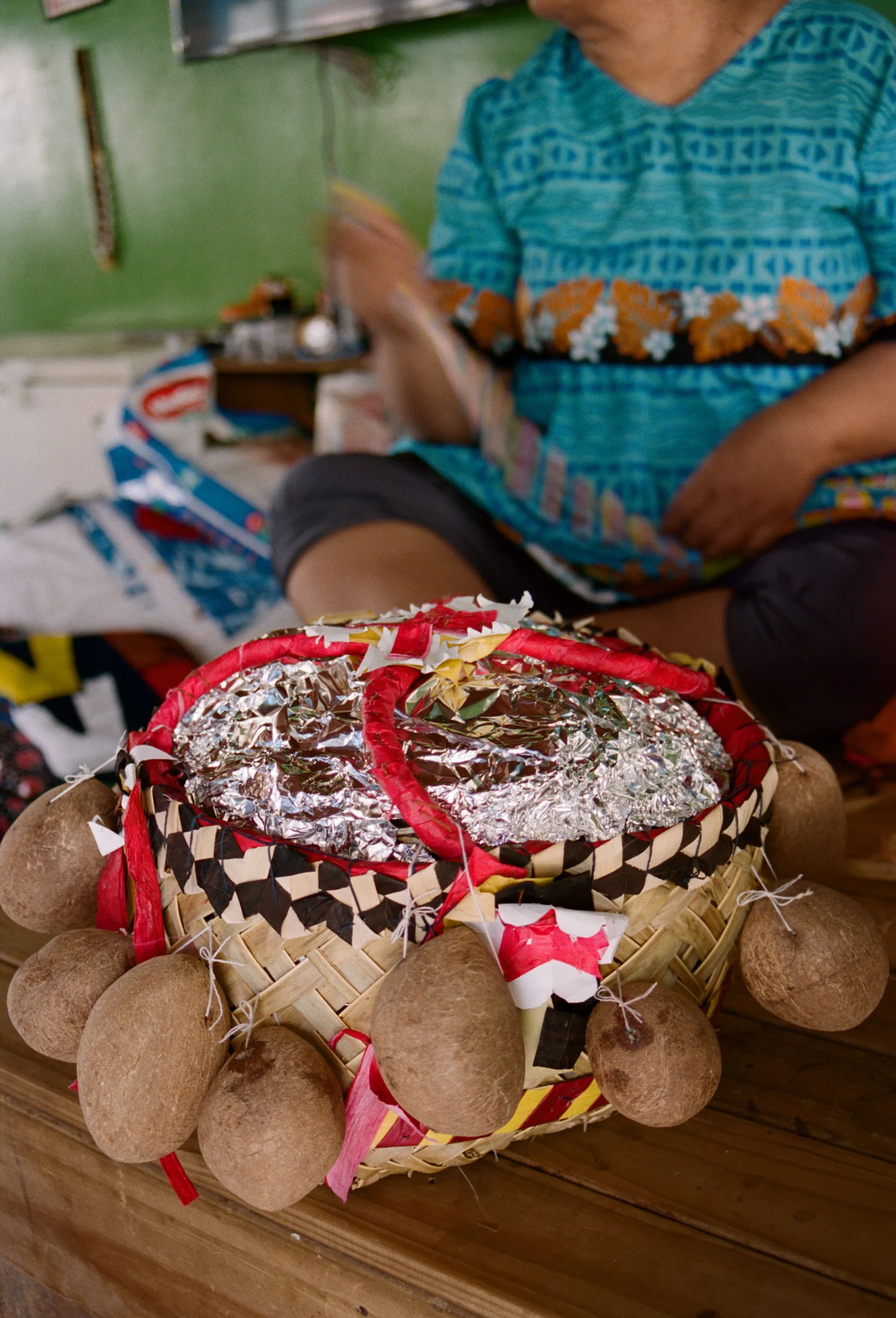
A woven basket of coconuts and prepared food is assembled as part of the wedding celebrations.
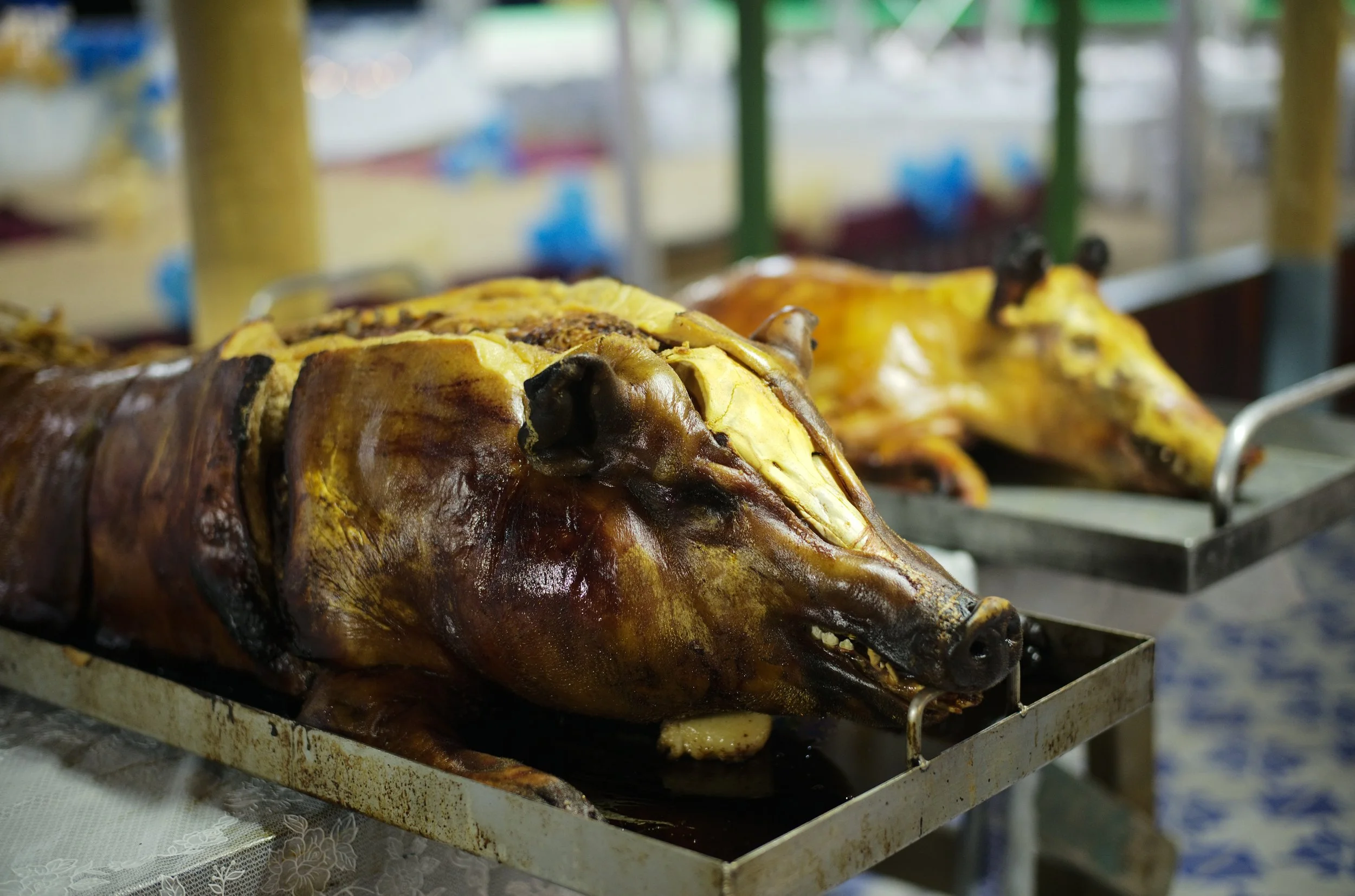
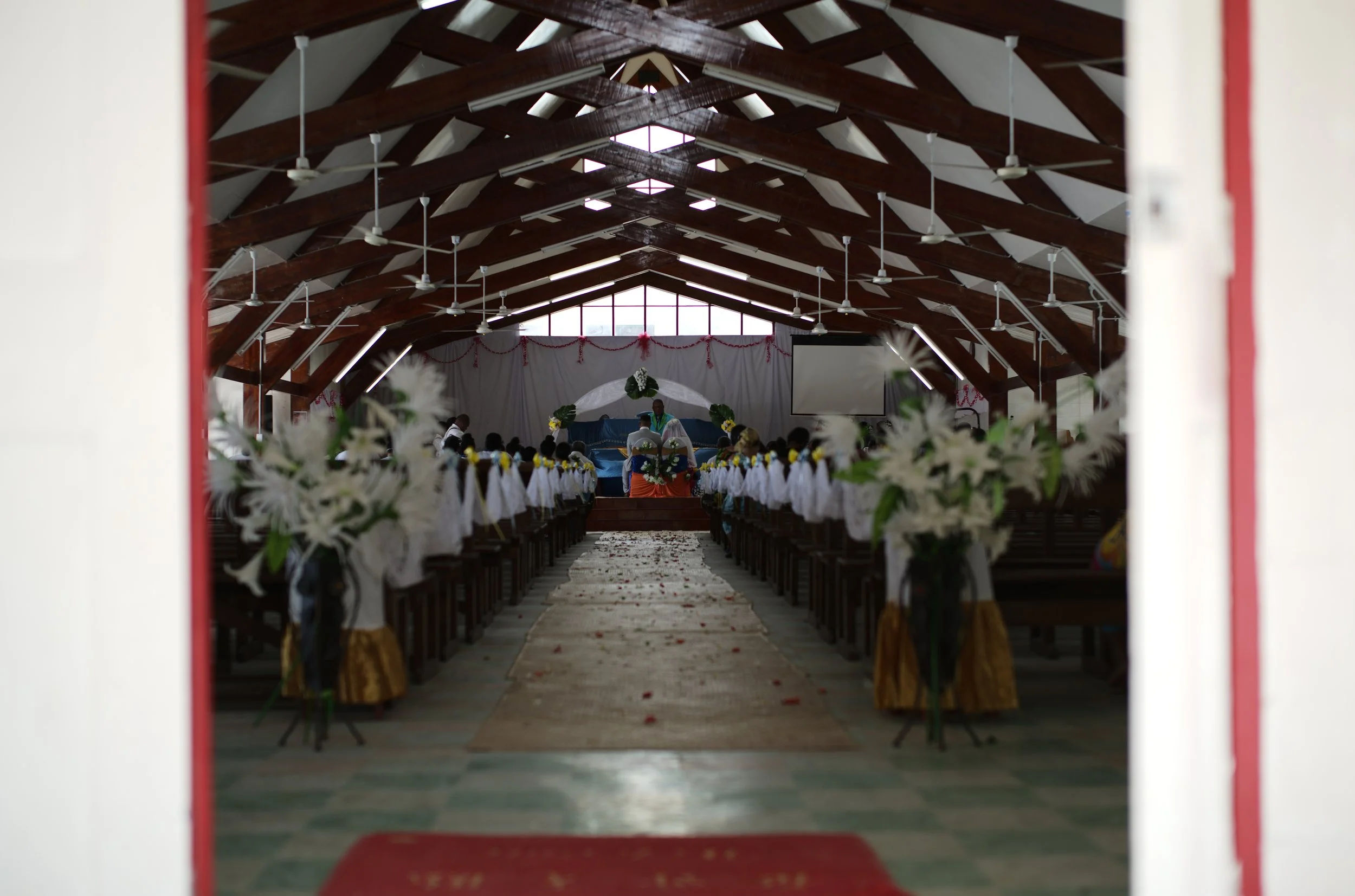
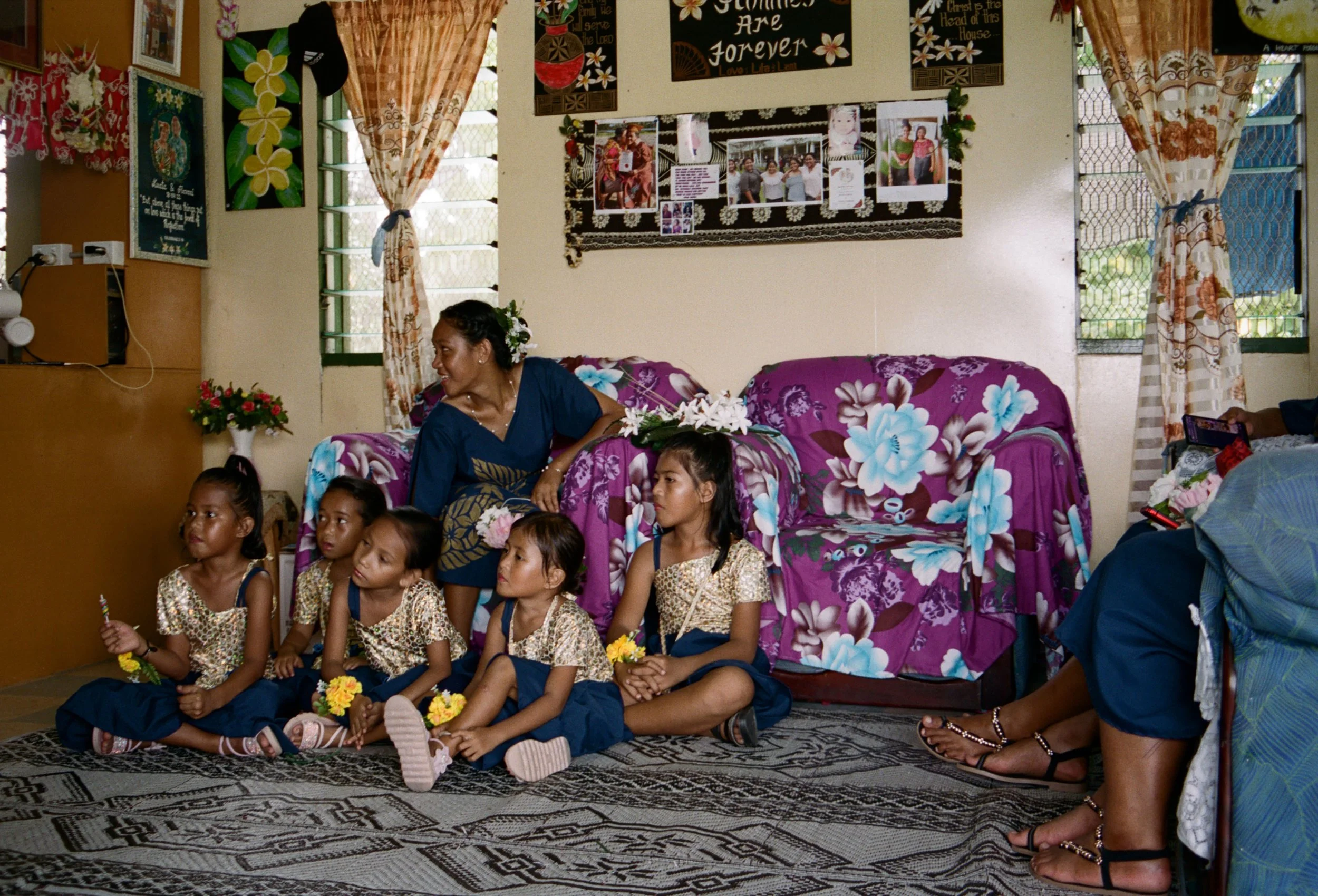
In one Tuvaluan wedding tradition, the bride changes from a gown chosen by her family into a second gown presented by the groom’s family. The bride and groom then proceed separately through the village, accompanied by relatives and friends whose singing and rhythmic clapping mark the journey. The two processions meet at the church for the wedding ceremony.
I had never seriously considered that an entire country could disappear within my lifetime. Countries, in my mind, were permanent. Borders changed. Governments changed. Leaders came and went. But countries endured. Tuvalu challenged that assumption and left me contemplating what it truly means for a nation to disappear. A country is more than the boundaries drawn on a map or the land beneath its people’s feet. It lives in its language, memory, community, and culture.
Imagine, hypothetically, that Tuvalu’s population were forced to rebuild their lives in a distant country with a different climate, landscape, and way of life. How would traditions rooted in fishing, coconuts, local plants, and materials adapt to unfamiliar surroundings? Would communities remain together or be scattered? Would children retain the Tuvaluan language? Would Tuvaluan citizenship and sovereignty endure? Who would support the psychological toll of losing not only one’s home, but the landscape and rhythms of life that shaped it?
Climate displacement is not simply the movement of people from endangered land to safer ground. It is a negotiation over what can be carried forward, what must change, and what may be lost along the way.
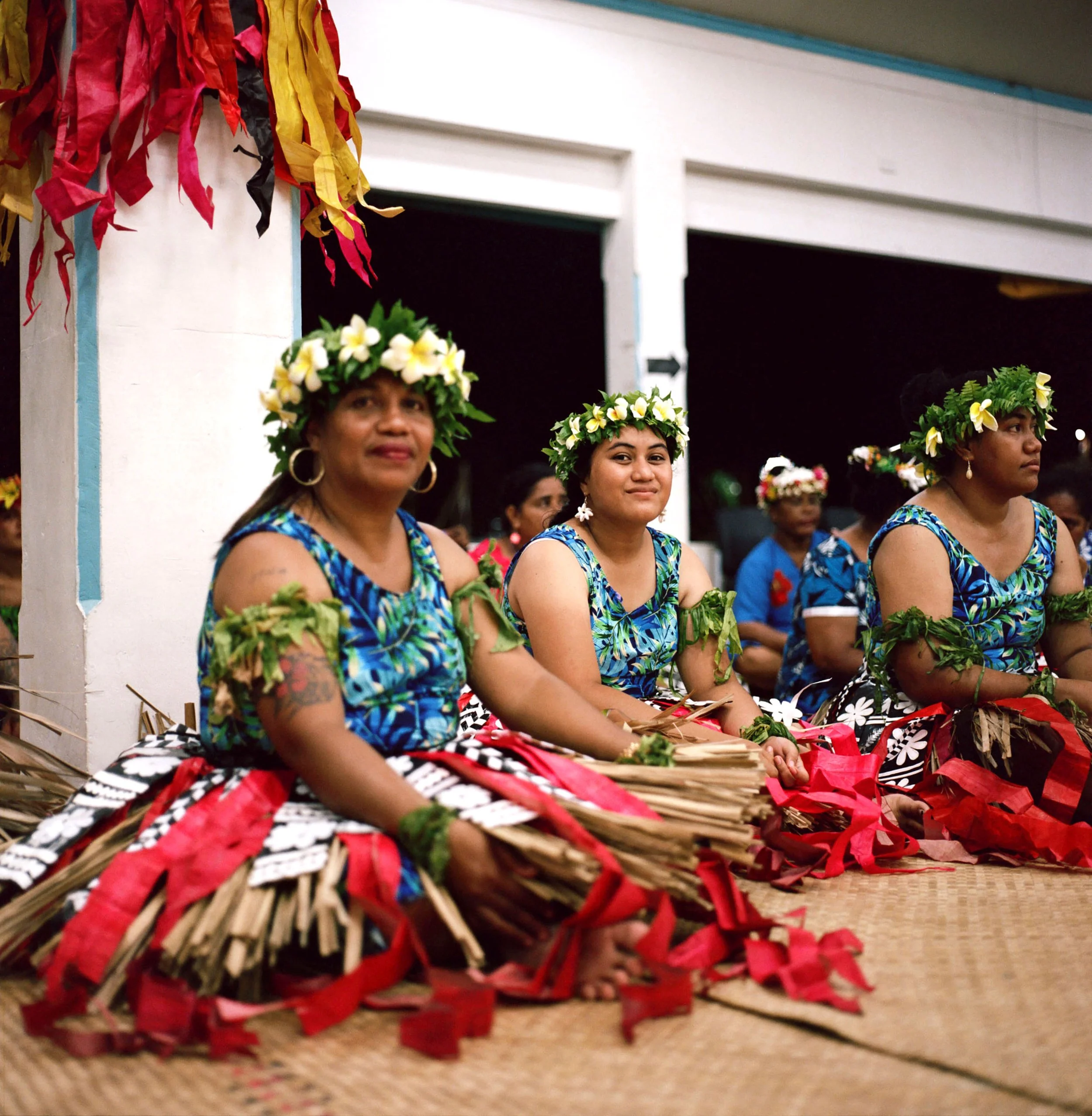
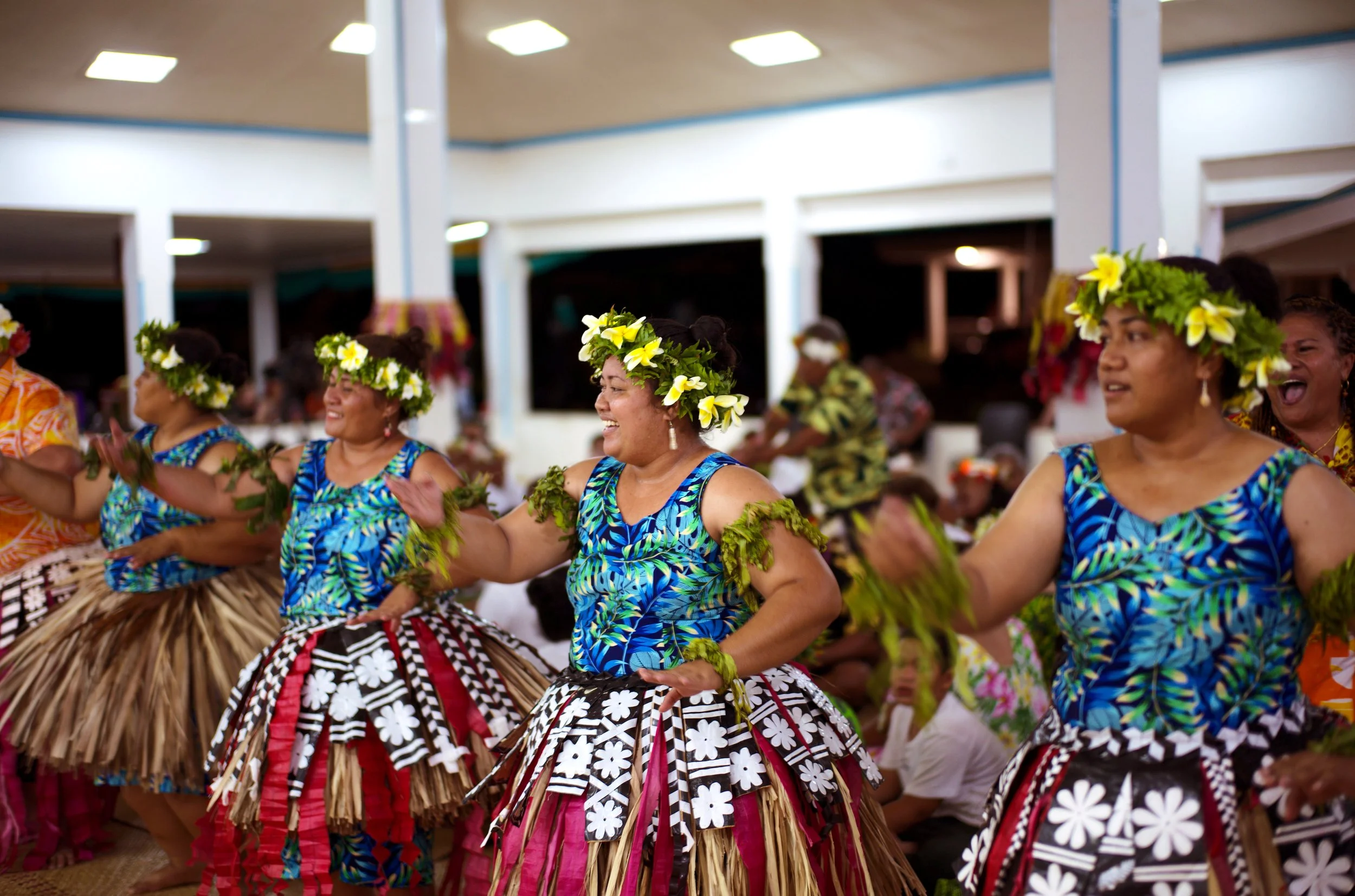
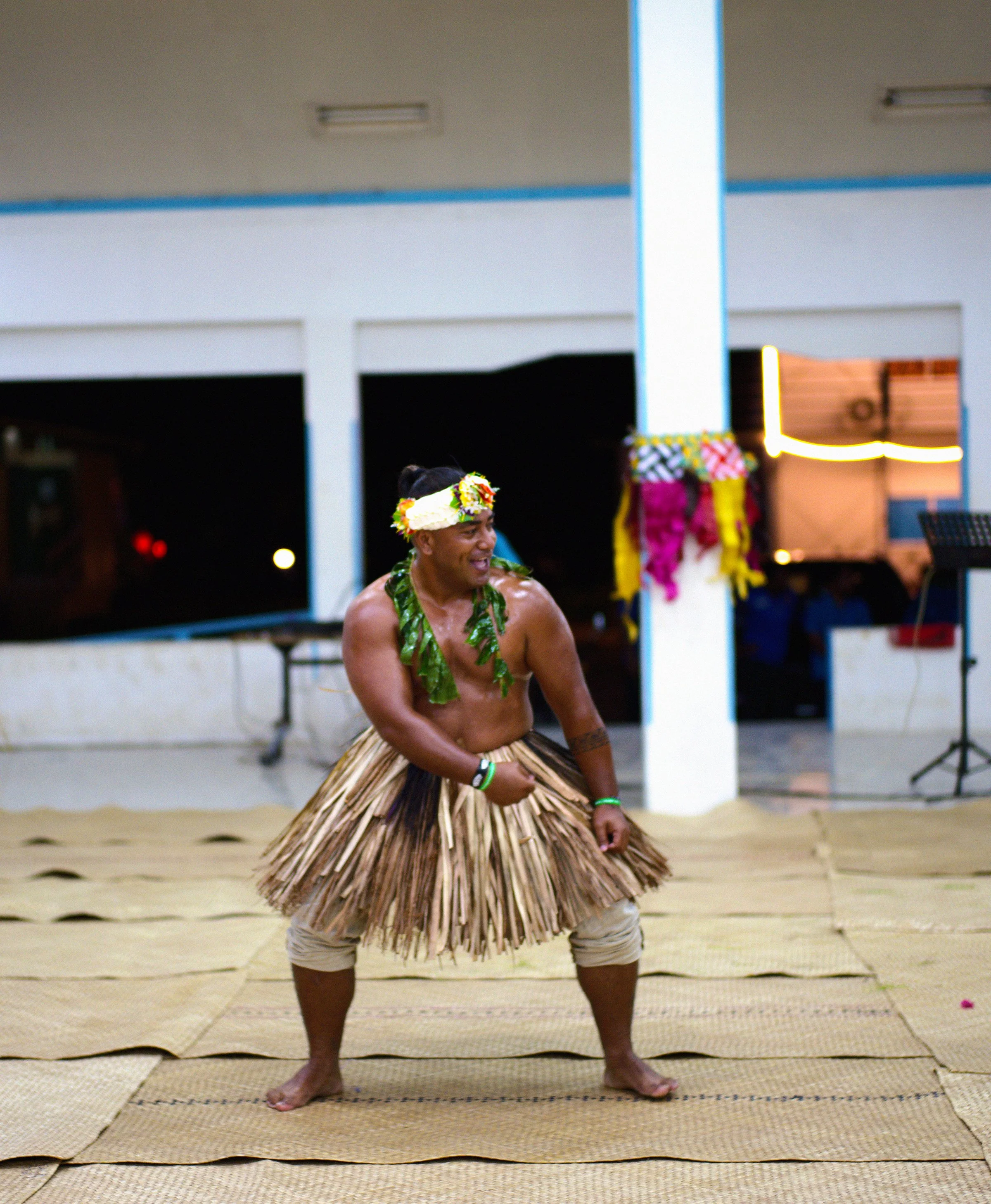
Inside the maneapa, a community meeting hall, two groups faced one another from opposite ends of the room for a fatele. One side performed, then the other answered in a spirited exchange of voices, rhythmic clapping, and percussion that felt almost like a musical contest. Singers sat closely together on the floor while dancers rose before them, each group wearing clothing and adornment particular to its community. With every turn, the energy gathered: the singing grew stronger, the rhythm quicker, and the dancing more animated. The fatele was both performance and conversation, a celebration of collective memory, skill, and pride.
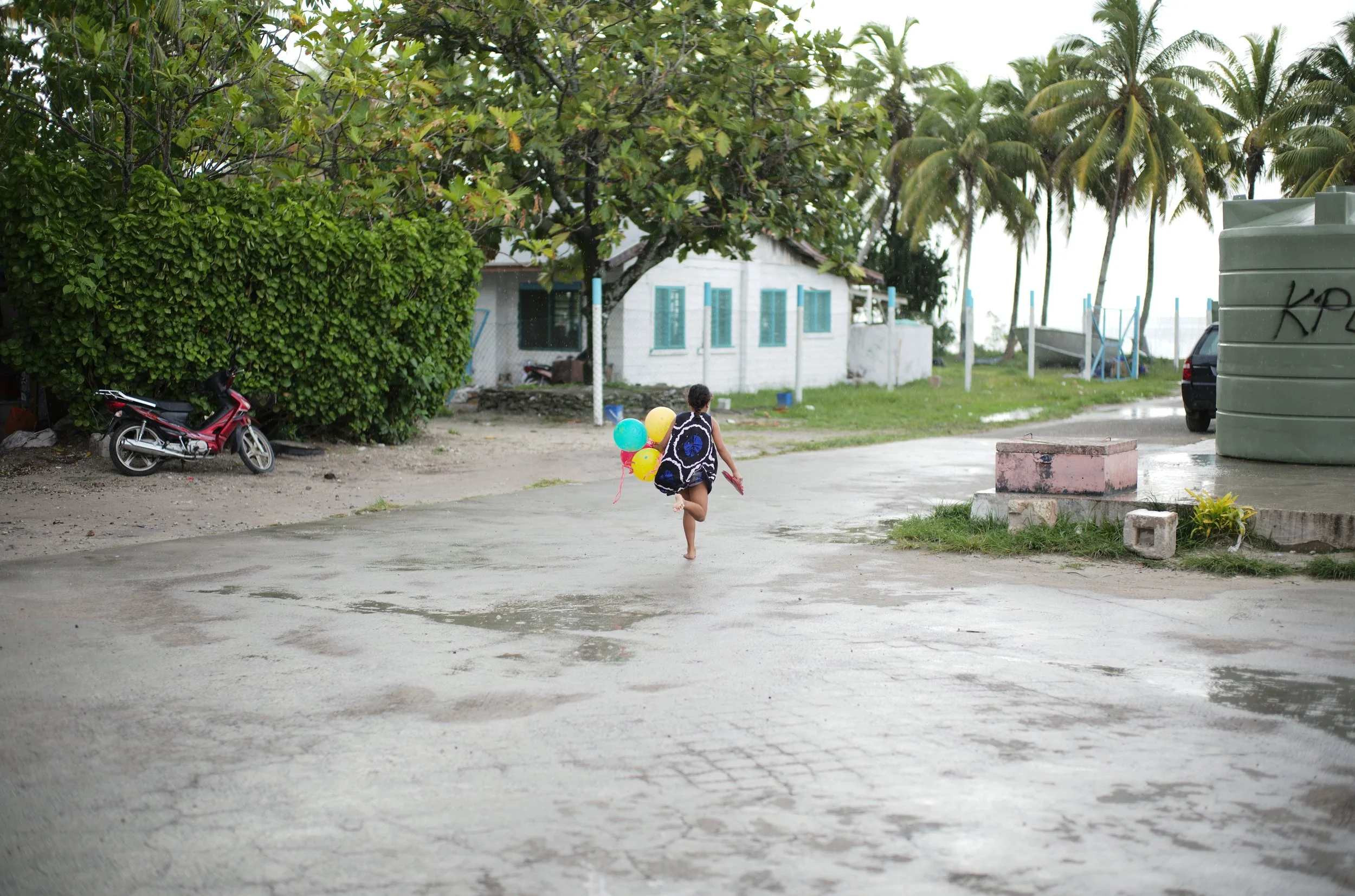
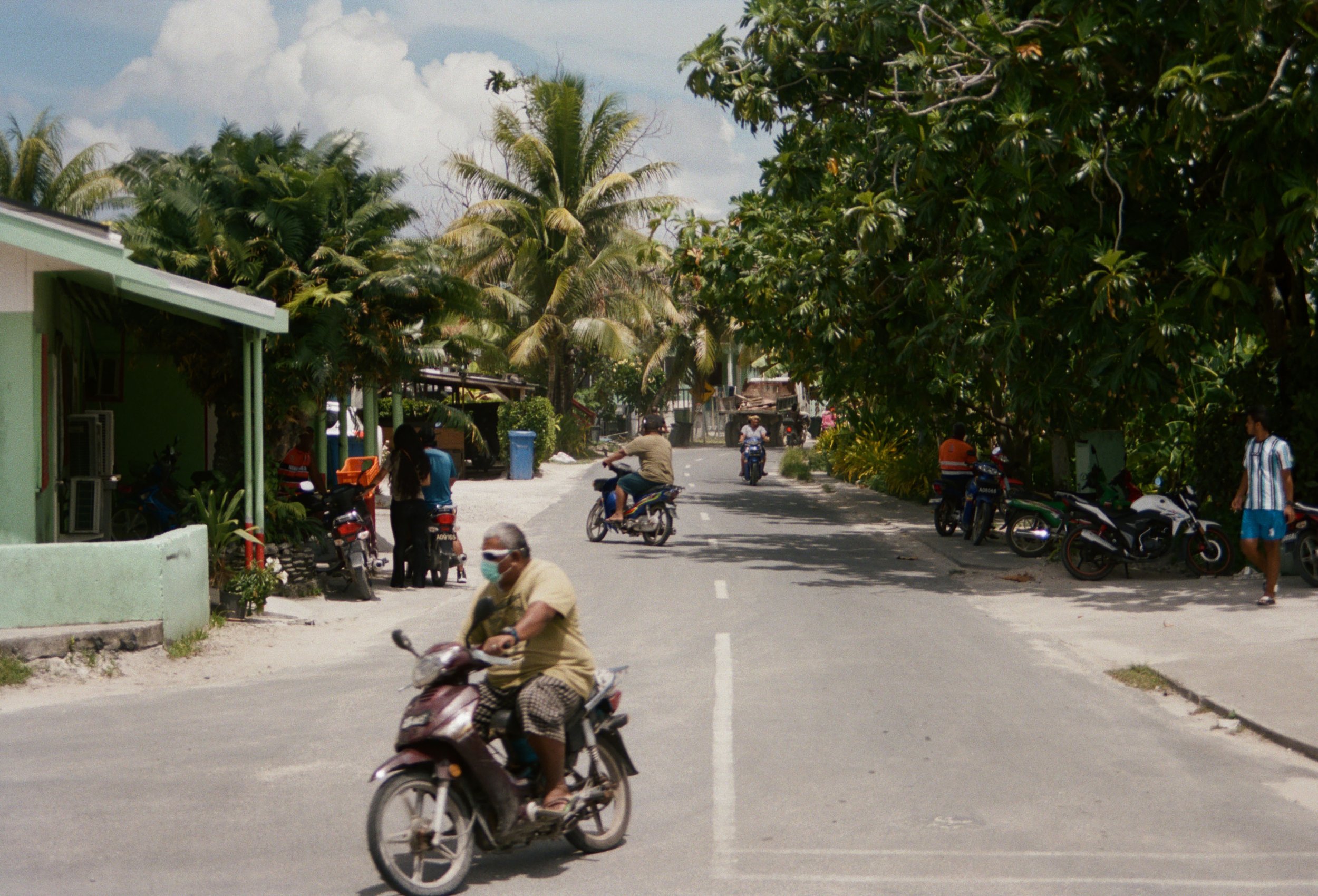
Christianity is deeply woven into Tuvaluan life. Introduced in 1861 by Elekana, a Christian deacon from the Cook Islands, the faith was later spread by European missionaries and generations of Samoan pastors associated with the London Missionary Society—decades before Tuvalu came under British colonial rule. Its presence remains visible across Fongafale, where numerous churches serve the islet’s small population. Each evening at approximately 6:45, church bells announce a fifteen-minute period of prayer. Traffic stops, engines are switched off, and pedestrians pause beside the road. From nearby homes, families can be heard praying and singing together in the warm evening air.
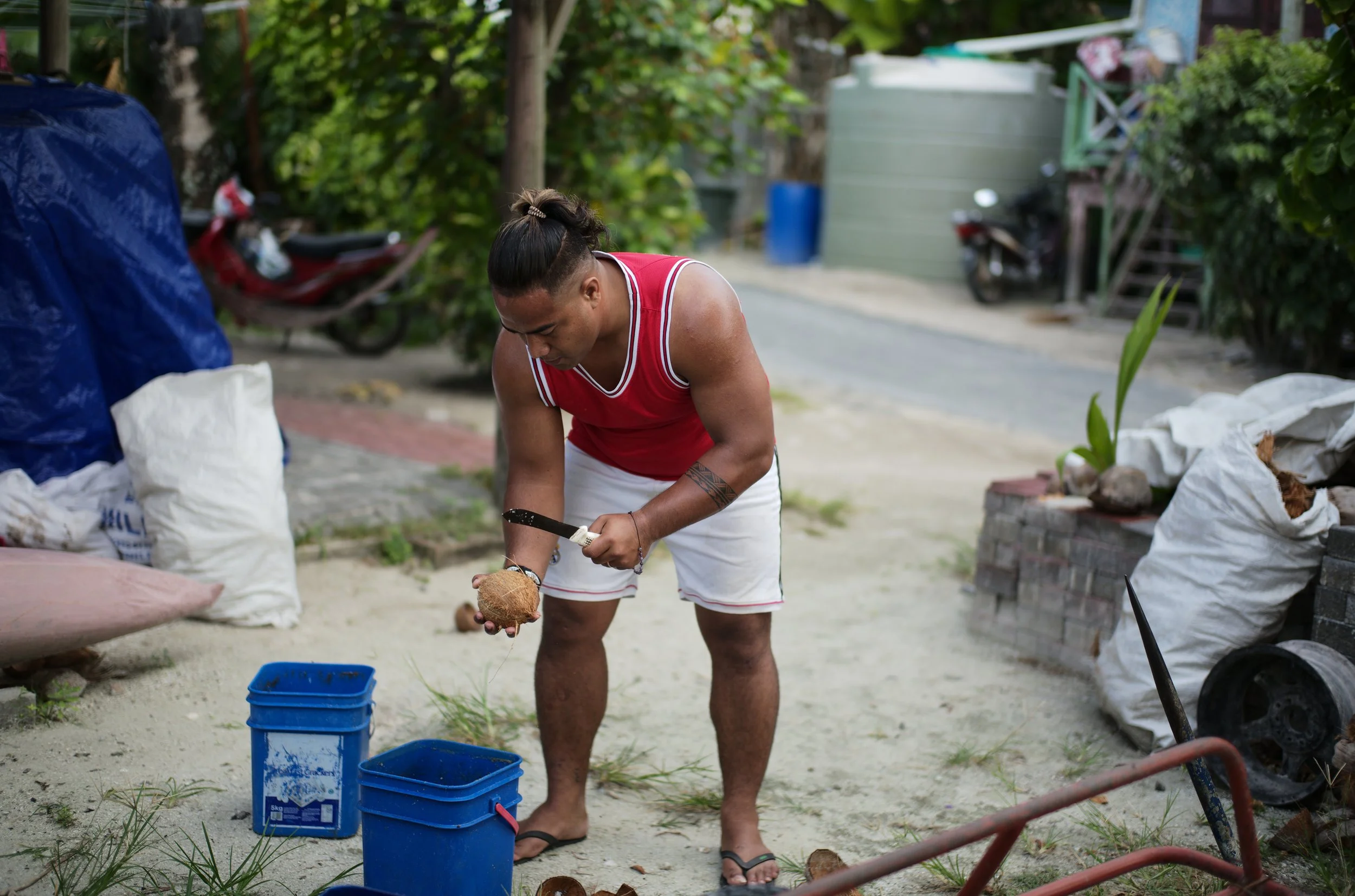
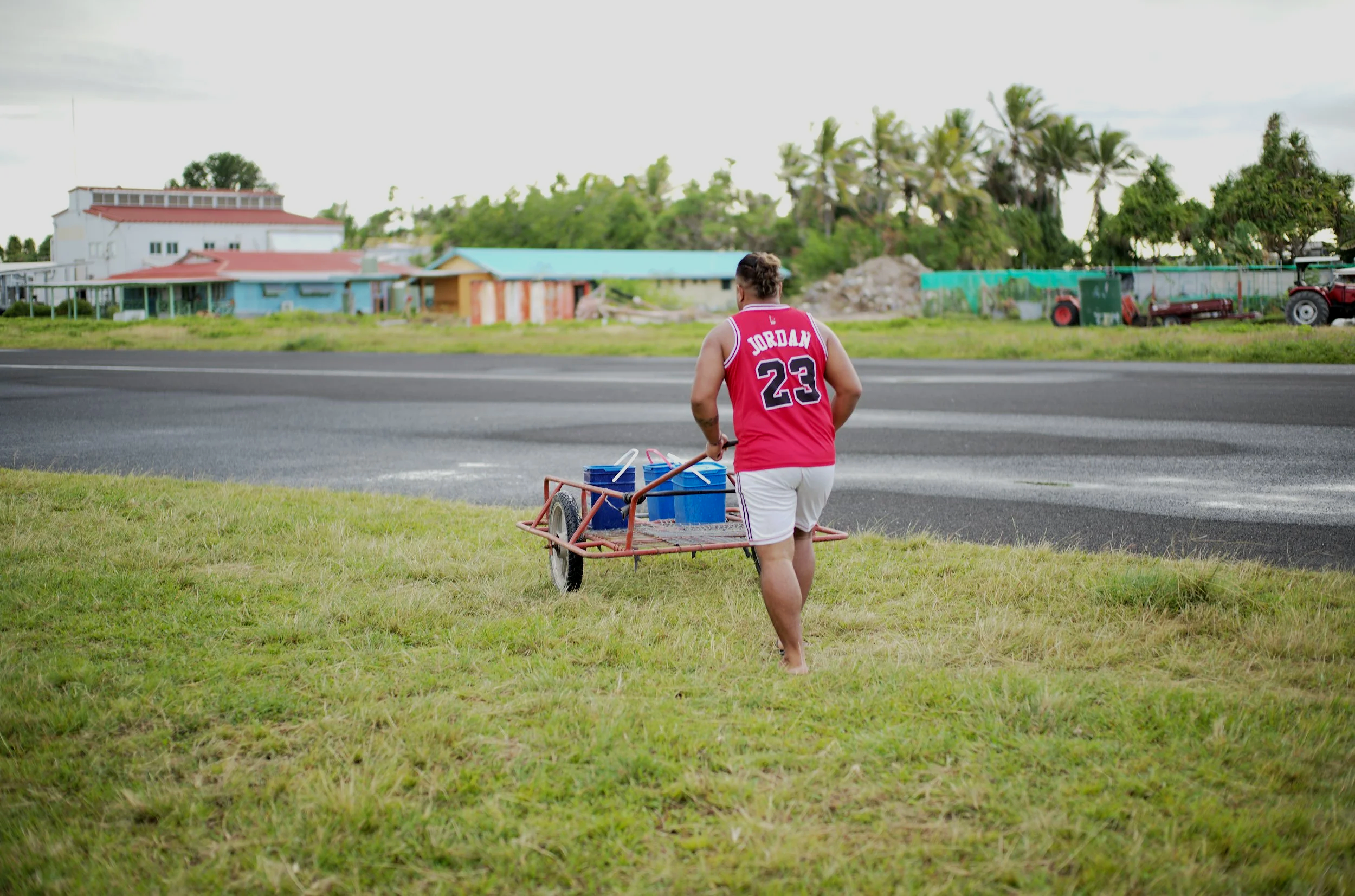
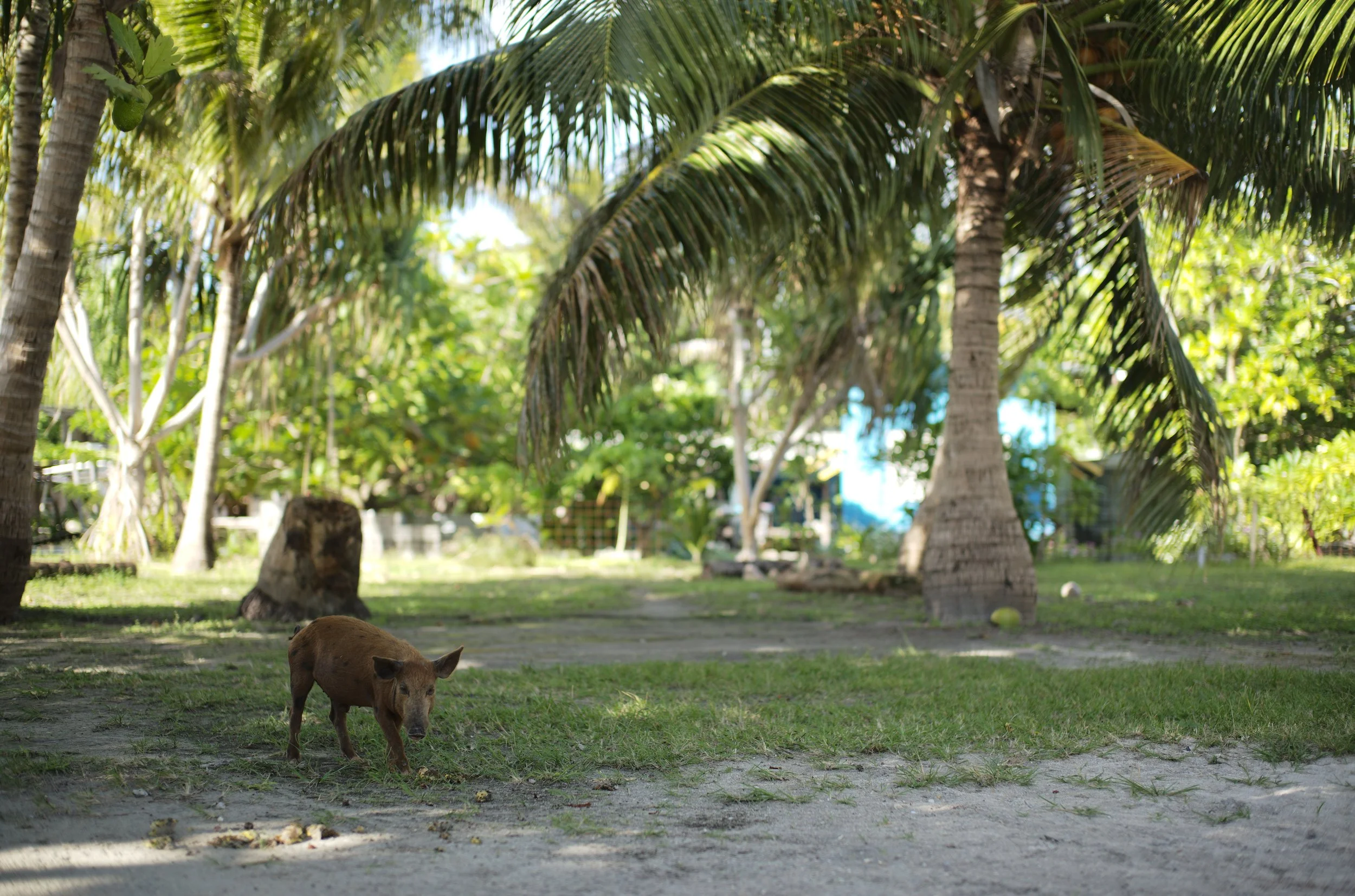
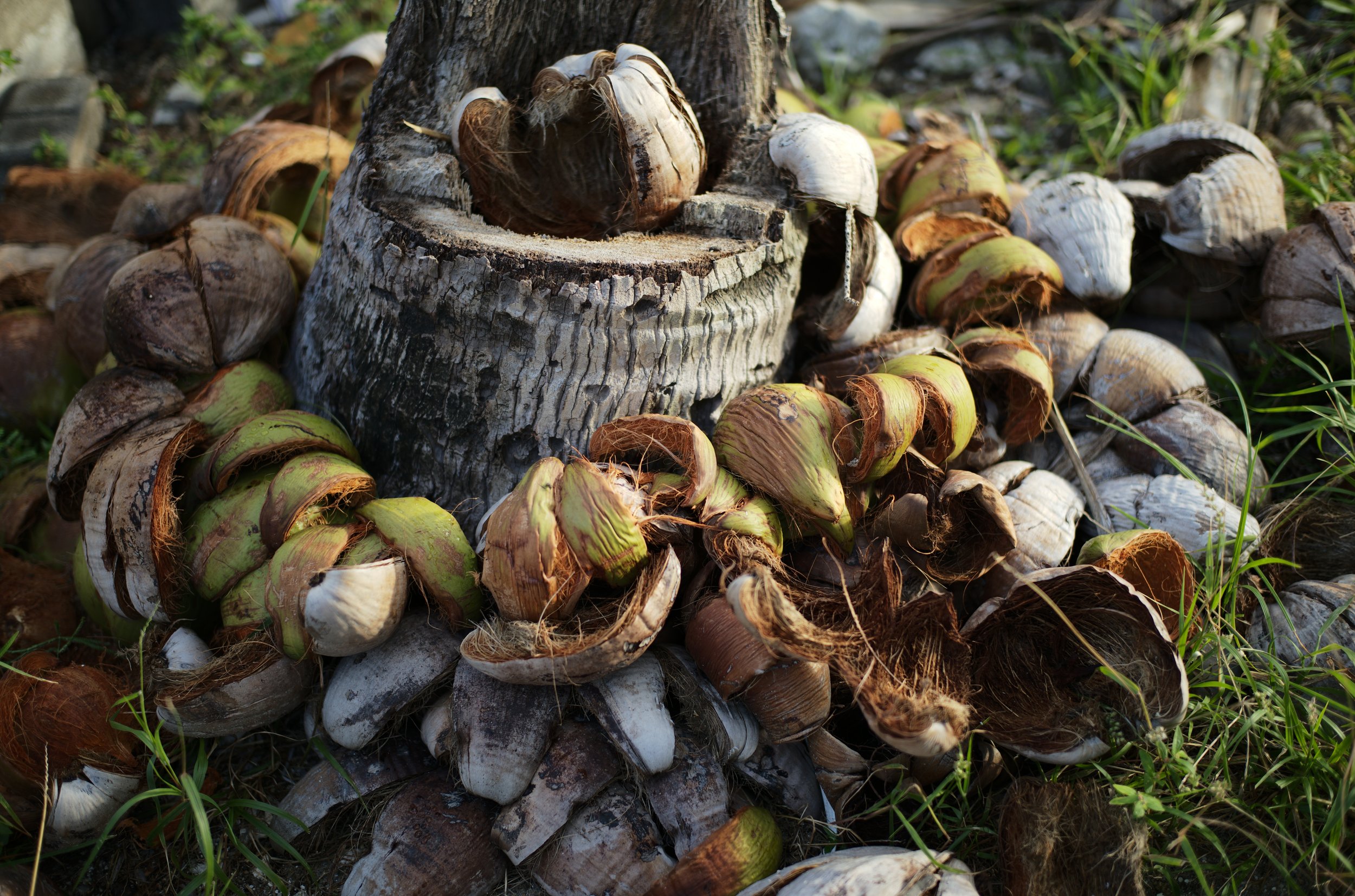
Kato prepares coconuts to feed his family’s pigs. Like many pigs raised on Fongafale, they are kept across the airfield on the less populated side of the islet.
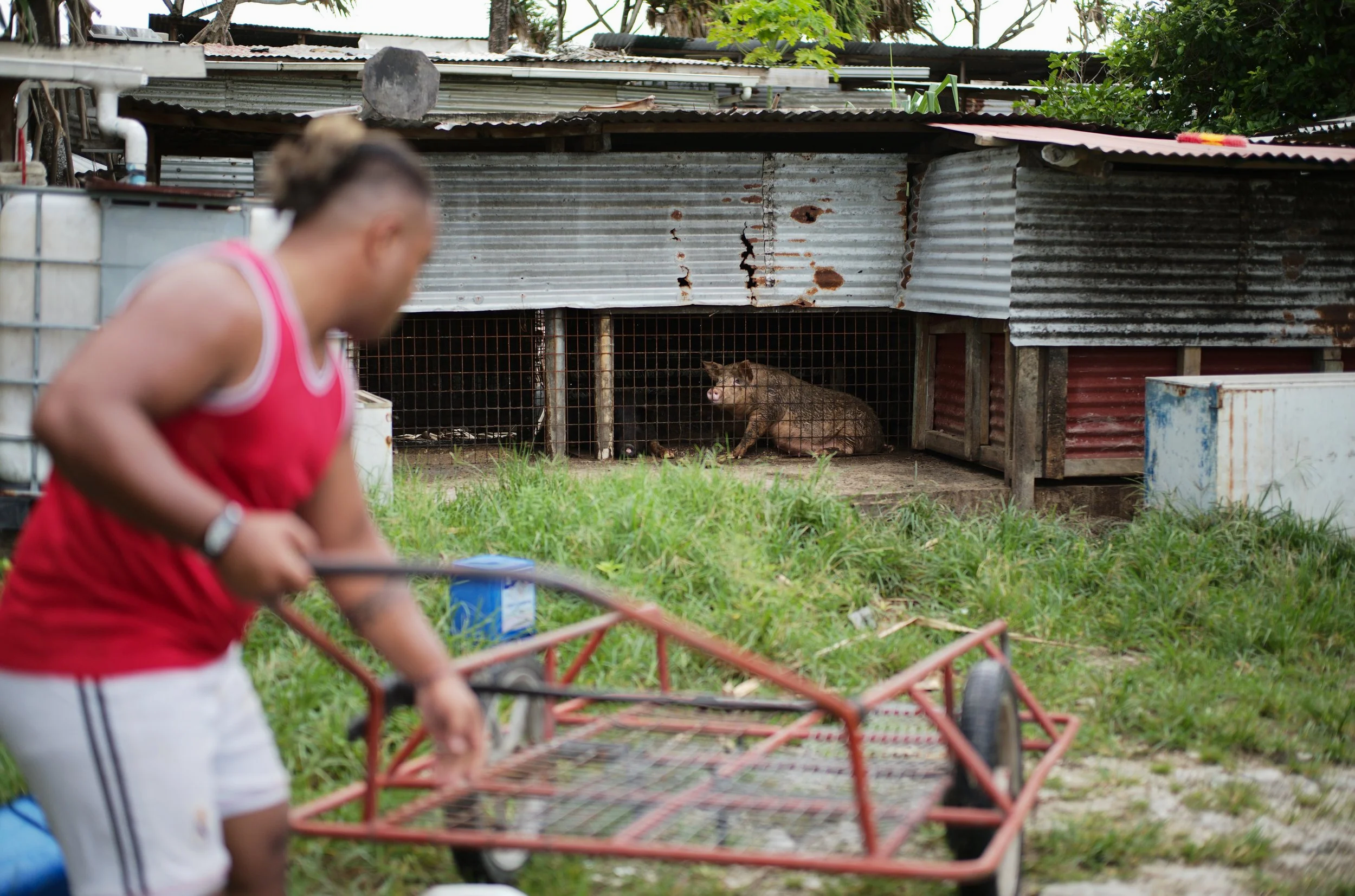
Kato Ewekia is a youth climate activist from Fongafale and the national director of Saving Tuvalu, a nongovernmental organization that amplifies Tuvaluan voices and advocates for sustainable responses to the country’s environmental and humanitarian crisis. He represents his community on the front lines of climate change, speaking for a generation whose homeland faces an uncertain future. Outside his advocacy, he is a gifted musician who performs during services at his local church and participates in fatele performances.
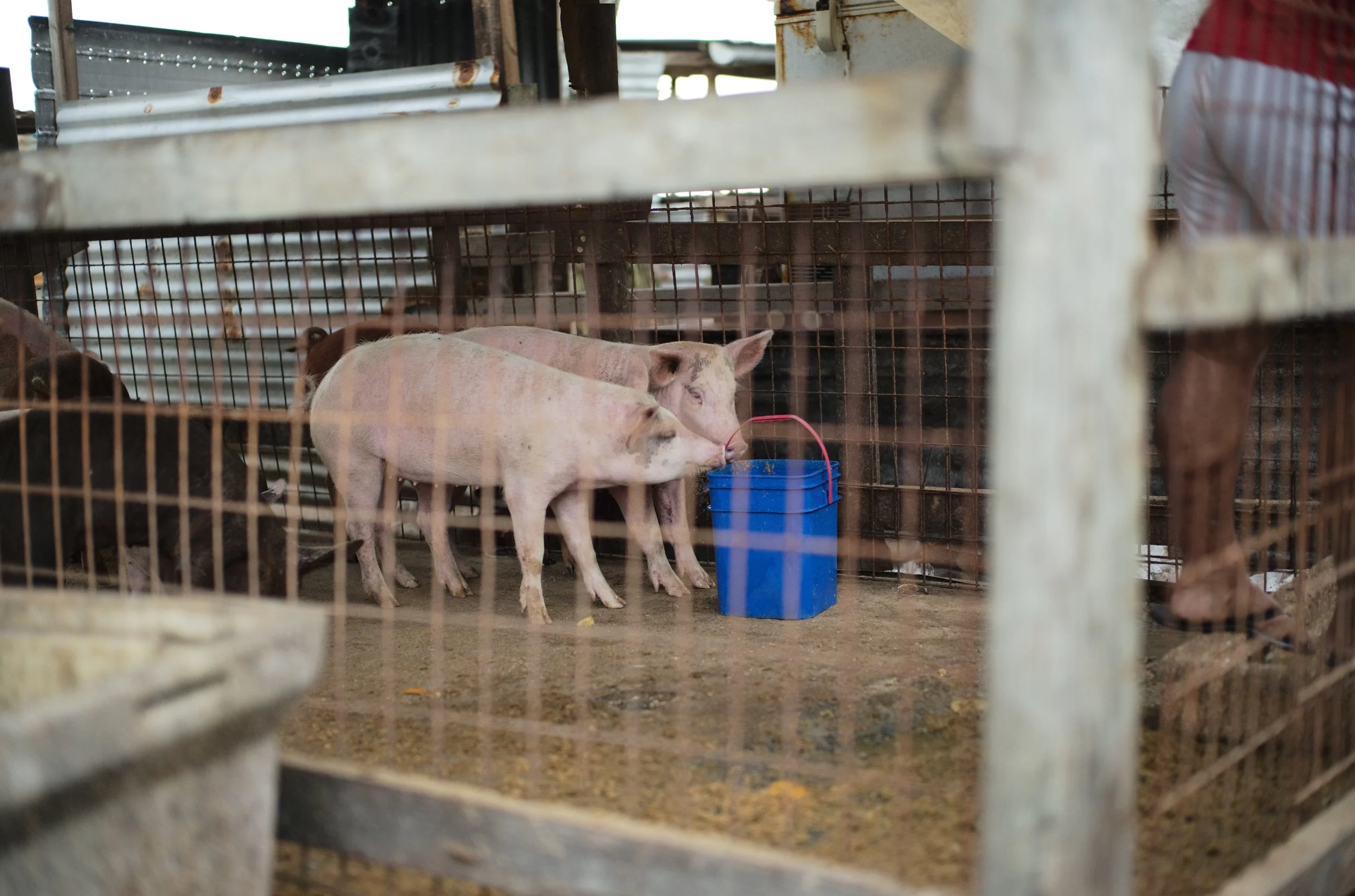
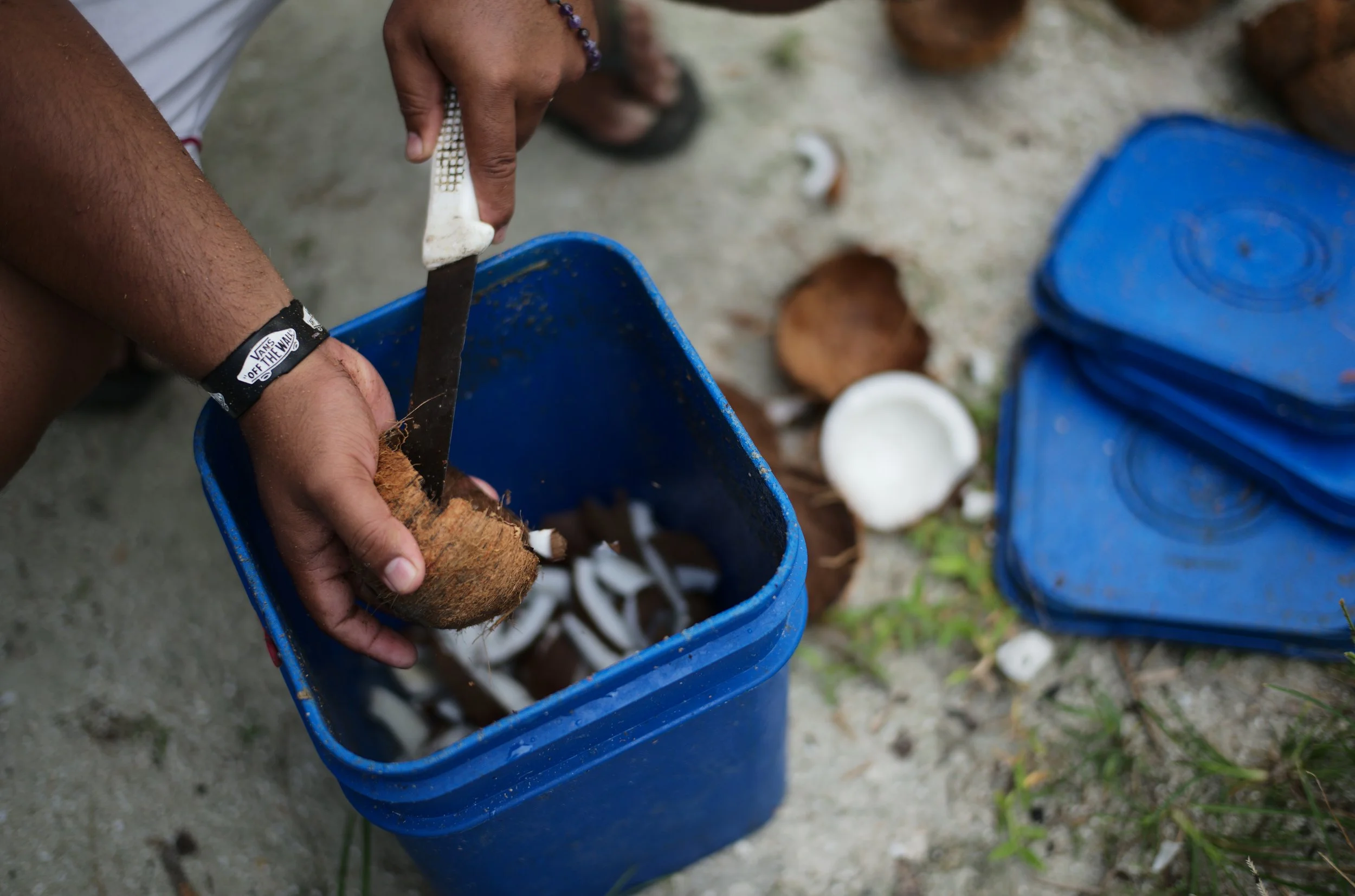
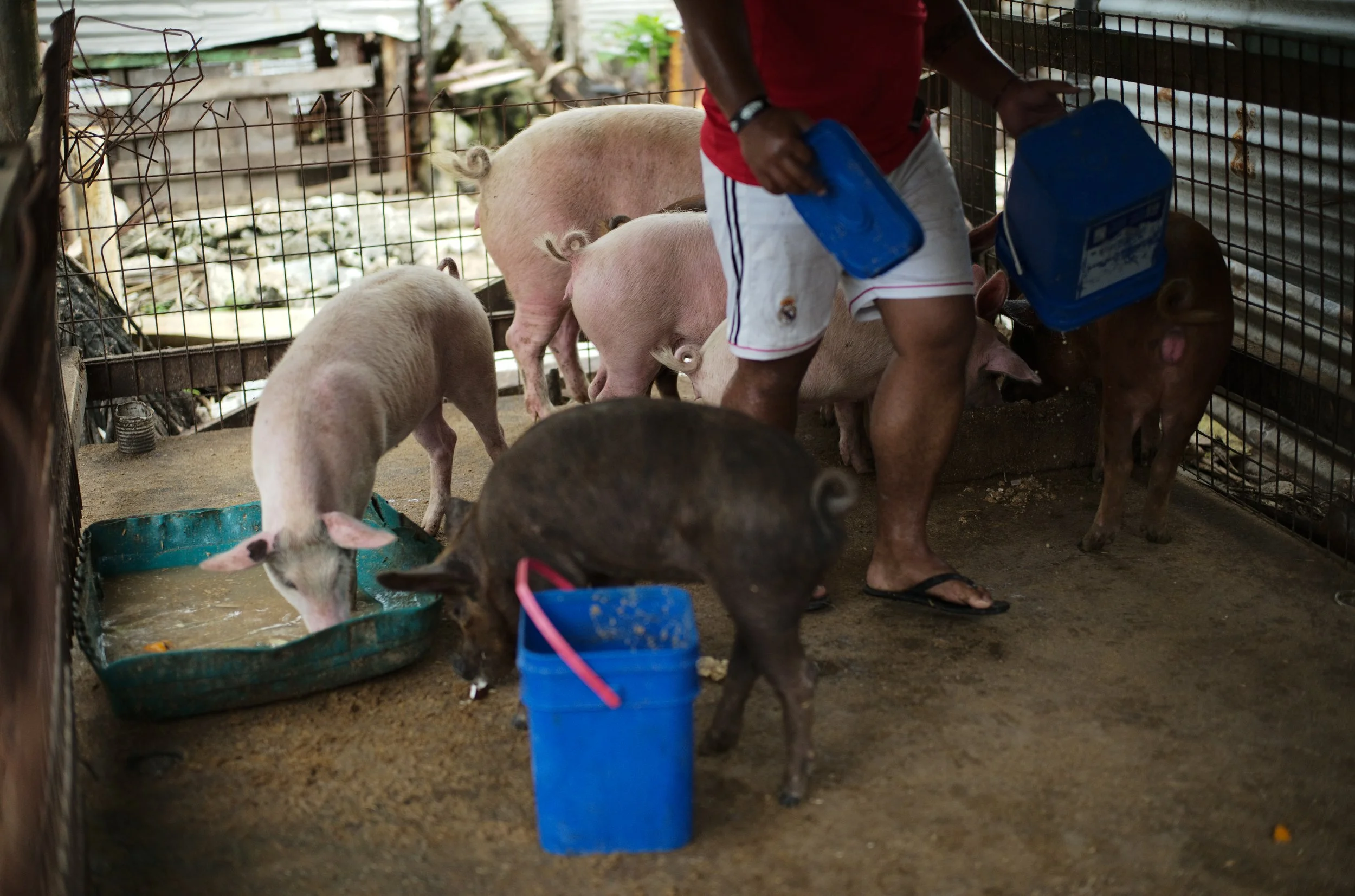
The faces in these photographs changed forever what the words climate change mean to me. They are neither symbols in a cautionary tale nor subjects of an elegy. They are people living full lives in a country that exists now, as much a part of our world as any other. If Tuvalu is lost, the tragedy will belong to all of us. The responsibility will rest with those who had the power to act but chose their own interests over Tuvalu’s future. Our future.
WORDS + PHOTOGRAPHY BY JUNG KIM
AERIAL PHOTOGRAPHY + VIDEO BY JOSH ORTER
ACKNOWLEDGMENTS
With gratitude to the people of Tuvalu who welcomed us and shared their lives, knowledge, and traditions with such generosity. Special thanks to the Government of Tuvalu; the Honorable Kausea Natano, Prime Minister of Tuvalu at the time of this project; the Honorable Seve Paeniu, then Minister of Finance; and the many individuals, families, and friends whose trust and support made this work possible.